Sanshin
산신
A mountain spirit or deity understood through varied local traditions, ritual settings, and visual forms.
Research note · see sources and scope belowQuick Summary
Sanshin (산신) means a mountain spirit or mountain deity. The term covers beliefs shaped by particular mountains, communities, and religious histories rather than a single uniform character.
Different Local Forms
Mountain-spirit worship is part of a broad history of nature and mountain belief. It is not a single character biography. The Academy of Korean Studies describes the tiger as closely associated with mountain-deity traditions in some historical accounts, while its overview of mountain paintings shows several iconographic forms.
Many surviving Buddhist mountain-spirit paintings show an elderly figure in a mountain setting with a tiger, but the same source also records female figures, armed guardian forms, scholarly or clerical forms, couples, and figures without a tiger. In Buddhist temples these paintings were commonly enshrined in a samsŏnggak or a mountain-spirit hall. This is one documented ritual and visual context; it should not be applied to every local shrine or story.
Connection to the Dangun Story
In the Samguk Yusa account used by the Atlas, Dangun withdraws to the mountain and becomes a mountain spirit. The later practice of worshipping a sanshin and the literary ending of this foundation myth belong to different kinds of evidence. This story-specific link does not mean that every community identified its mountain deity with Dangun.
Visual Interpretation Notes
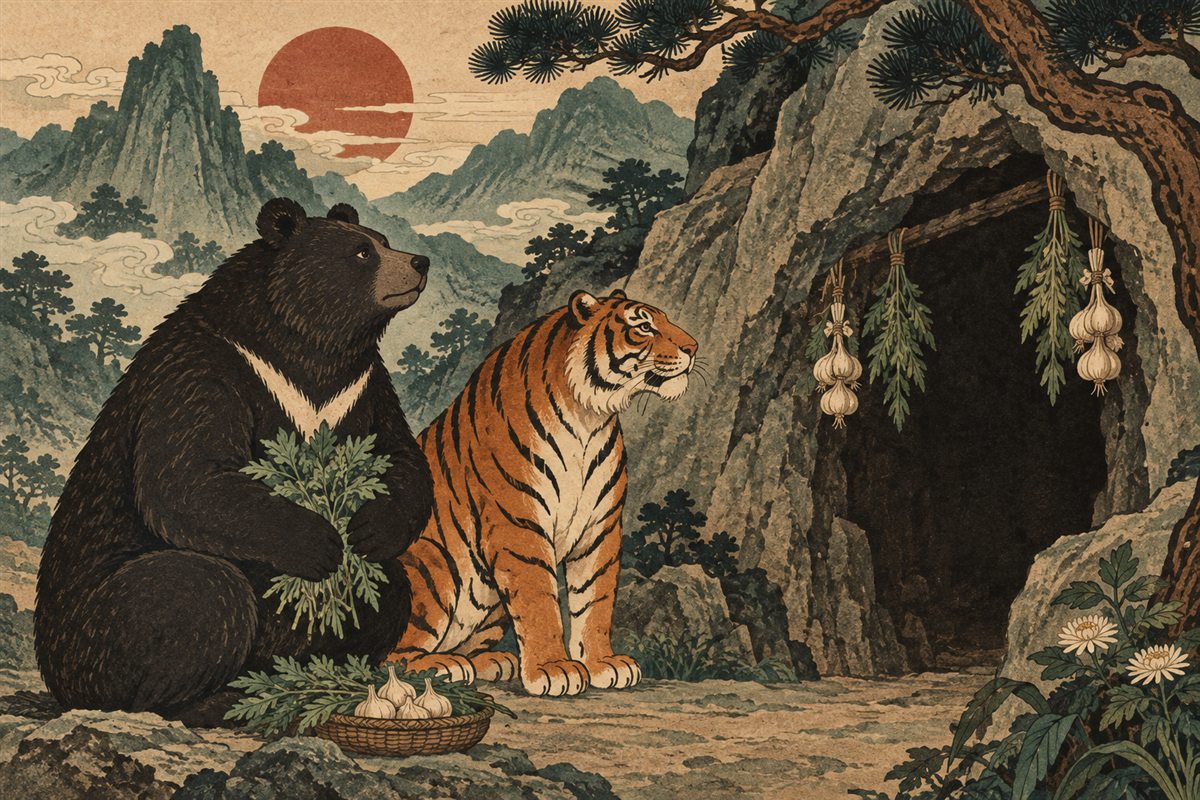
The linked story illustration belongs to the Dangun narrative, not to a general Sanshin iconography. A dedicated image should wait for a specific regional or historical reference.
Sources
- Academy of Korean Studies, Encyclopedia of Korean Culture: Nature Worship.
- Academy of Korean Studies, Encyclopedia of Korean Culture: Mountain-Spirit Belief.
- Academy of Korean Studies, Encyclopedia of Korean Culture: Mountain-Spirit Paintings (visual and temple contexts, including documented variants).