Korean context,
closer looked at.
Explore the objects, food, places, and practices that help readers picture a tale. Entries link to stories only when the source makes that connection.
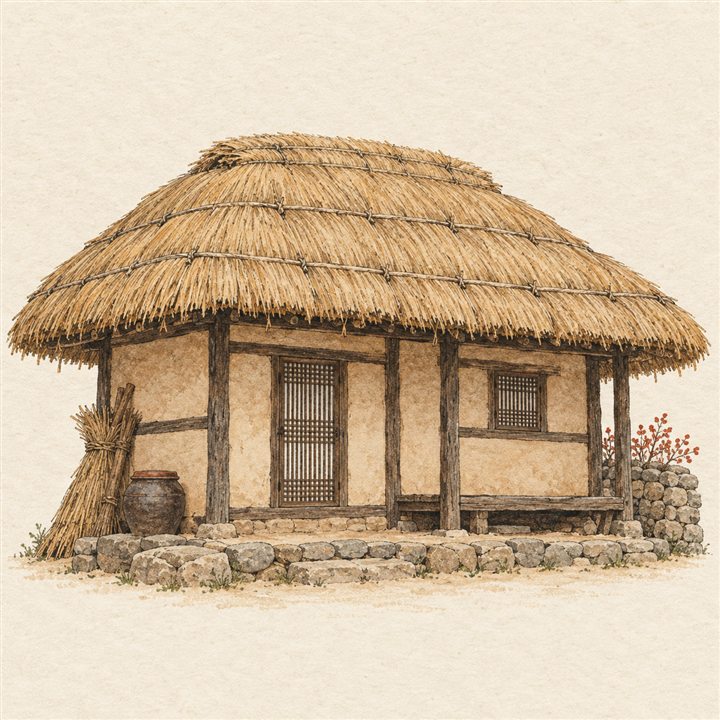 Home · Architecture
Choga-jip (Thatched-roof House)
A traditional house type identified by its thatched roof; details varied with place and time.
Discover the detail →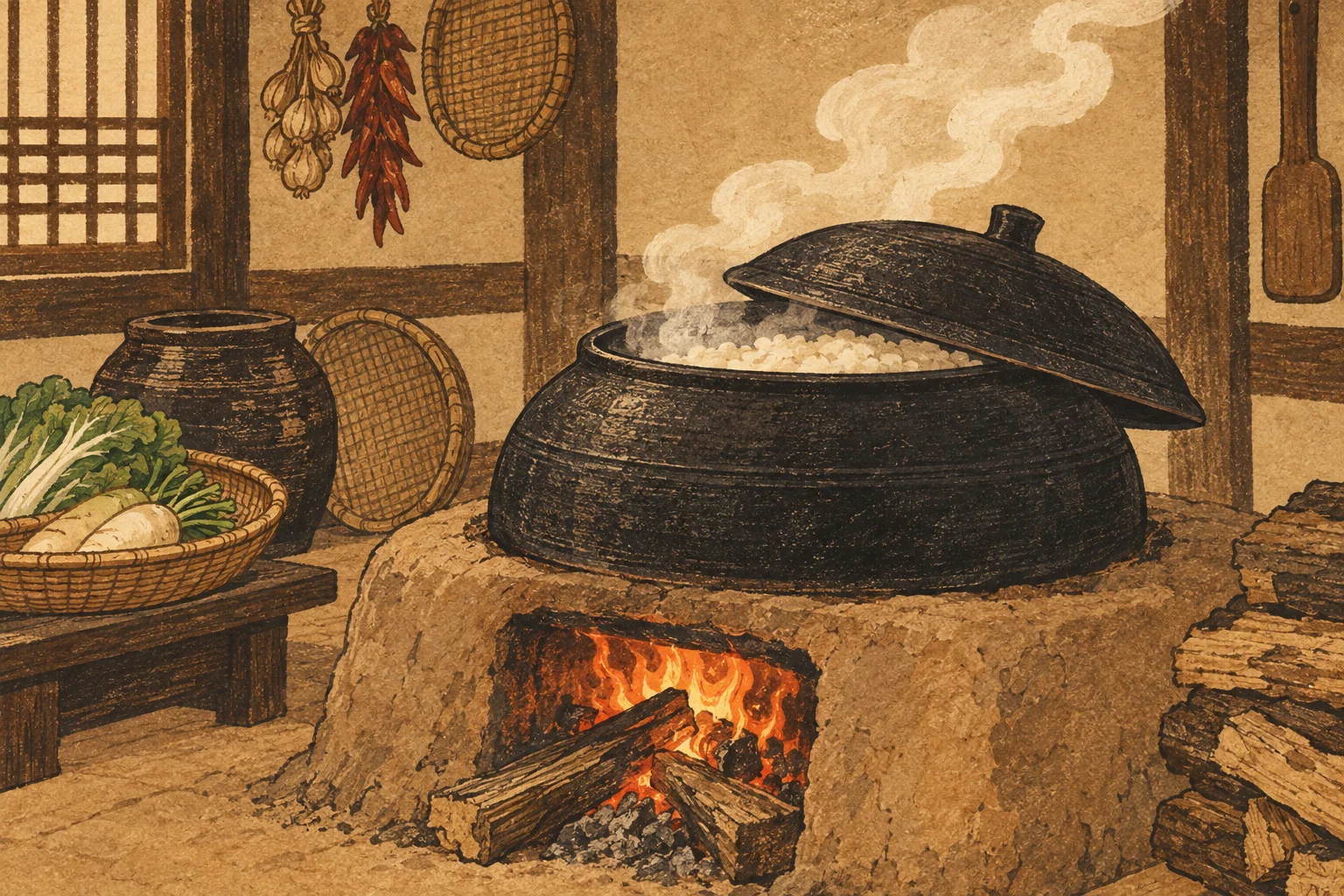 Kitchen · Household object
Gamasot (Cast-iron Cooking Pot)
A traditional cooking vessel used to cook rice or boil soup and water.
Discover the detail →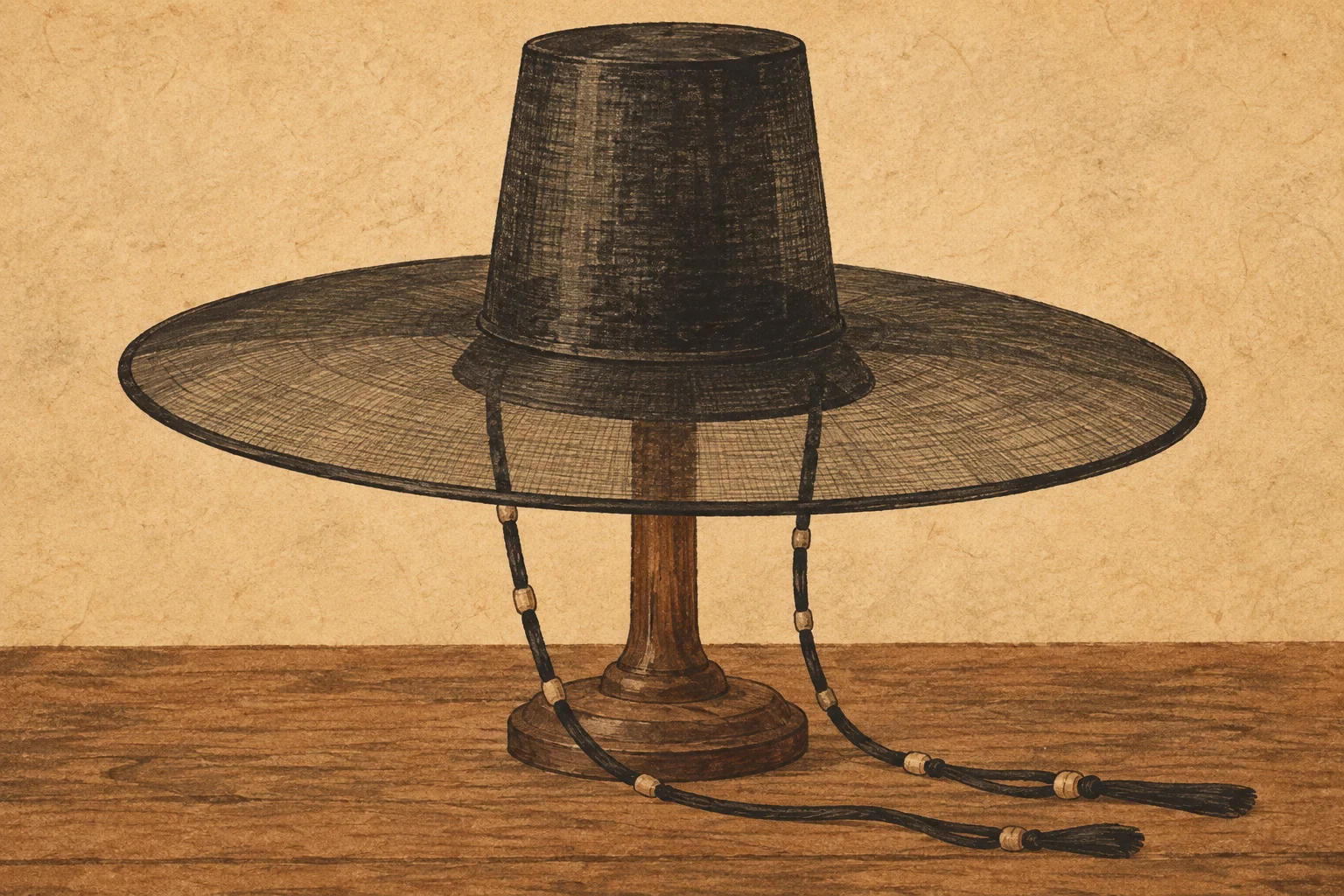 Clothing · Personal object
Gat (Traditional Hat)
A formal hat worn by men in historical Korea, with styles, materials, and use shaped by period and status.
Discover the detail →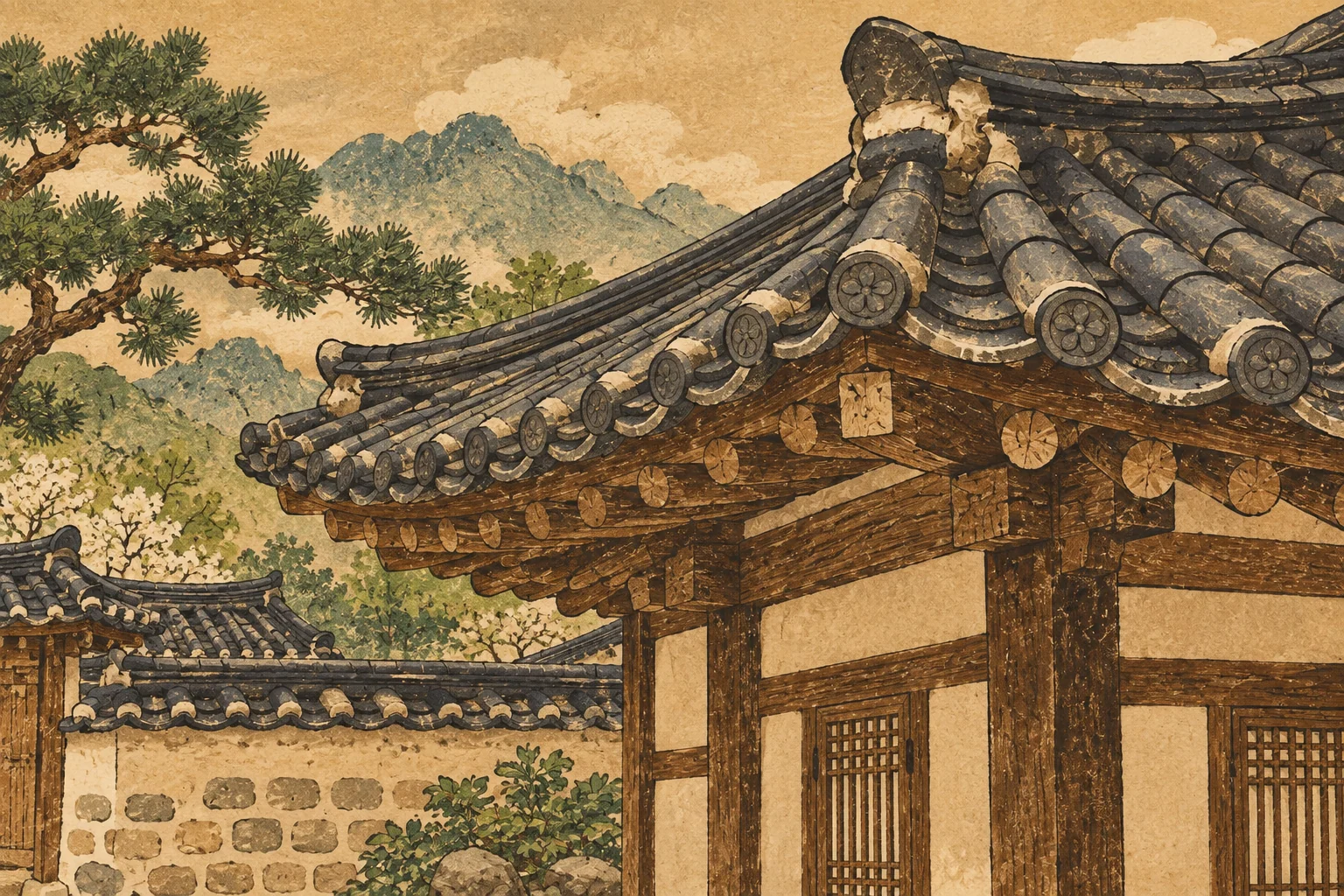 Home · Architecture
Giwa-jip (Tile-roofed House)
A house with a tiled roof; building layout and tile forms reflected different periods, regions, and household circumstances.
Discover the detail →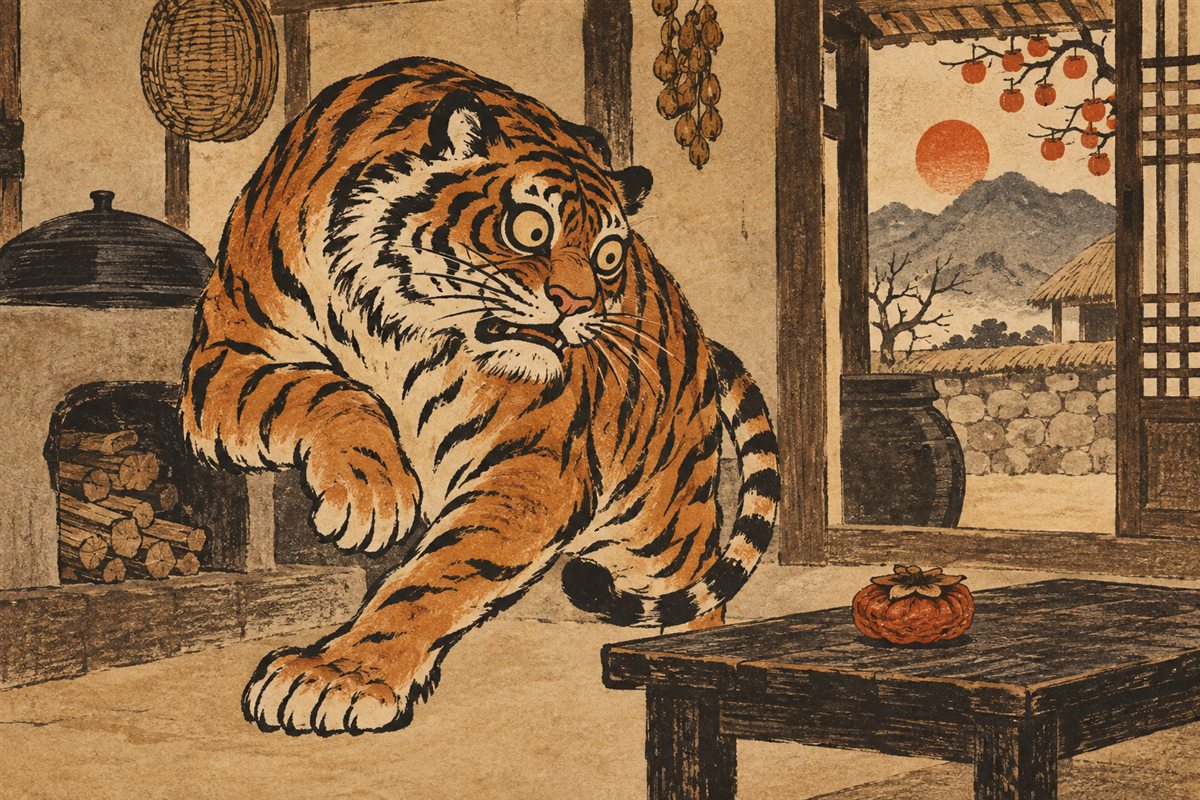 Food · Story object
Gotgam (Dried Persimmon)
A dried persimmon, the ordinary food at the center of a tiger’s comic misunderstanding.
Discover the detail →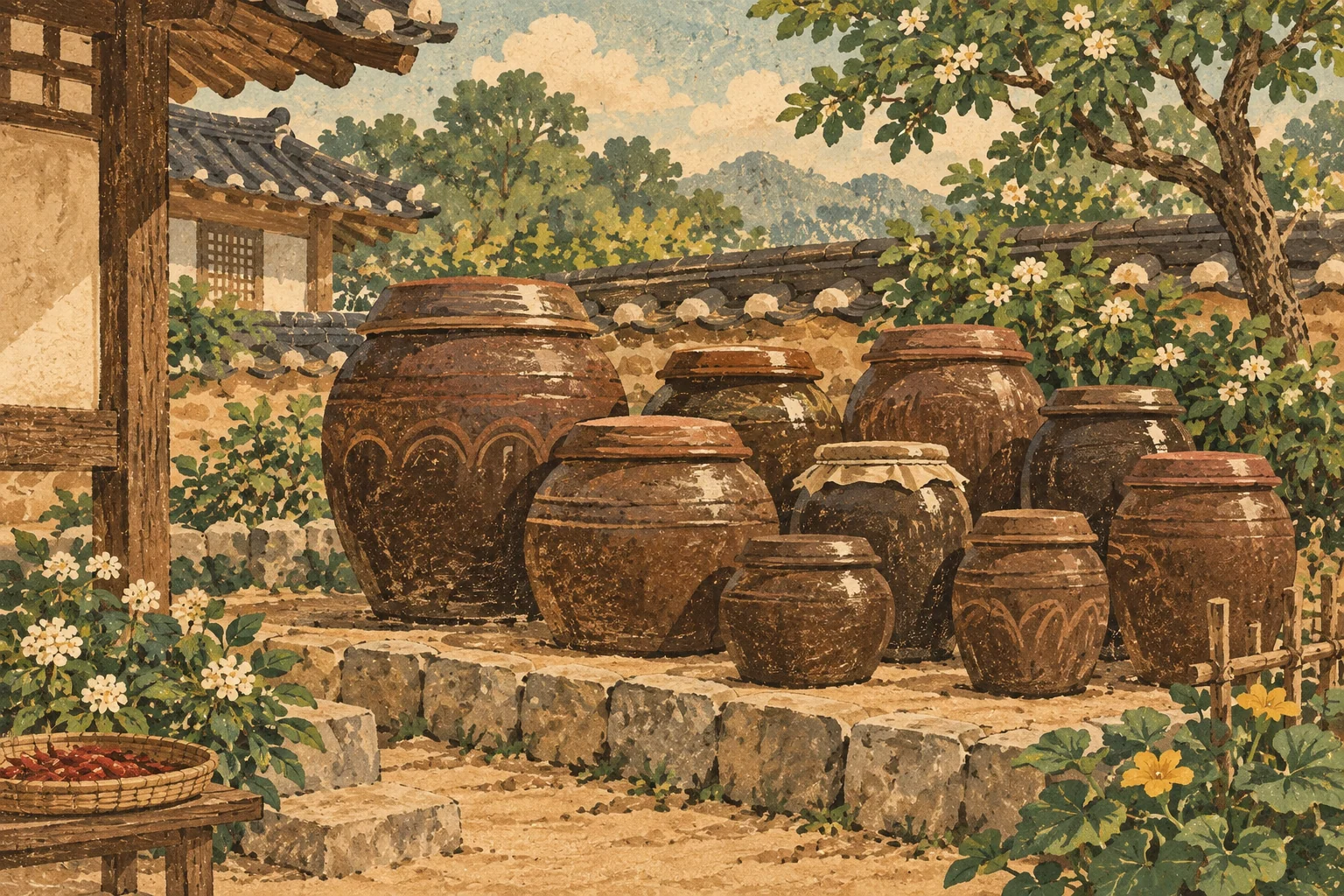 Home · Food storage
Jangdokdae (Jar Platform)
An outdoor household area where earthenware jars were arranged to store and ferment foods and sauces.
Discover the detail →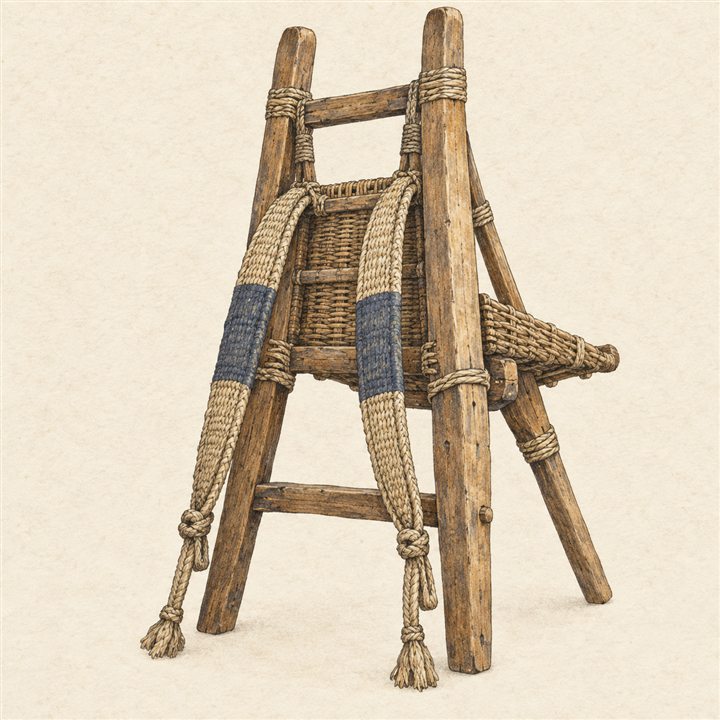 Tool · Work
Jige (Back Carrier)
A traditional Korean frame carrier worn on the back to transport loads.
Discover the detail →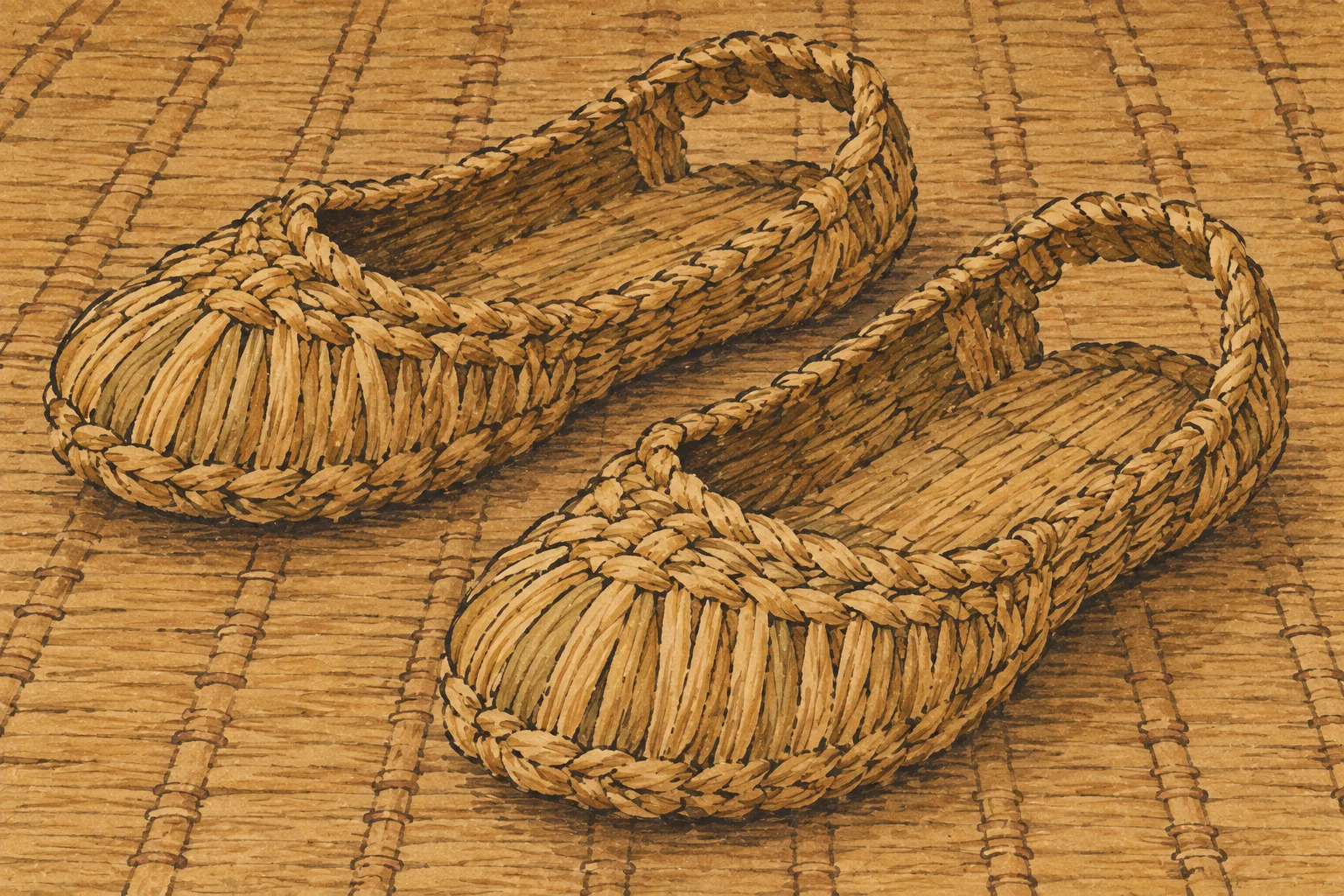 Clothing · Footwear
Jipsin (Straw Shoes)
Woven footwear made from plant fibres such as straw, with construction and use shaped by local materials and needs.
Discover the detail →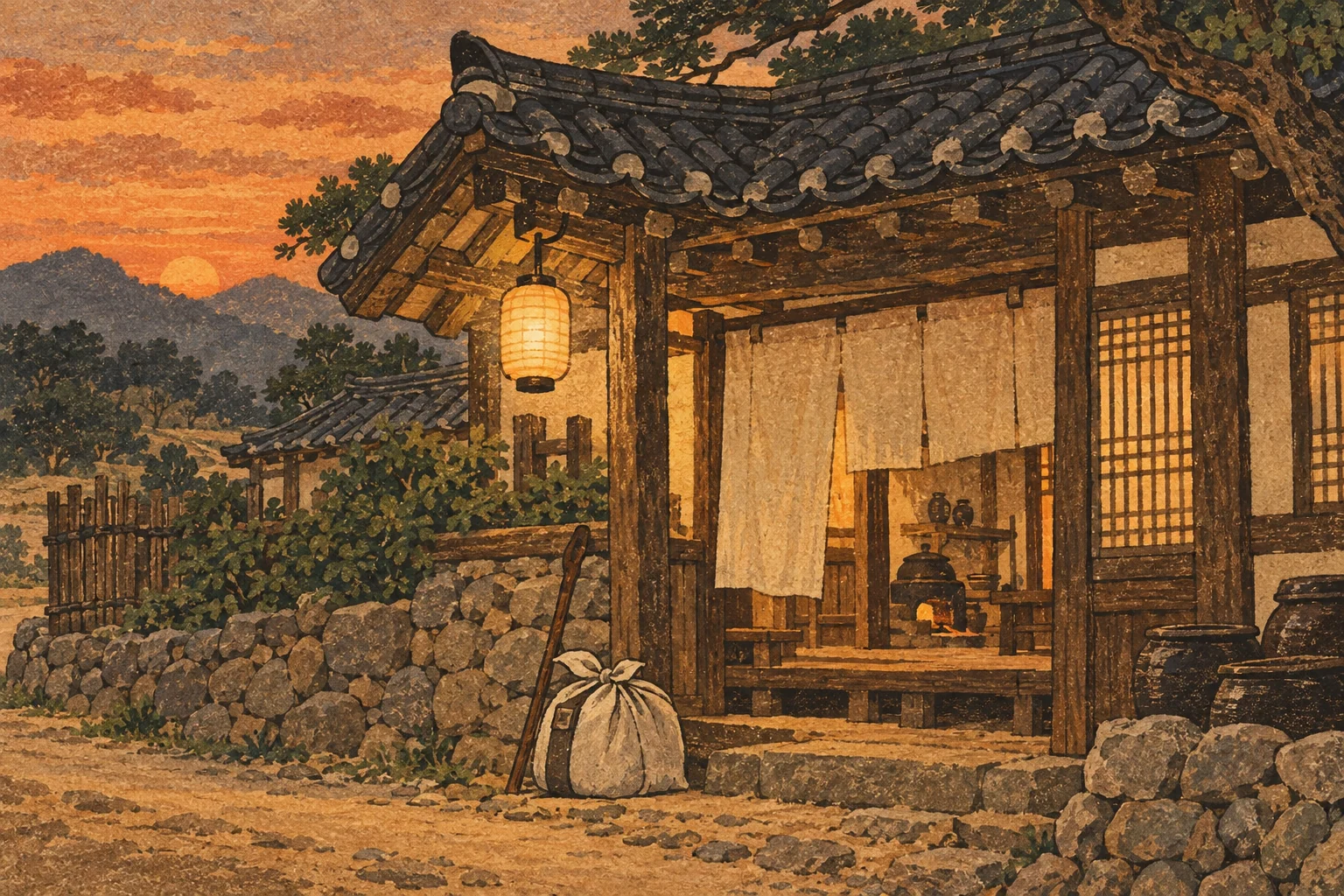 Food · Travel · Place
Jumak (Roadside Inn)
An inn or tavern that could serve food and drink and offer lodging or a stopping place, depending on its setting and period.
Discover the detail →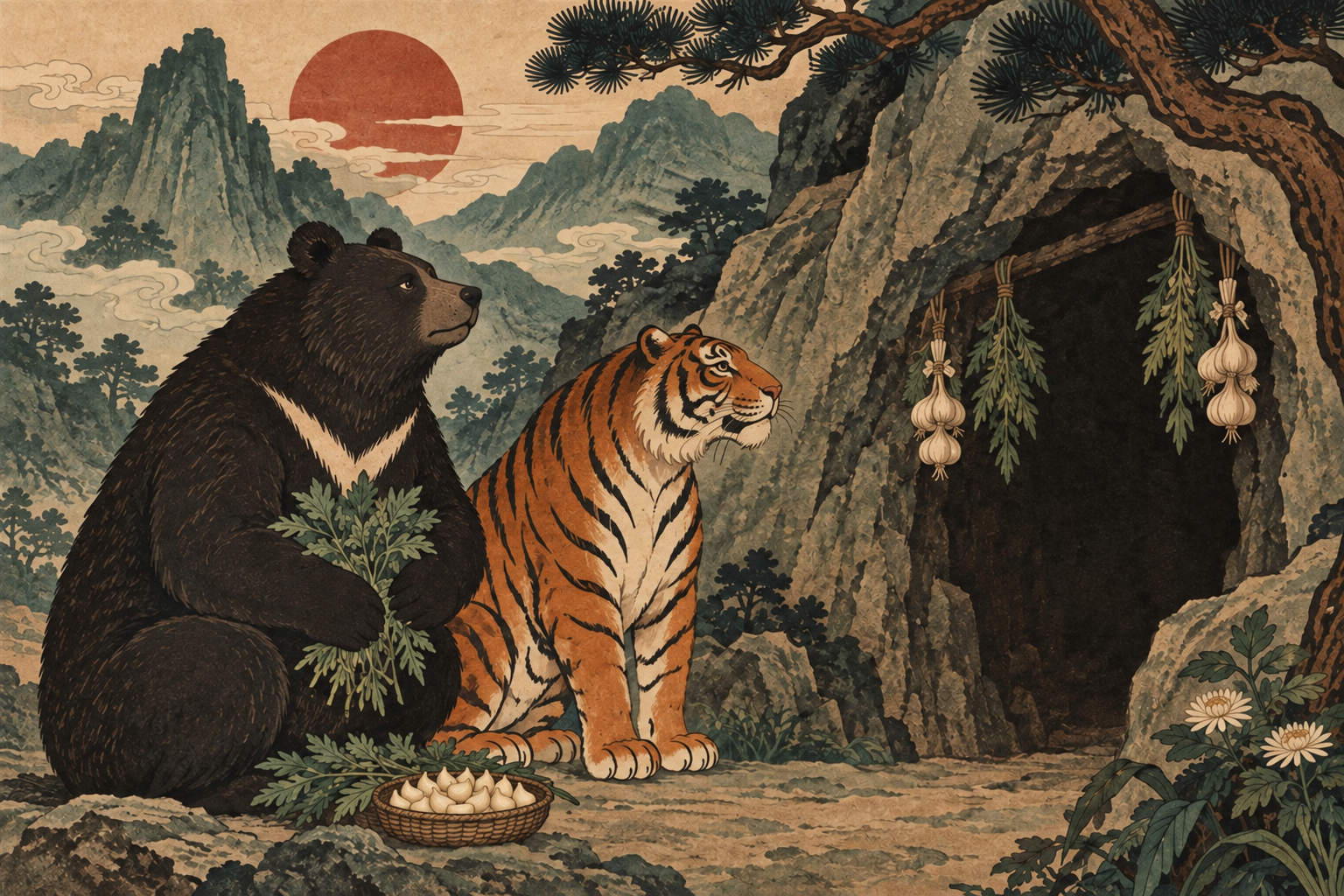 Plants · Textual detail
Mugwort and Garlic in the Dangun Account
The two foods named in the bear-and-tiger episode of the Samguk Yusa account; this note stays with that passage rather than assigning them a universal ritual meaning.
Discover the detail →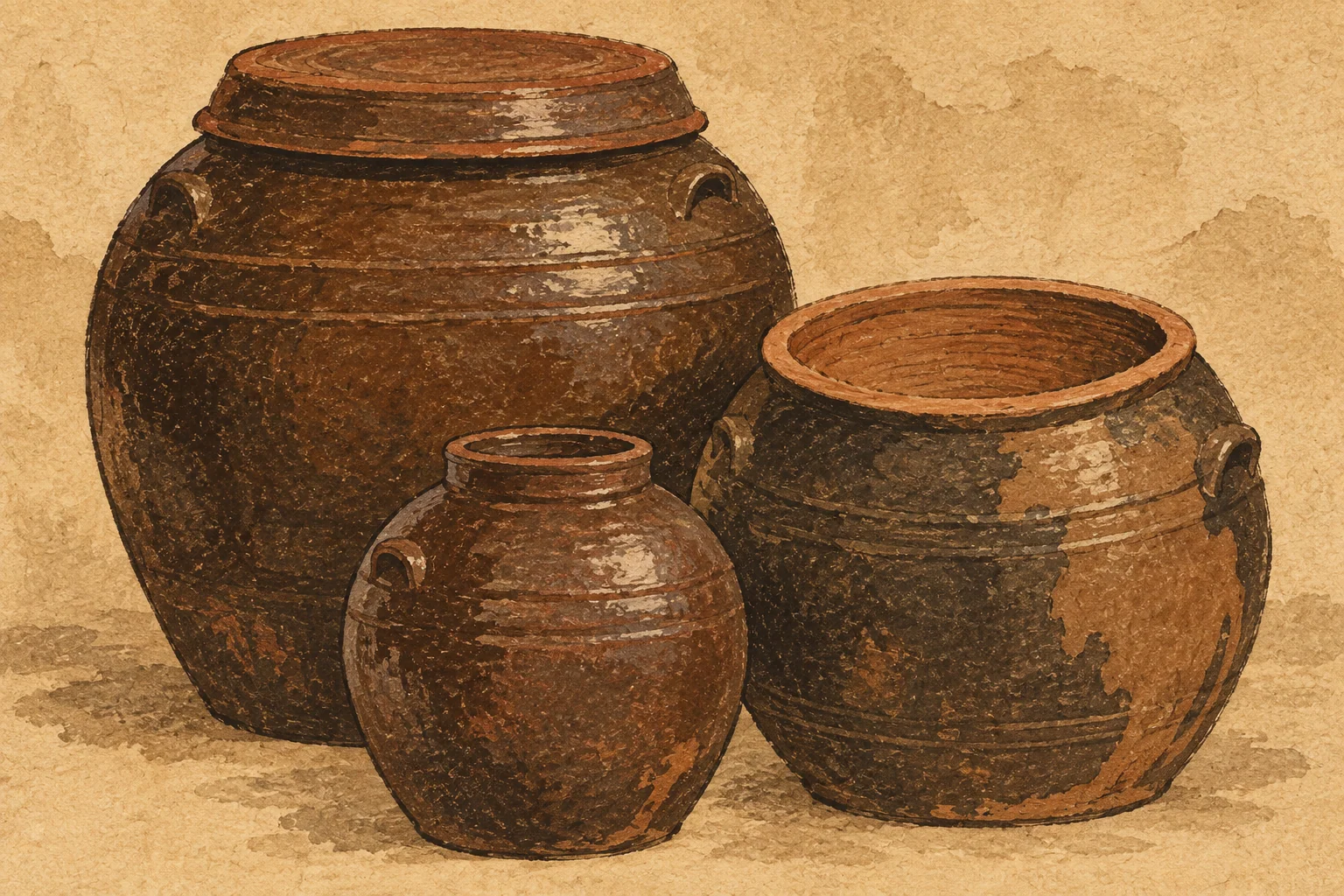 Household object · Pottery
Onggi (Korean Earthenware)
A broad category of Korean earthenware vessels associated with food storage and everyday use, with forms and finishes that vary.
Discover the detail → Food · Story detail
Patjuk (Red-Bean Porridge)
A thick porridge made with red beans; one recorded version of The Sun and Moon Siblings uses it as the food carried home to the children.
Discover the detail →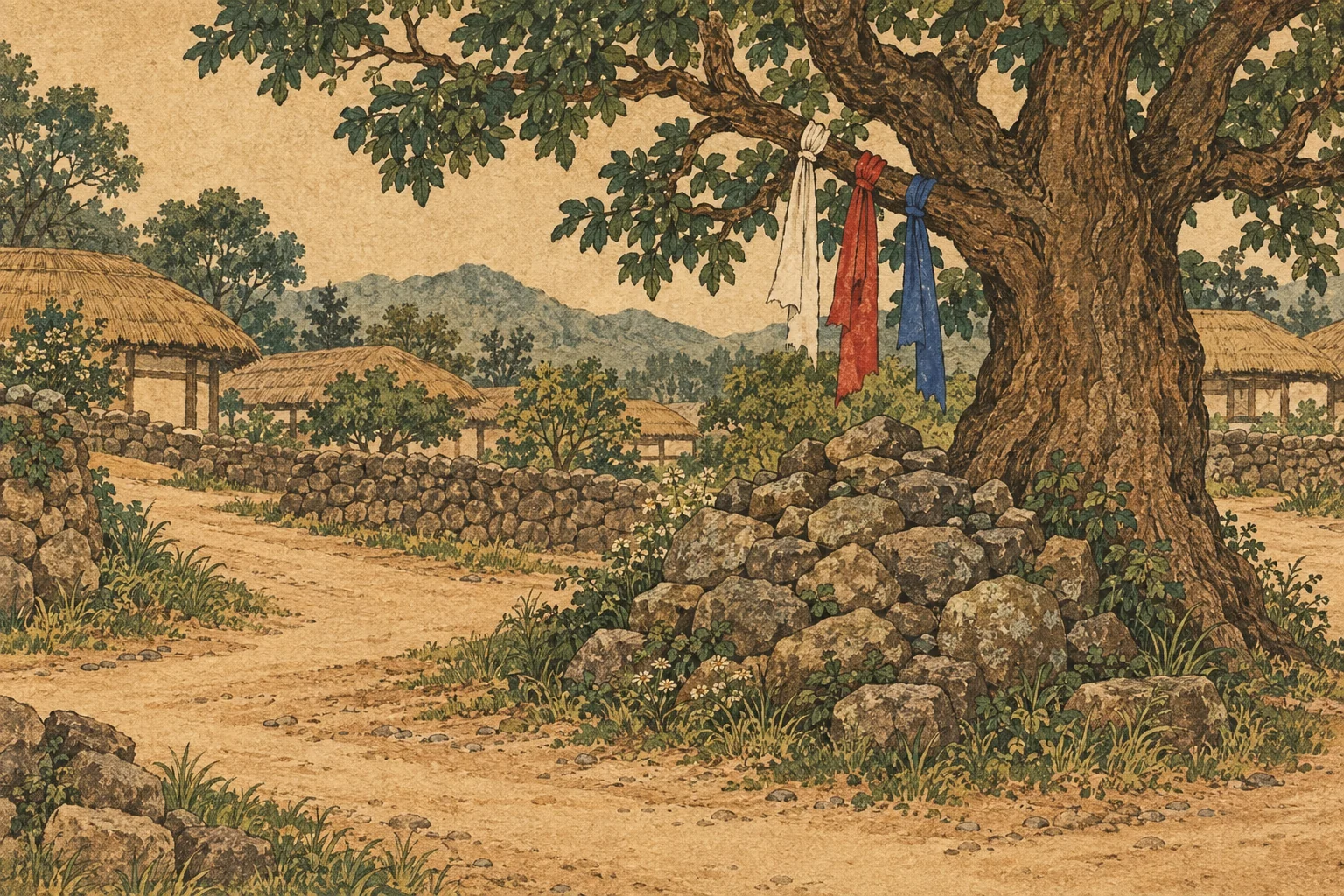 Belief · Community · Place
Seonangdang (Village Shrine)
A local shrine or sacred place associated with village protection and communal ritual in some Korean traditions.
Discover the detail →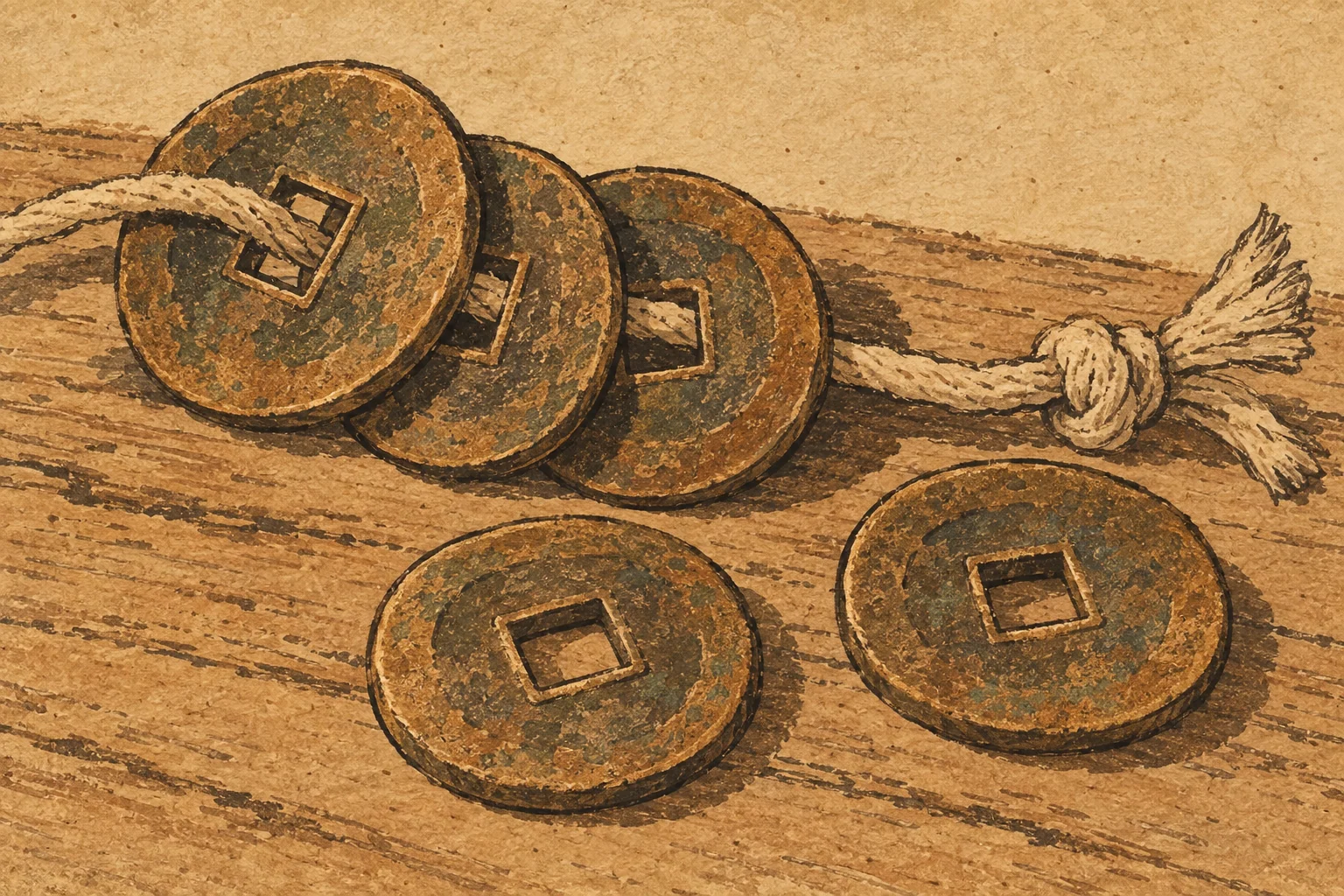 Money · Trade
Yeopjeon (Cash Coin)
A broad term for historic East Asian-style cash coins, commonly round with a square central hole; Korean issues and circulation changed over time.
Discover the detail →