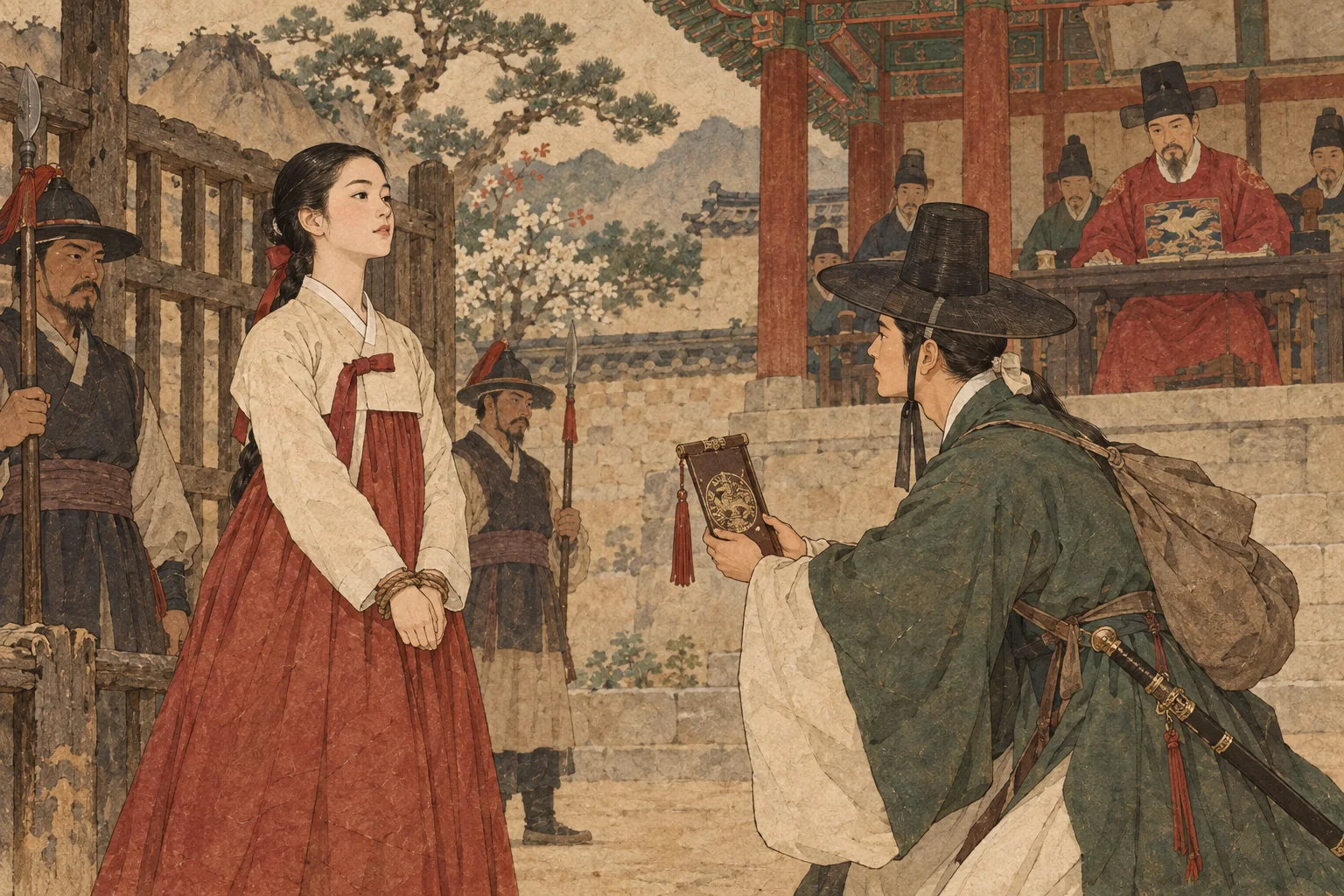
Amhaeng-eosa: The Secret Royal Inspector
암행어사
Why Mongryong's return in poor-looking clothes can overturn a magistrate's feast, and what the historical inspector's commission and horse token actually meant.
An Official Whose Arrival Was Kept Secret
An amhaeng-eosa (암행어사) was a royal inspector sent secretly into local districts in Joseon. Concealment helped the official discover conditions that a public visit might hide. The role makes Mongryong’s unannounced return in Chunhyang more than a disguise chosen by a disappointed lover: his apparent lack of power conceals an official commission.
The Academy of Korean Studies entry on amhaeng-eosa describes appointments made by the king, inquiries into local officials and people’s hardships, and reports submitted after the mission. The institution belonged to government oversight. An inspector was not simply a wanderer free to punish anyone he disliked, and the role was distinct from that of the local magistrate he might investigate.
What Is the Horse Token?
The mapae (마패), often shown when an inspector reveals his identity in popular depictions, had a practical purpose. The National Museum of Korea describes a token that authorized an official traveling on public business to use government horses. Horses were available through a network of stations; horse images on a token indicated the authorized number. It was not an object issued only to secret inspectors.
The museum’s examples also carry issuing information on the reverse. Thinking of the token as part of a travel and authorization system makes it more understandable than treating it as a magical badge. You can view actual surviving objects in the National Museum of Korea’s mapae introduction.
Why the Feast Becomes a Turning Point
In the selected Chunhyang telling, Mongryong asks about the magistrate on the road, hears Chunhyang’s account in prison, and attends the feast dressed as a poor man. Those stages move him from hearing local criticism to encountering the person directly threatened by the official.
The feast places the magistrate’s public confidence beside an authority he has failed to recognize. Mongryong’s verses expose the conduct hidden behind the celebration. Revealing the commission then changes who has to answer questions. The setting matters: an occasion arranged to display one man’s power becomes the scene of its challenge.
This is the dramatic arrangement of the story. A historical institution makes it intelligible, but the exact sequence of the feast should not be taken as a standard procedure followed in every inspection.
How Does the Inspector Differ from a Magistrate?
For these stories, a simple distinction is enough: a magistrate governs a locality, while the royal inspector arrives with a separate mission to examine conduct there. In Chunhyang, the problem is the local official’s abuse of his position, and the return brings an authority capable of challenging him.
Janghwa and Hongryeon uses a different arrangement. Jeong Dong-u takes the local magistrate’s vacant post and hears the sisters. He does not return as Mongryong does, nor does a secret royal commission solve the case. His progress depends on listening and then examining the false evidence. Similar English words such as “official” can hide these different roles.
Read the Reveal with New Eyes
Return to Mongryong’s arrival and ask who recognizes him as a former lover, who judges him by his clothes, and who knows about his commission. Those are three different kinds of recognition. Their separation makes the public reveal work—and explains why the reunion needs more than a change of costume.