 A READING PATH · 5 STORIES
Daughters Who Change the Ending
These women travel, refuse, return, and insist on being heard. Five stories ask what happens when a household depends on someone it has failed to protect.
More Than One Kind of Heroine
“A devoted daughter” can sound like a complete description, until you look at what the daughter actually has to do. Bari leaves for a distant garden. Simcheong leaves for the sea. Chunhyang stays in prison rather than submit. Kongjwi returns from the pond, and Janghwa and Hongryeon return to demand a hearing. Their movements are different, and so are the wrongs that make them necessary.
Read the stories first if you would like their endings to remain a surprise. The comparisons below follow the versions published on this site; other performances and editions can change the journeys and resolutions.
Bari and Simcheong: Who Makes the Homecoming Possible?
In Bari-degi, the father who abandoned his daughter later needs a medicine only she can obtain. Her family asks her to cross a distance it cannot cross for itself. Access to the remedy comes with a new demand from the garden’s keeper, and her return brings two children as well as flowers. The errand has taken up a life, not merely a journey.
Simcheong begins with care already underway. Her labor feeds her blind father before his enormous rice vow makes separation seem unavoidable. Her farewell arrangements matter: she leaves food and asks neighbors to look after him. Even the miraculous lotus cannot answer her remaining question of where he is. As queen, she organizes the feast that finally brings him within reach.
The daughters do not simply wait to be restored to their households. Bari stops the funeral bearers; Simcheong creates a gathering large enough to find one missing man. Their fathers’ recoveries depend on those acts as well as on supernatural aid.
Chunhyang: Staying Put Can Be an Action
Chunhyang offers a different kind of determination. The magistrate tries to turn an entry in the courtesan register into control over her. Refusing him leaves her imprisoned and exposed to punishment. She does not travel to another world, but the refusal is the action around which everyone else’s choices turn.
Mongryong’s return matters because he can publicly challenge the official. Removing Chunhyang’s name from the register also addresses the claim used to constrain her. The romantic reunion and the change in her recorded status belong to the same resolution, while answering different parts of the conflict.
Kongjwi and the Sisters: Being Seen Is Not Being Believed
The magistrate finds Kongjwi through a shoe, yet later fails to recognize the woman impersonating her. In Kongjwi and Patjwi, a flower and a bead keep Kongjwi present until an old woman provides shelter and a meeting. The decisive return gives her a chance to speak about her own murder.
Janghwa and Hongryeon also need more than an appearance. The early magistrates cannot bear to see the ghosts. Jeong listens, but even he initially accepts the false evidence. Justice requires a second hearing and the physical examination the sisters demand.
Put the meal beside the opened object. Both interrupt a comfortable mistake: a man thinks he knows who lives in his home, or what a piece of evidence proves. The women make the story continue until that confidence is tested.
The Endings Give Back Different Things
Bari restores her father to life. Simcheong finds hers and witnesses his sight return. Chunhyang leaves Namwon with Mongryong. Kongjwi resumes a life stolen from her. Janghwa and Hongryeon receive burial and vindication, without returning to the childhood household in this site’s ending.
Those differences are worth keeping. “Happy ending” is too broad to describe a cure, a marriage, a recovered identity, and a cleared name as though they were the same gift. These stories become richer when the reader asks exactly what has been restored—and what cannot be restored at all.
Read in this collection
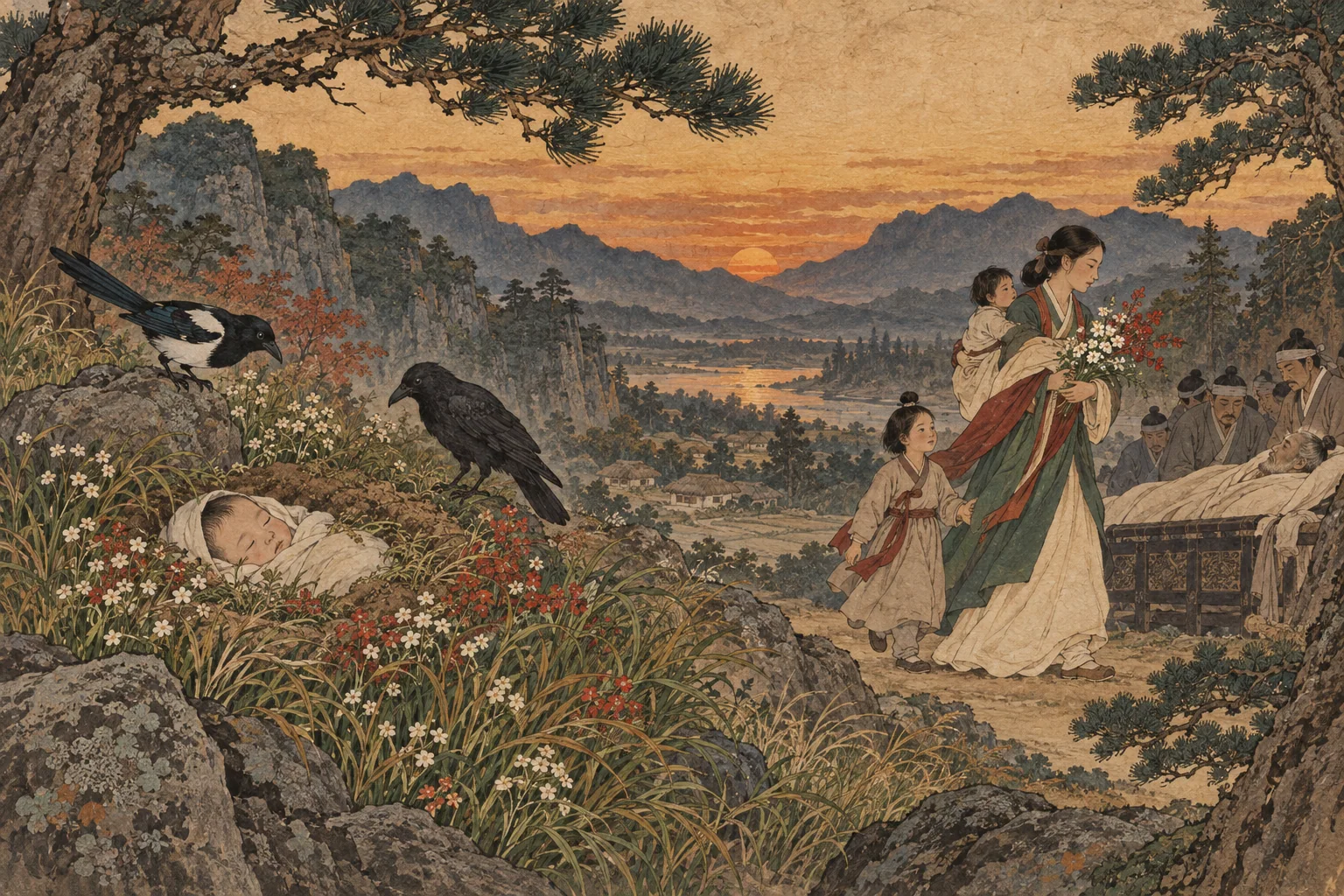 01 · 3 MINBari-degi and the Life-Restoring FlowersThe daughter her father abandoned is called home when he falls ill. To find his medicine, Bari must leave again—this time for a distant land whose keeper will not give up his secret freely.↗
 02 · 6 MINThe Story of SimcheongSimcheong keeps her blind father fed until a promise he cannot afford puts their life together in danger. To pay for the offering, she agrees to go with merchants to the sea.↗
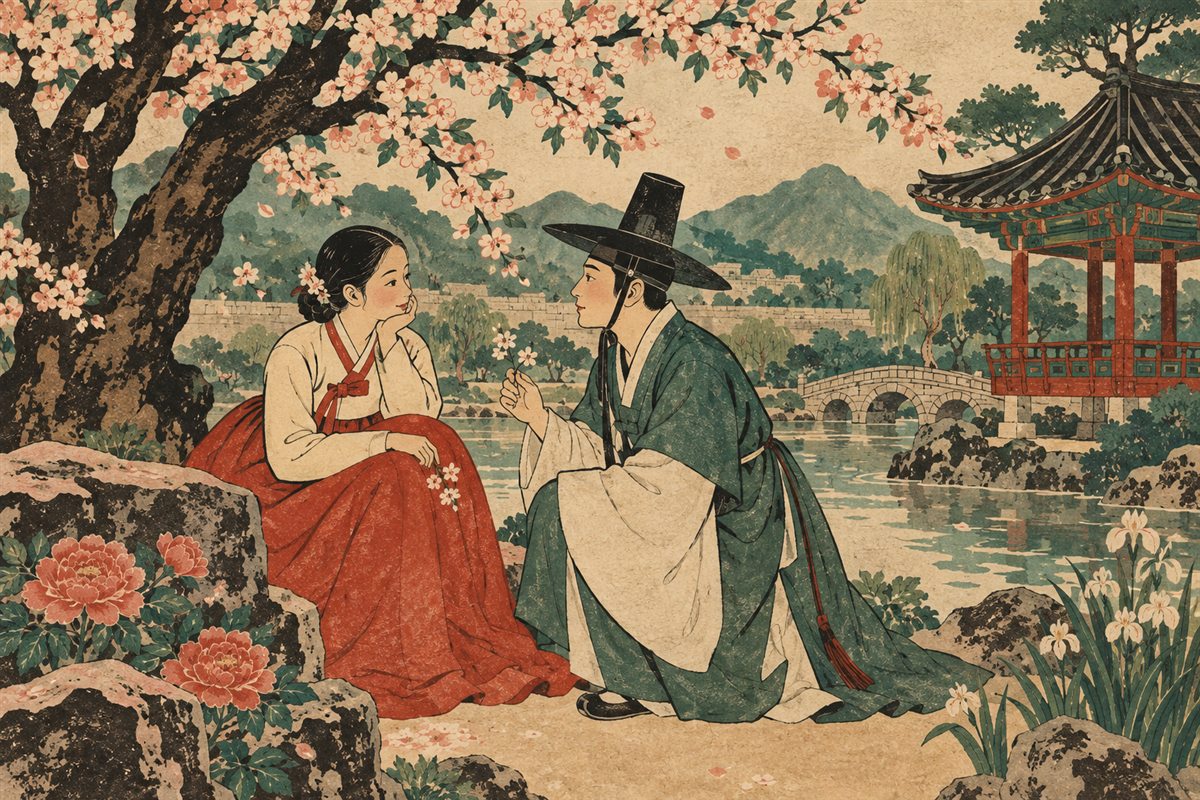 03 · 6 MINThe Tale of ChunhyangChunhyang and Mongryong promise to remain true to one another. When he must leave Namwon, she faces a new magistrate who expects her to obey him instead.↗
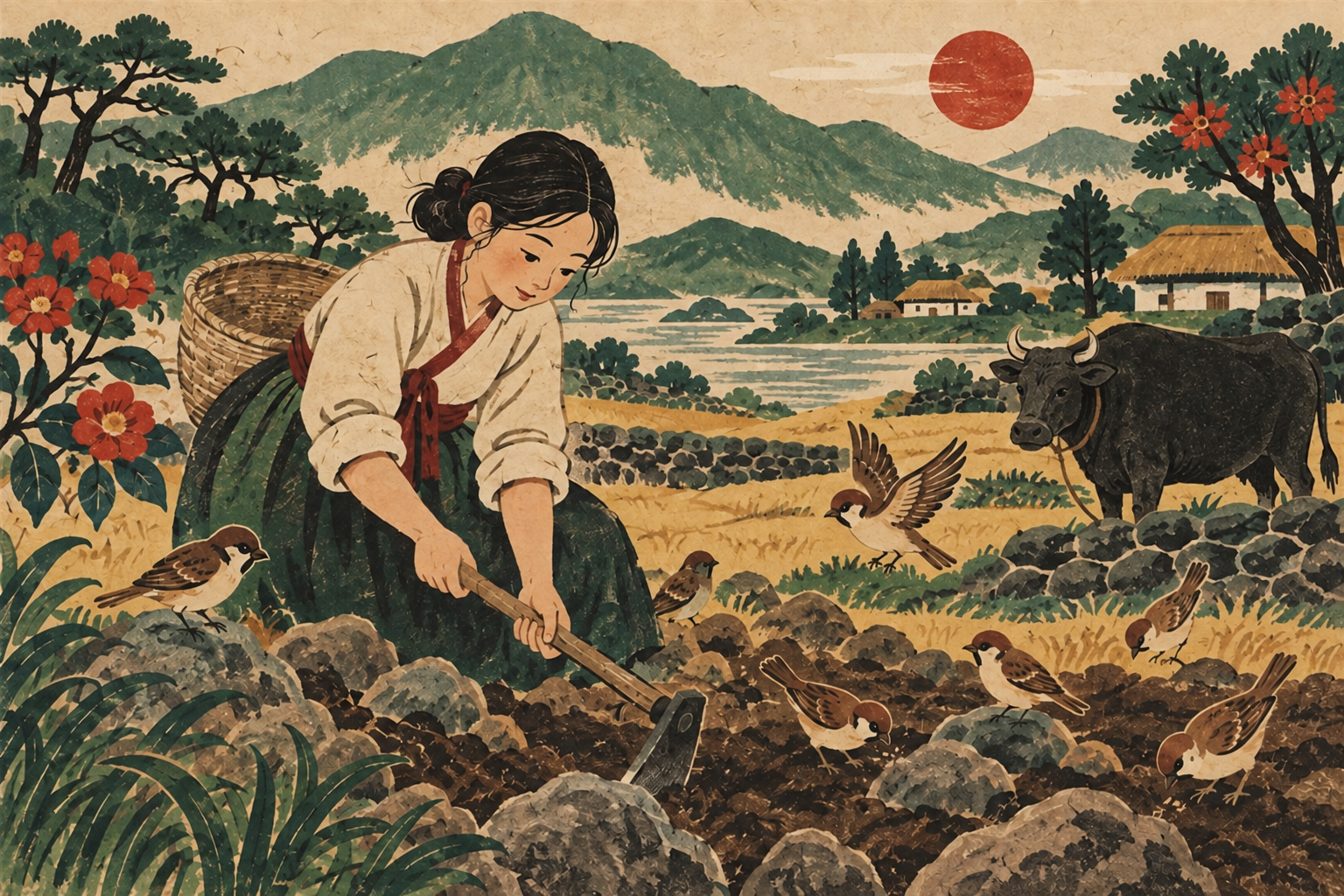 04 · 4 MINKongjwi and PatjwiKongjwi faces chores she cannot possibly finish and finds help in the most unexpected places. A lost shoe opens a new life, but her stepsister will not let her keep it.↗
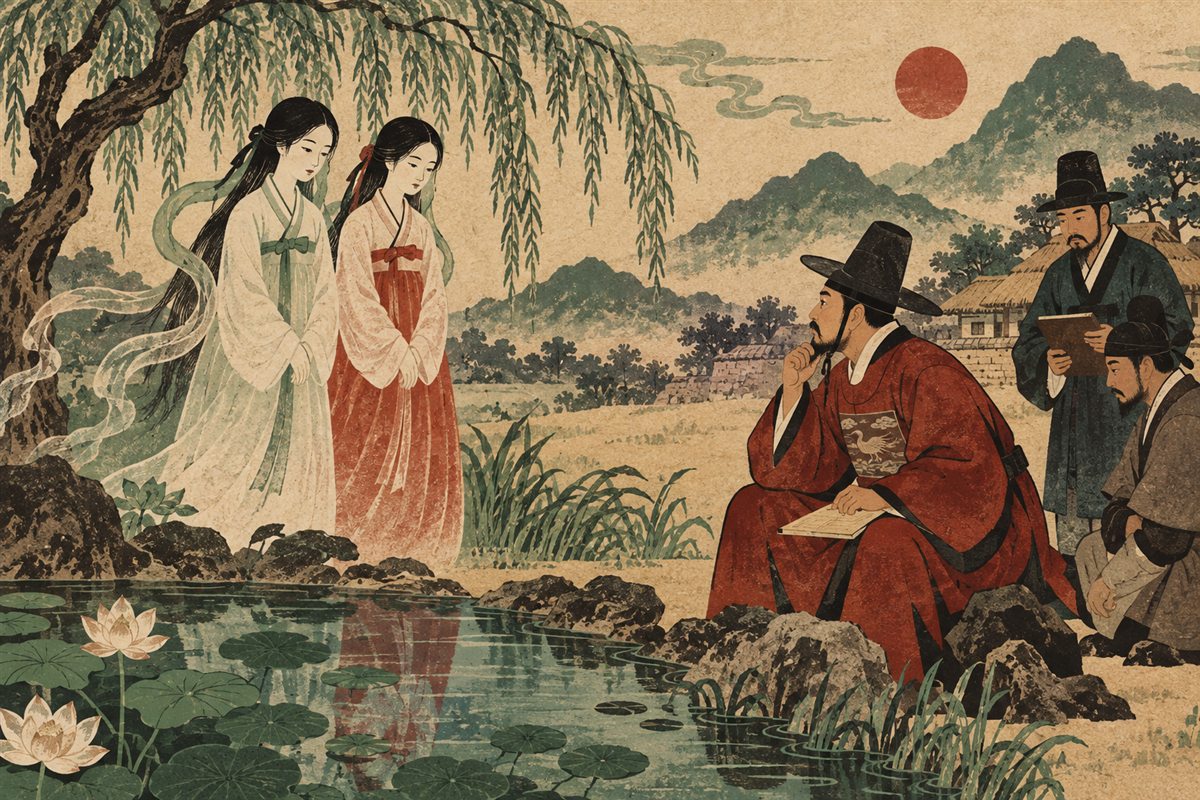 05 · 5 MINJanghwa and HongryeonA lie destroys two sisters' lives. When their ghosts come to demand justice, the next magistrate must do what their own family would not: listen, and look closely at the evidence.↗
Being guides
Meet the animals, spirits, and otherworldly figures behind these tales, and discover the different roles they play.
Korean Context guides
Look more closely at the foods, objects, and customs that give these stories their texture.