Hyo: Care for Parents in Korean Stories
효
Food, shelter, medicine, and reunion make care for parents visible in Korean tales. Explore hyo without reducing three very different families to one moral.
More Than the English Word “Obedience”
Hyo (효, 孝) is often translated as filial piety. That English phrase can feel distant until a story shows someone earning a parent’s meal, offering shelter, or searching for medicine. In these tales, care has a material form and a cost.
The Academy of Korean Studies entry on hyo begins with affection and respect toward parents. It explains how Confucian thought gives this relationship a central ethical place, including both support during life and observance after death. Hyo is therefore broader than carrying out a particular command. Knowing the concept helps identify a tension in a story; it does not settle every difficult choice the characters face.
Heungbu: Care before the Swallow Arrives
The 1833 telling of Heungbu and Nolbu begins the contrast between the brothers with their parents. Heungbu comes home after marrying and uses his wife’s resources to support them. When those resources are gone, the household returns to work. Nolbu refuses help despite his prosperity.
This makes the magical seed part of a conflict already established through ordinary needs. The swallow is not the first chance to distinguish the brothers. Water, meals, wages, and a place to live have done that work before the gourds appear. At the end, Heungbu’s hospitality expands to include Nolbu and his wife as well.
Simcheong: Who Pays for a Promise?
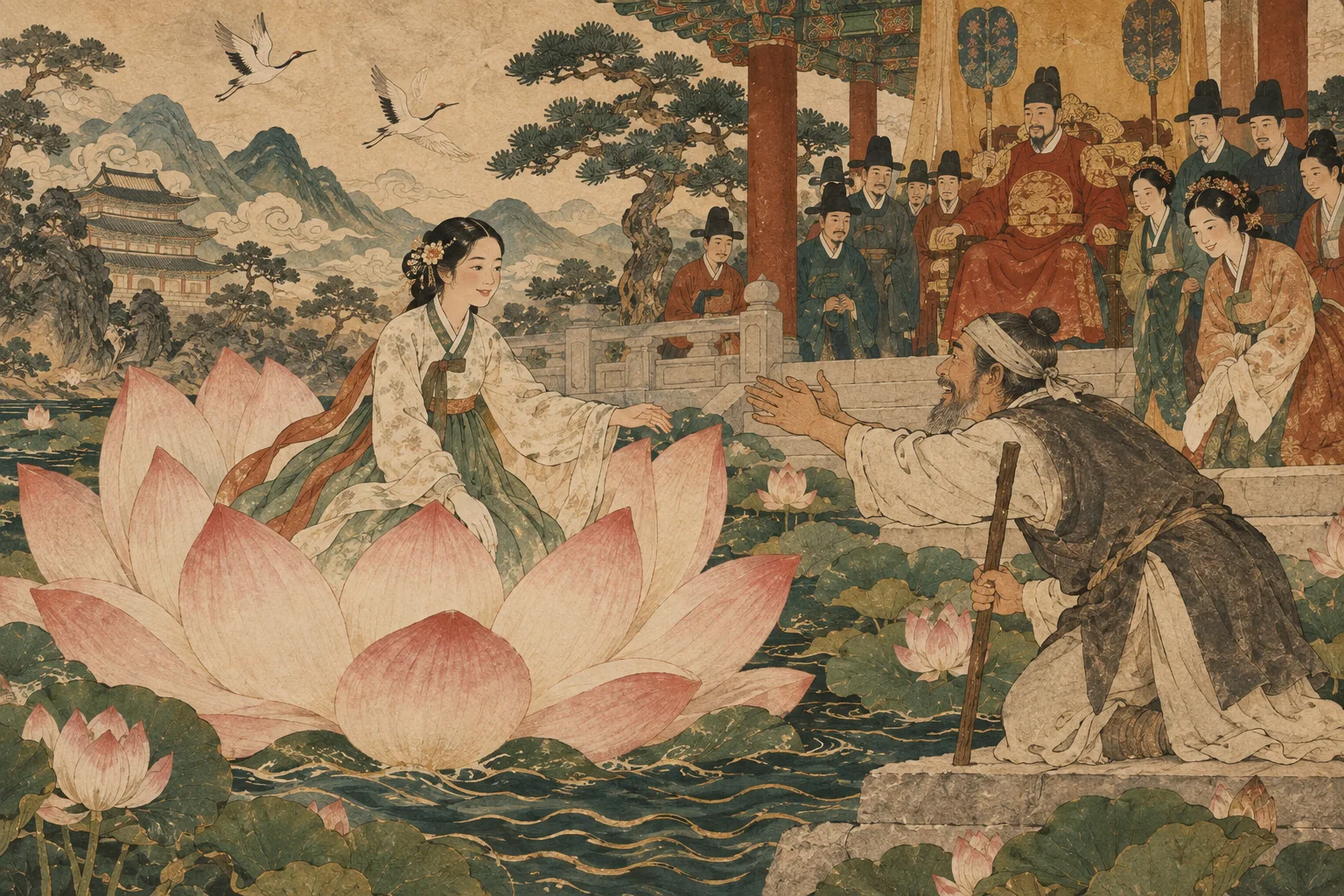
Simcheong sustains her blind father before he makes the rice vow. His hope of restored sight creates an obligation the household cannot afford. Calling her a filial daughter describes the relationship, but does not by itself explain the poverty, the promise, the merchants, or the terrible price of meeting it.
Her preparations before leaving keep practical care in view. She arranges food and neighbors’ help, while the father begs her to remain when he learns the truth. The scene is more complicated than a parent giving an order and a child obeying. Love and the consequences of the vow pull against one another.
The eventual feast also matters. Her new position lets her organize a search for her father through a public gathering. Reunion requires action after the miracle, not merely the receipt of a reward.
Bari: Care in a Family That Abandoned Her
Bari-degi makes the family bond uncomfortable in another way. Her father excluded her, but the household later needs her to obtain medicine. When she returns, the procession does not stop for her call, and she has to halt it with her own power.
The story belongs to a shamanic narrative tradition with a wider ritual role; it should not be explained away as simply an illustration of a Confucian term. Reading it beside Simcheong is useful precisely because the abandoned daughter’s situation is different from that of a child raised with affection. The shared act of helping a father does not erase the different histories of care.
A Way to Discuss the Stories
Instead of asking only whether a child is dutiful, ask three more concrete questions: What care is needed? Who provides it? What does it cost that person? Heungbu offers resources and a home. Simcheong’s journey begins with daily labor and an unaffordable vow. Bari’s journey answers a request from the family that rejected her.
Those questions leave room for admiration and unease at the same time. The tales can make devotion moving while also making a reader notice unequal demands. They are rich stories to discuss, rather than a complete set of instructions for families today. Follow the comparison further in Daughters Who Change the Ending.