Gotgam (Dried Persimmon)
곶감
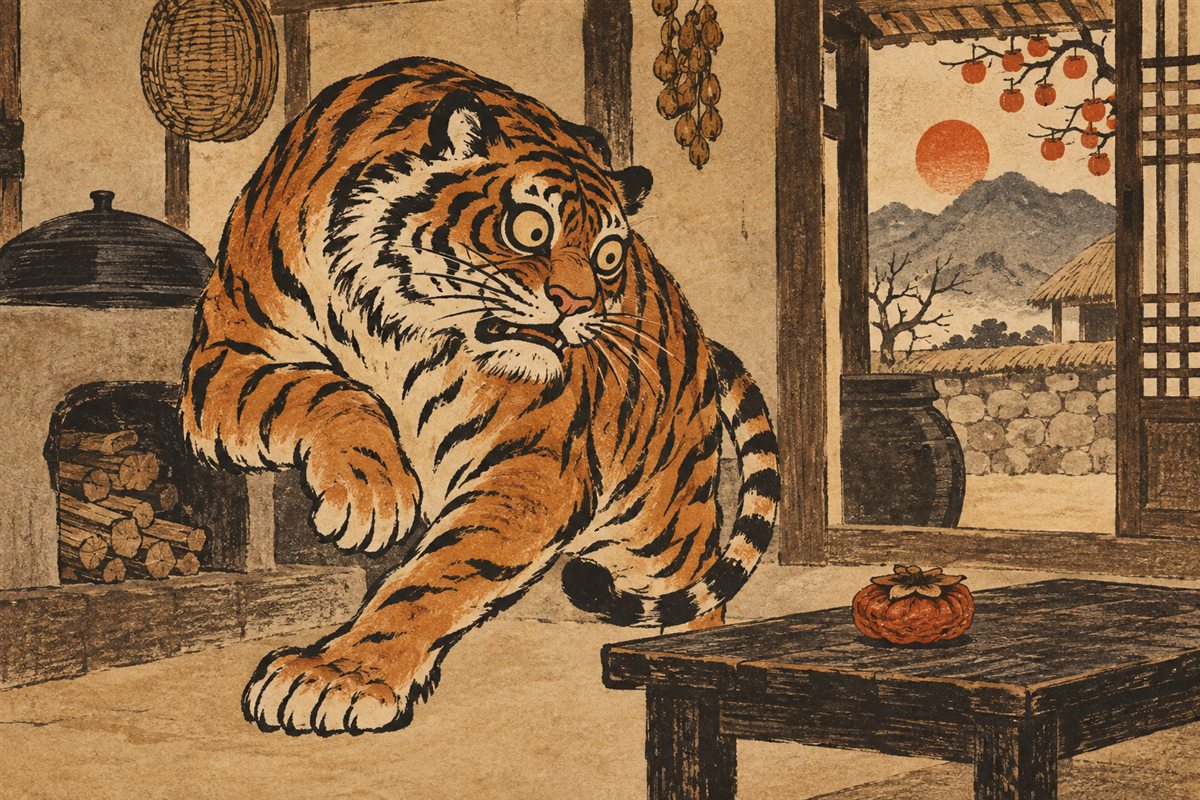
A dried persimmon, the ordinary food at the center of a tiger’s comic misunderstanding.
Research note · see sources and scope belowOne-Sentence Definition
Gotgam (곶감) is a Korean term for a dried persimmon.
What It Does in This Story
The child stops crying after being offered one. The tiger hears this and wrongly imagines the fruit must be a frightening creature.
A Regional Food History
That joke needs only a familiar dried fruit; it does not establish where or how the fruit was made. A separate account of Sangju gotgam documents a regional production tradition: persimmons are peeled carefully, hung with space between them in a well-ventilated drying place, and dried. The same source traces tribute records to the fifteenth century and describes later uses in everyday food, seasonal offerings, and hospitality. These details belong to the Sangju case and should not be projected onto every household or the story’s setting.
The regional food history and the folktale are useful beside each other, but they answer different questions: one documents a local agricultural and food tradition; the other uses the fruit in a comic misunderstanding.
Sources
The story-specific role is drawn from the tiger entry in the National Folk Museum of Korea’s Encyclopedia of Korean Folk Symbols. The regional account below refers only to Sangju and does not identify the folktale’s place or period. This page remains a prototype pending comparison with a complete recorded version.
References: National Folk Museum of Korea, Encyclopedia of Korean Folk Symbols, “Tiger”; Academy of Korean Studies, Encyclopedia of Korean Culture: Sangju Gotgam.