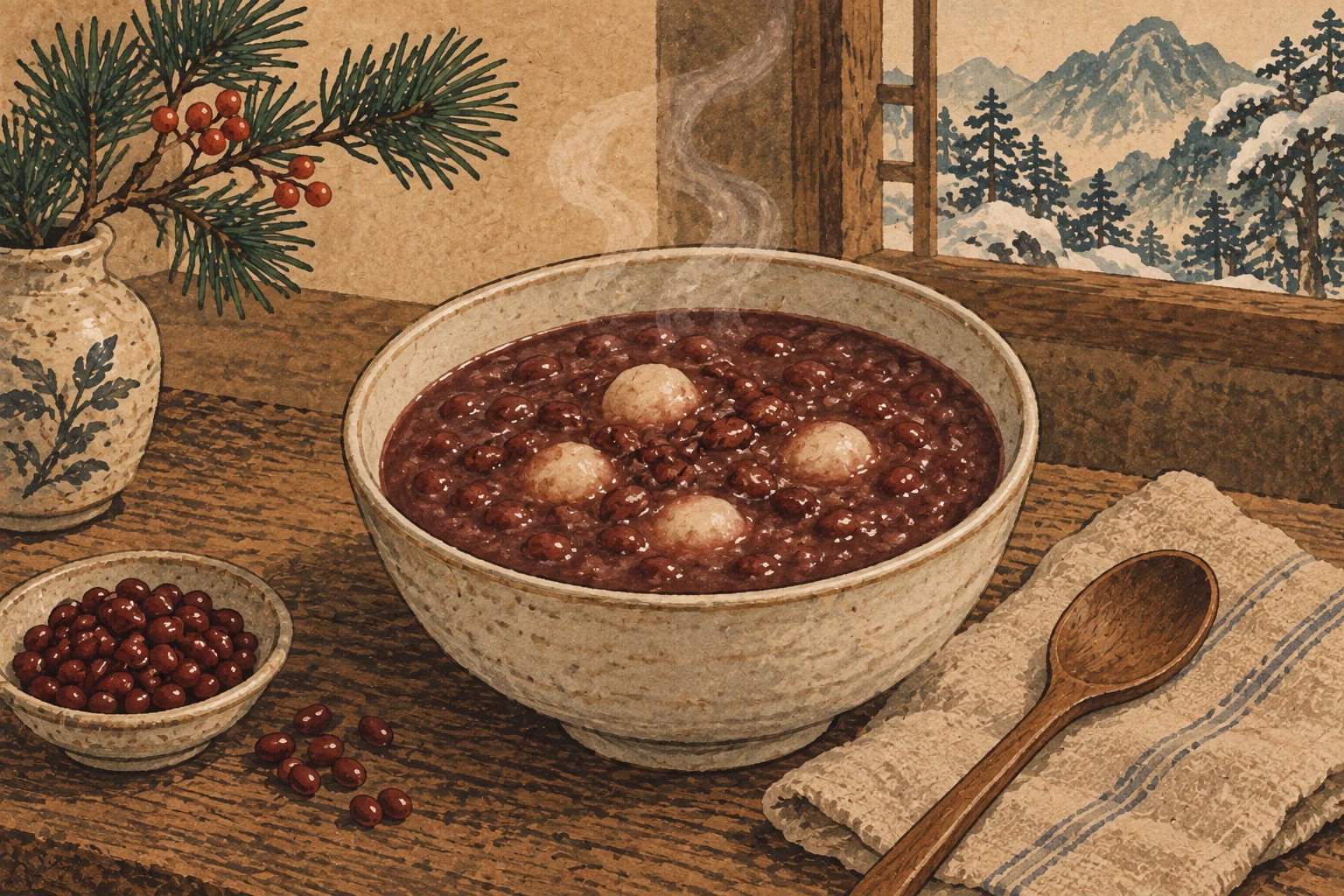
Patjuk (Red-Bean Porridge)
팥죽
Discover how red-bean porridge is made, why it is associated with the winter solstice, and what a mother's lost supper means in The Sun and Moon Siblings.
A Meal before It Becomes a Symbol
Patjuk (팥죽) is red-bean porridge. In the Sangju telling of The Sun and Moon Siblings, a mother carries a large container of it home for her children. Before the tiger takes anything else, it takes their meal.
That order matters. The food connects the mother’s work outside the house with the children waiting inside. The encounter first threatens the ordinary act of bringing supper home. Knowing what is in the container makes the loss more immediate than an unexplained bundle would.
What Is in the Bowl?
Red beans are boiled until soft and strained; rice can be cooked in the bean liquid. The small pale balls often visible in a bowl are saealsim, rice-flour dumplings whose name evokes little birds’ eggs. Salt or sugar may be used according to preference. The institutional account of Dongji patjuk describes these ingredients and the resulting thick porridge.
Why Is It Associated with Winter?
Dongji is the winter solstice. Seasonal customs connected red-bean porridge with protection: portions could be placed or scattered at a gate or jar platform. The red color was associated with driving away harmful spirits. The same food was also eaten as a meal or snack and sold to travelers.
The mother in the Sangju story is carrying food to her children; the telling does not say that the day is Dongji. You can understand her meal without turning the scene into a solstice ceremony.
Two Foods, Two Tiger Stories
Compare patjuk with gotgam, the dried persimmon. In one tale the tiger takes food that a family needs. In the other, a food’s name makes it imagine a creature it cannot face. Both stories begin near a household, but hunger and misunderstanding lead them in different directions.
Read next: The Sun and Moon Siblings, then The Tiger and the Dried Persimmon.
Further Reading
- Korean Oral Literature Compendium, Sangju oral record, 1981.
- Academy of Korean Studies, Dongji Patjuk, for ingredients and seasonal customs.