Jangdokdae (Jar Platform)
장독대
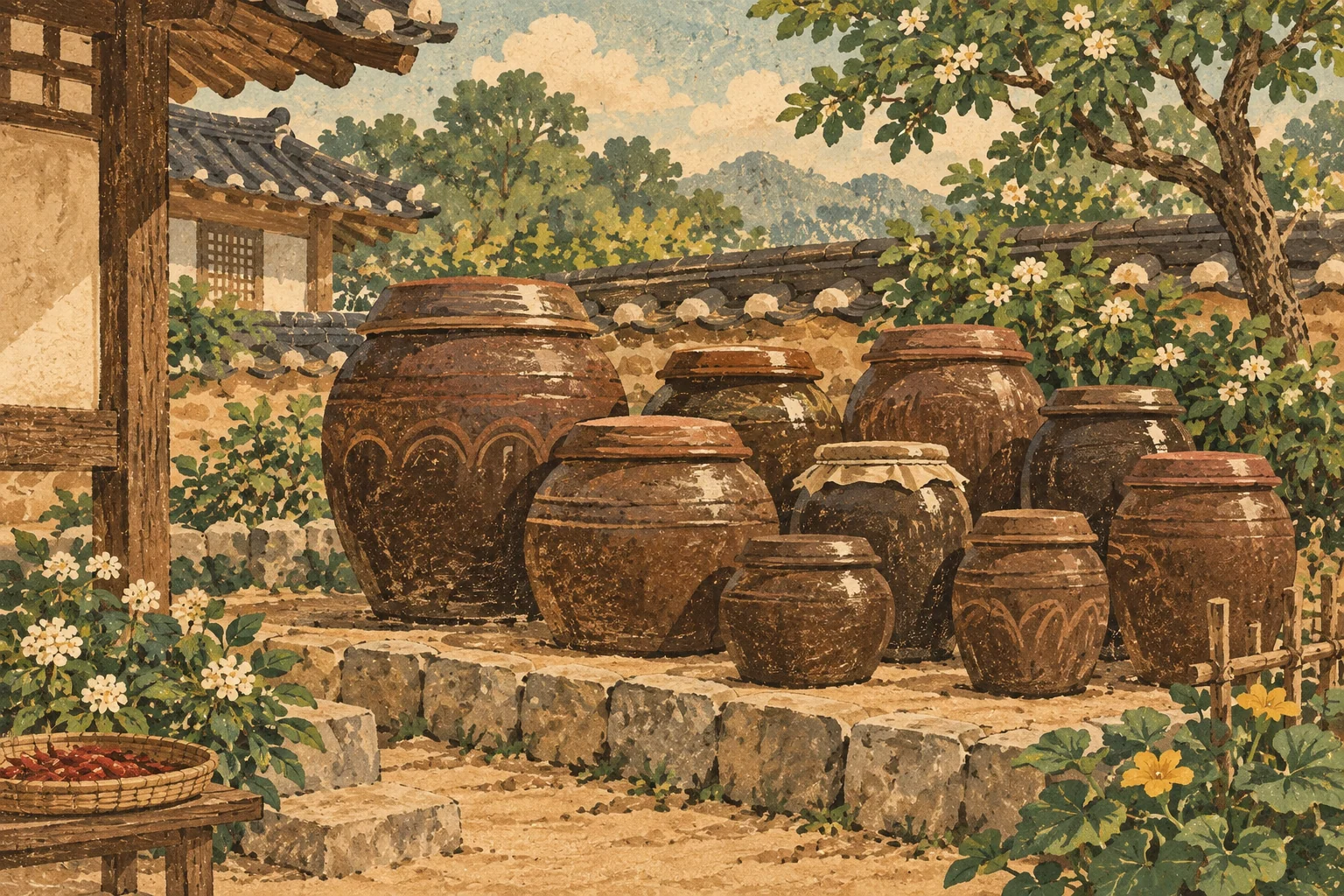
An outdoor household area where earthenware jars were arranged to store and ferment foods and sauces.
Research note · see sources and scope belowOne-Sentence Definition
A jangdokdae (장독대) is a household area for arranging storage jars, often outdoors in a sunny, accessible part of the home compound.
What Was Kept There
Jars commonly held soy sauce, soybean paste, and chili paste; some households also kept smaller containers for other foods. The Academy of Korean Studies records a frequent arrangement with larger jars behind and smaller ones in front, but the number and layout changed with the household and region. Homes with little yard space could place jars in a sunny area near the kitchen; the platform itself might be round in Jeju or fenced and roofed in some southern areas.
Why the Place Matters
The platform was placed where water could drain, sometimes raised over stones or gravel. Its position could connect the kitchen, yard, and food-storage routine. The source also records that seongju, a house guardian, was often enshrined at the jangdokdae in some regions. That is a documented household-belief context, not a universal feature of every platform.
For the vessel itself, see Onggi. The jar and the platform are related but distinct: onggi names a family of vessels, while jangdokdae is the household place or arrangement where jars were kept. A story that mentions a jar does not necessarily establish that it stood on a jangdokdae; the specific scene still needs source support.
Sources
- Academy of Korean Studies, Encyclopedia of Korean Culture: Jangdokdae (regional names, placement, construction, jar arrangements, and household belief).
Stories featuring Jangdokdae (Jar Platform)
This guide provides cultural background. No current story page names this item as a direct plot detail, so the Atlas keeps the two separate.