 A READING PATH · 6 STORIES
Village Life in Traditional Korea
Follow household and community life through stories, while keeping each tale’s setting and genre distinct. “Traditional Korea” spans many periods and places; it is not one frozen village scene.
A Reading Guide
These tales focus on homes, family relationships, work, travel, authority, and community expectations. They come from different narrative traditions: animal folktales, literary and pansori narratives, and wonder tales. The grouping is an editorial path, not a claim that every story shares one historical setting.
What to Notice
- How household circumstances shape a character’s choices.
- What a story says about siblings, spouses, parents, or neighbors.
- When a named place or official setting is established by the source—and when a precise date is not.
- How later retellings can change customs, clothing, and architecture.
The Korean Context guides below offer background on places and household spaces. They are not direct annotations of every selected story; follow each story’s own source note for setting-specific claims.
Read in this collection
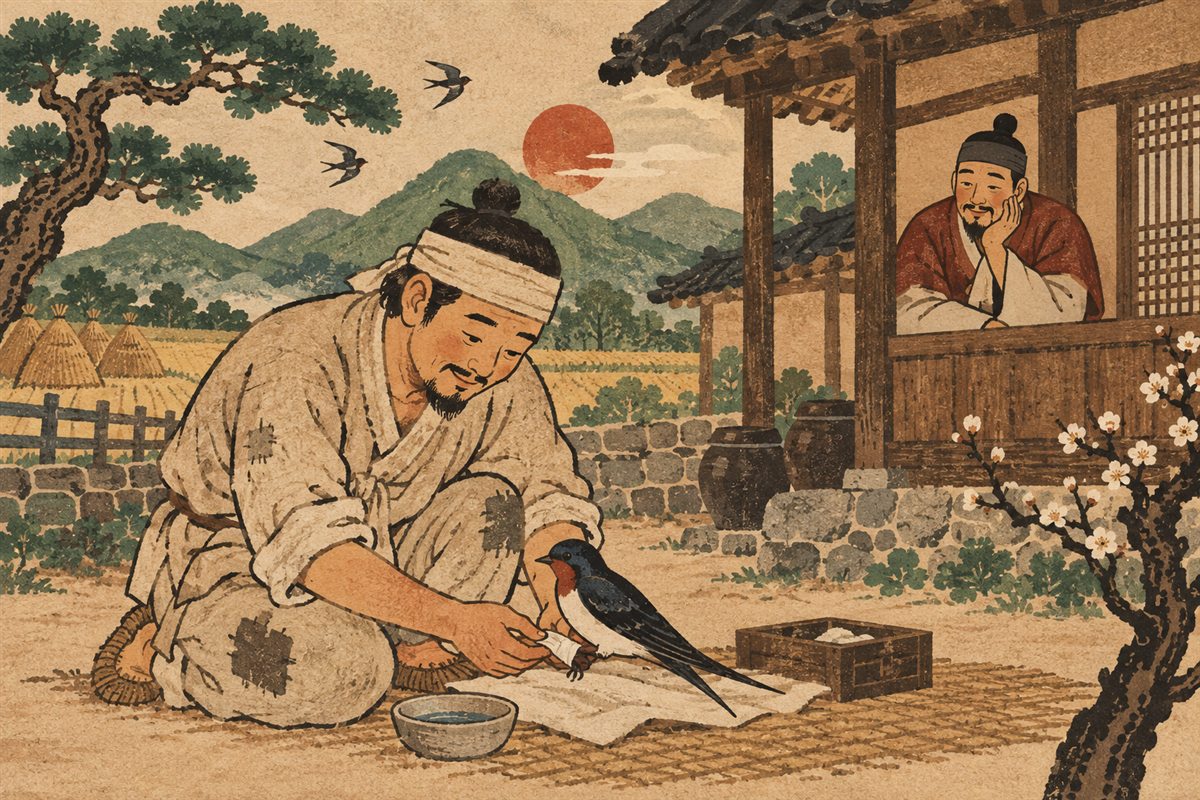
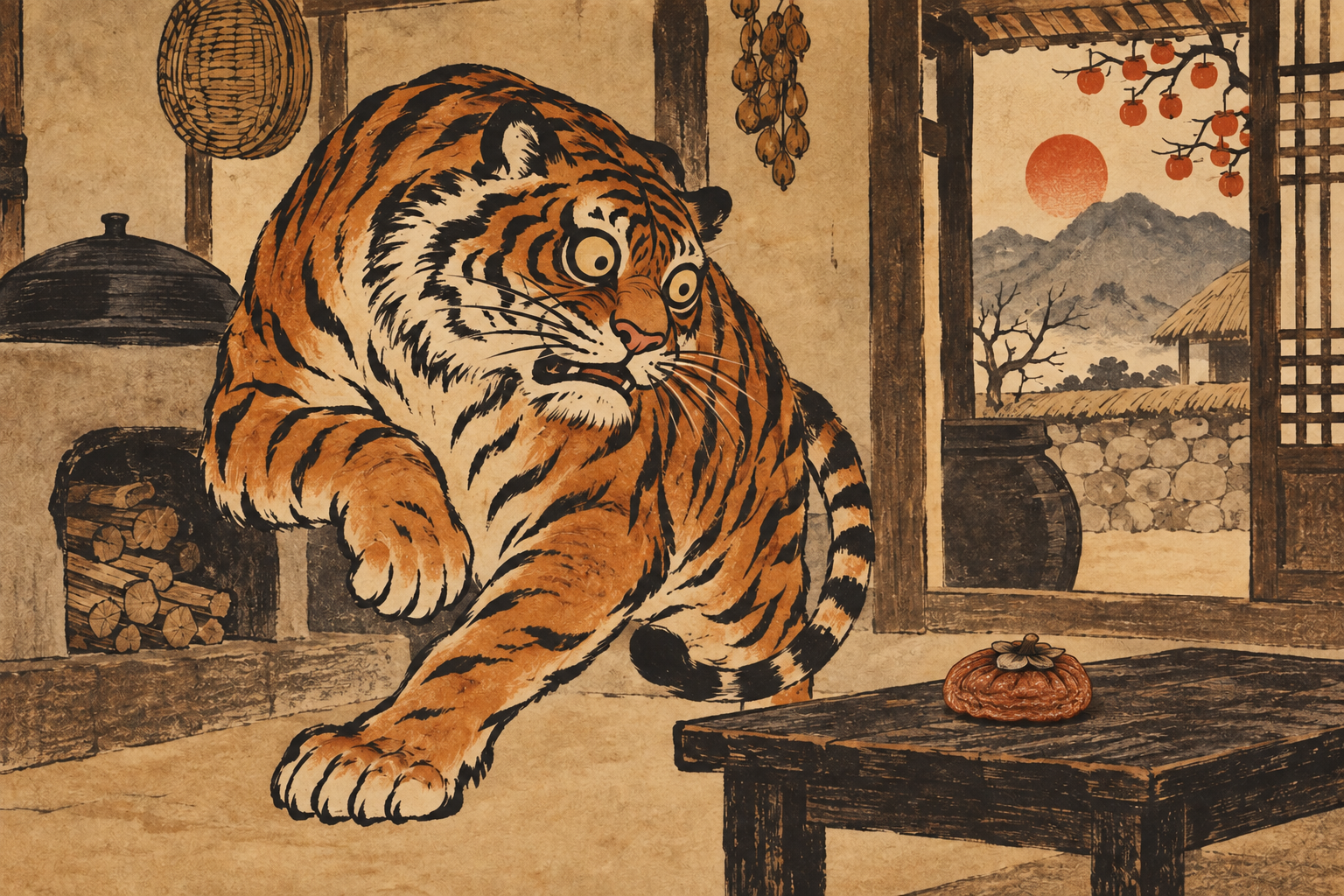 01 · 3 MINThe Tiger and the Dried PersimmonA tiger listens as a mother tries to quiet her child and learns that a promised dried persimmon does what the tiger cannot.↗02 · 3 MINHeungbu and NolbuIn the 1833 Heungbo Manborok, Heungbo supports his parents and heals a swallow. Its seed yields twelve gourds of riches; Nolbu imitates him and loses his estate through a chain of comic punishments.↗
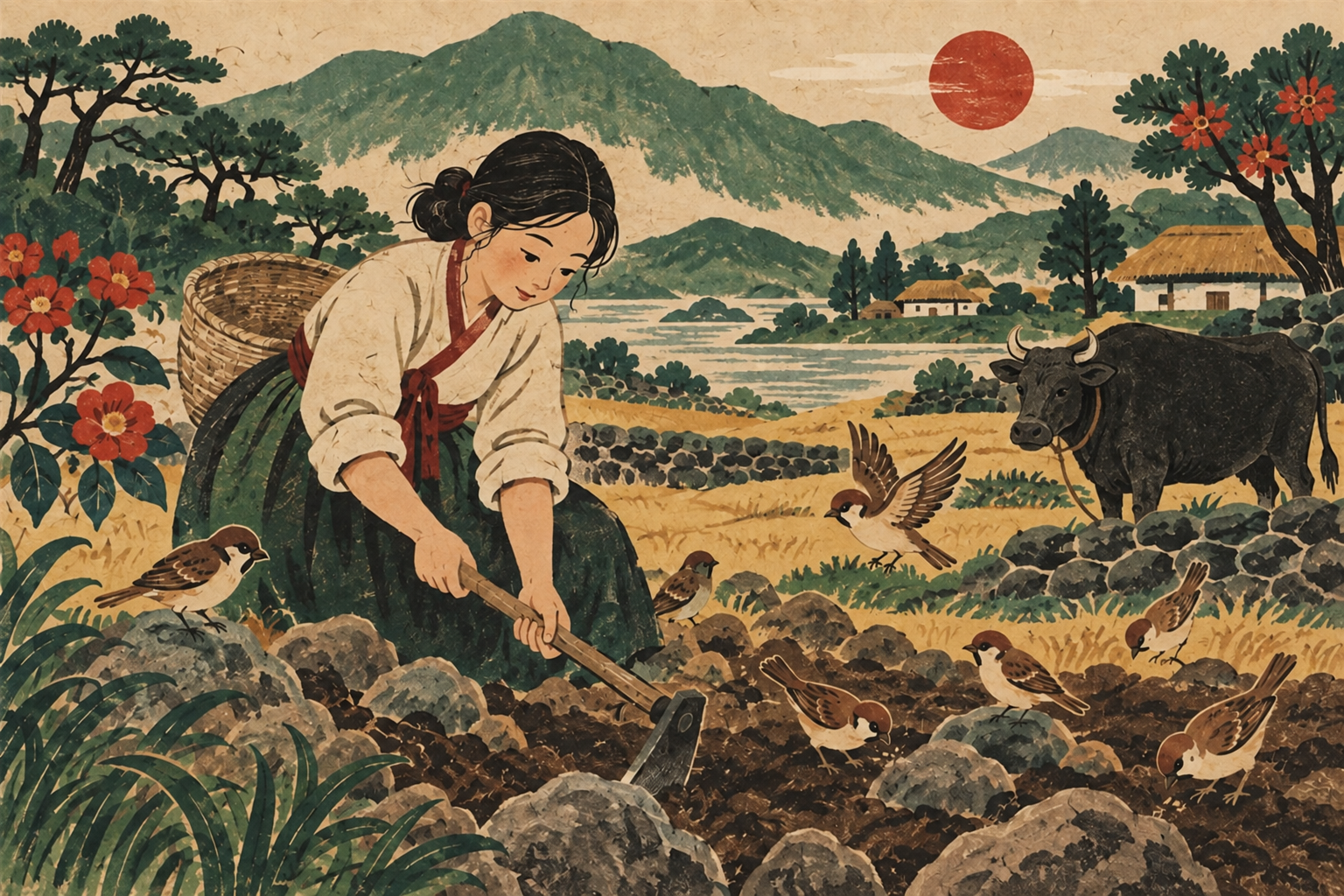 03 · 3 MINKongjwi and PatjwiKongjwi completes a stepmother’s impossible chores with unexpected help, but Patjwi pushes her into a stream. The 1982 teller recalls a flower and Kongjwi’s revenge, then hesitates over the ending.↗
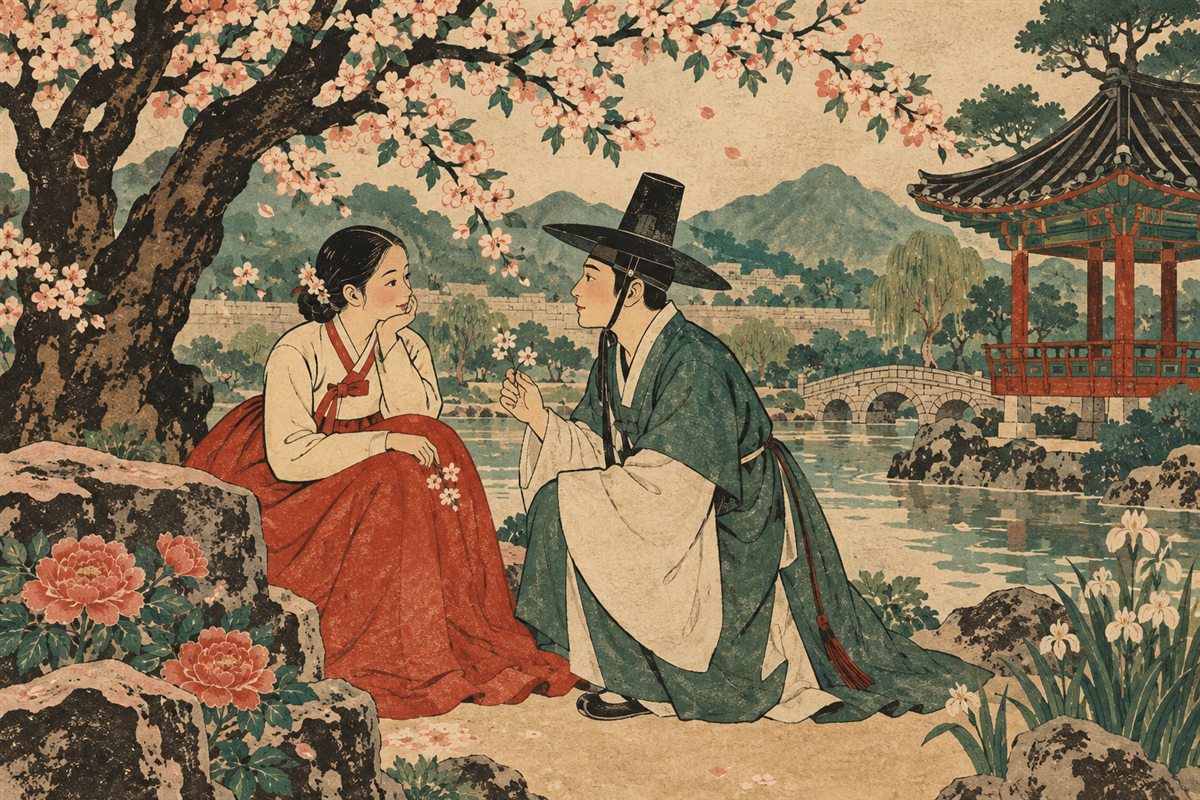 04 · 3 MINThe Tale of ChunhyangIn an early Chunhyang narrative, a young couple’s promise is tested by separation, an abusive magistrate, and a return that turns private fidelity into public justice.↗
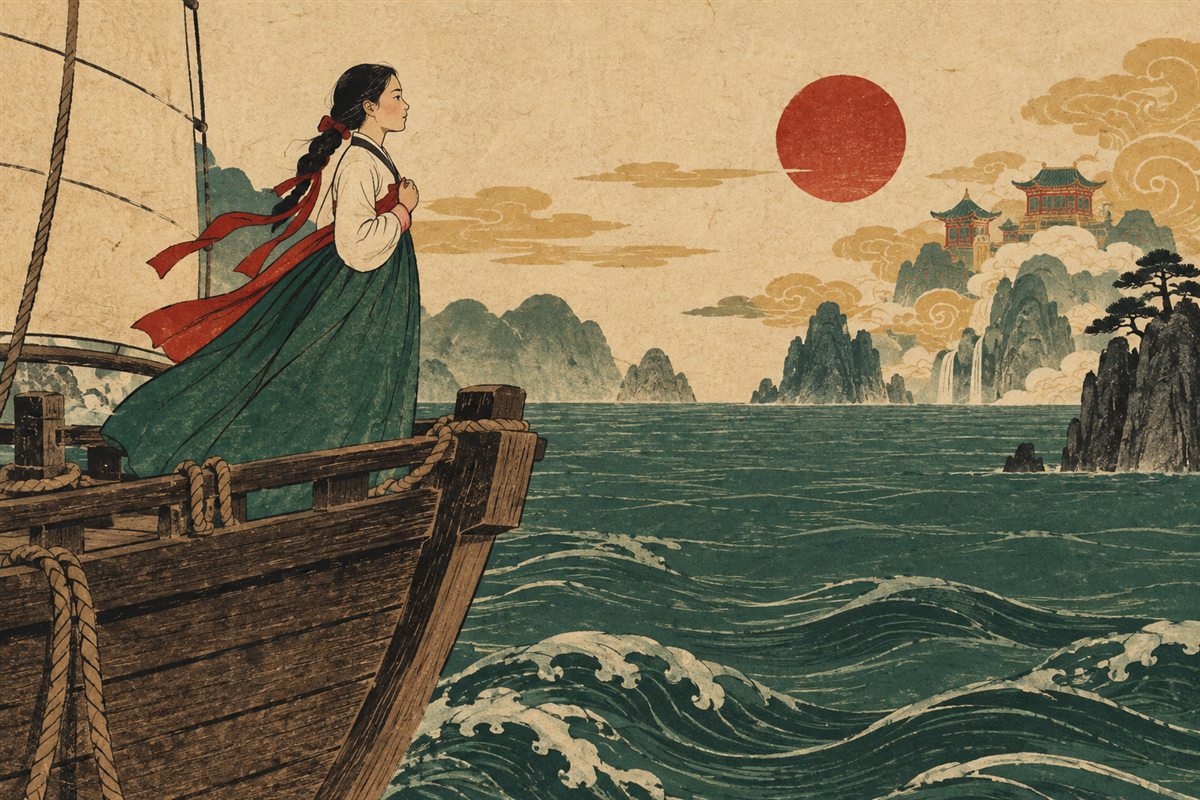 05 · 3 MINThe Story of SimcheongAfter a promise made in fear and confusion binds her blind father to an impossible offering, Simcheong chooses a dangerous path; the 24-chapter Seoul edition carries her story through death, return, and reunion.↗
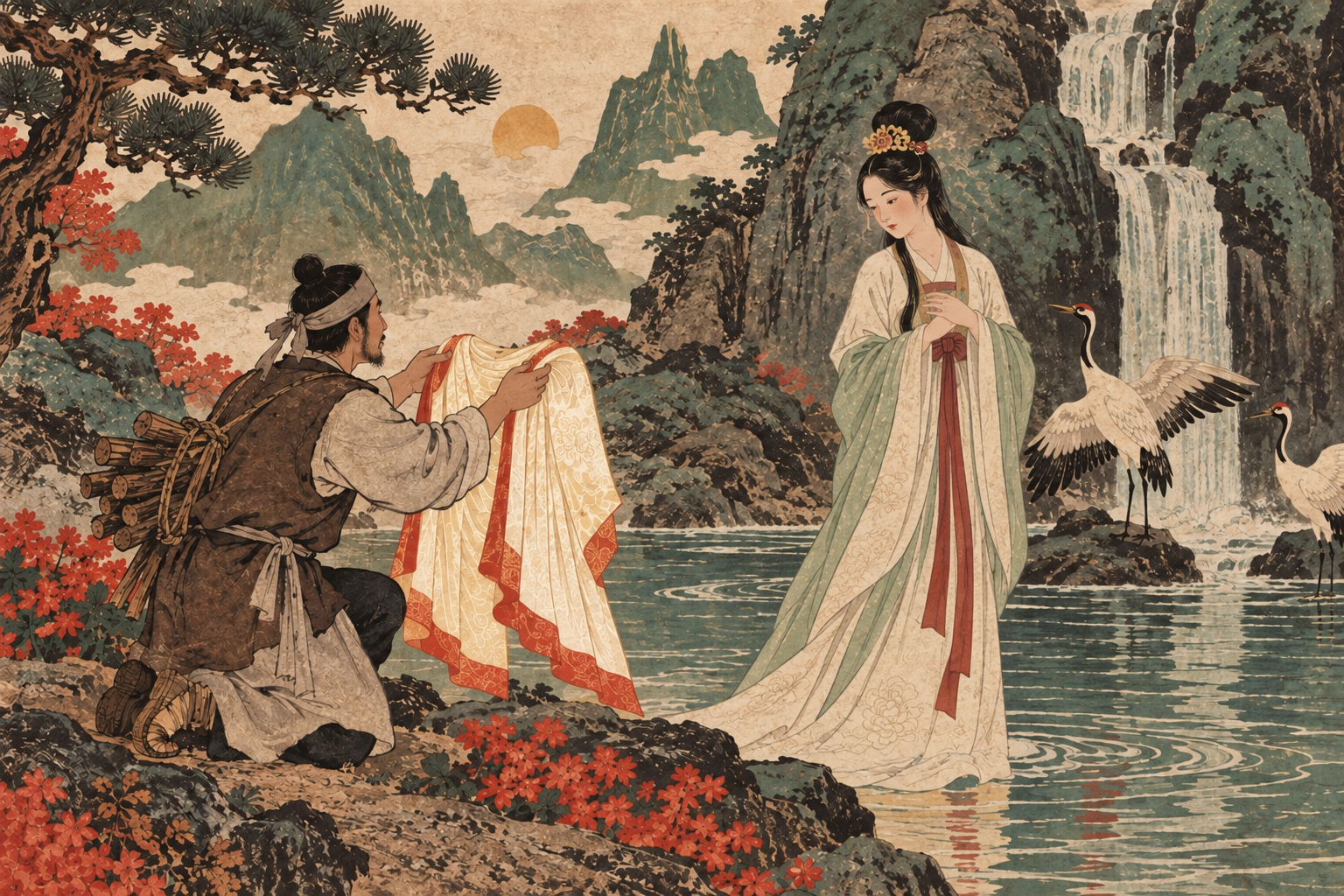 06 · 3 MINThe Fairy and the WoodcutterA woodcutter saves a deer and hides a heavenly maiden’s clothes. In this Jindo telling, she returns to heaven with their two sons; his attempt to follow ends in a rooster’s cry.↗
Korean Context guides
Context entries support further reading. A guide is a direct story reference only when that story page links to it.