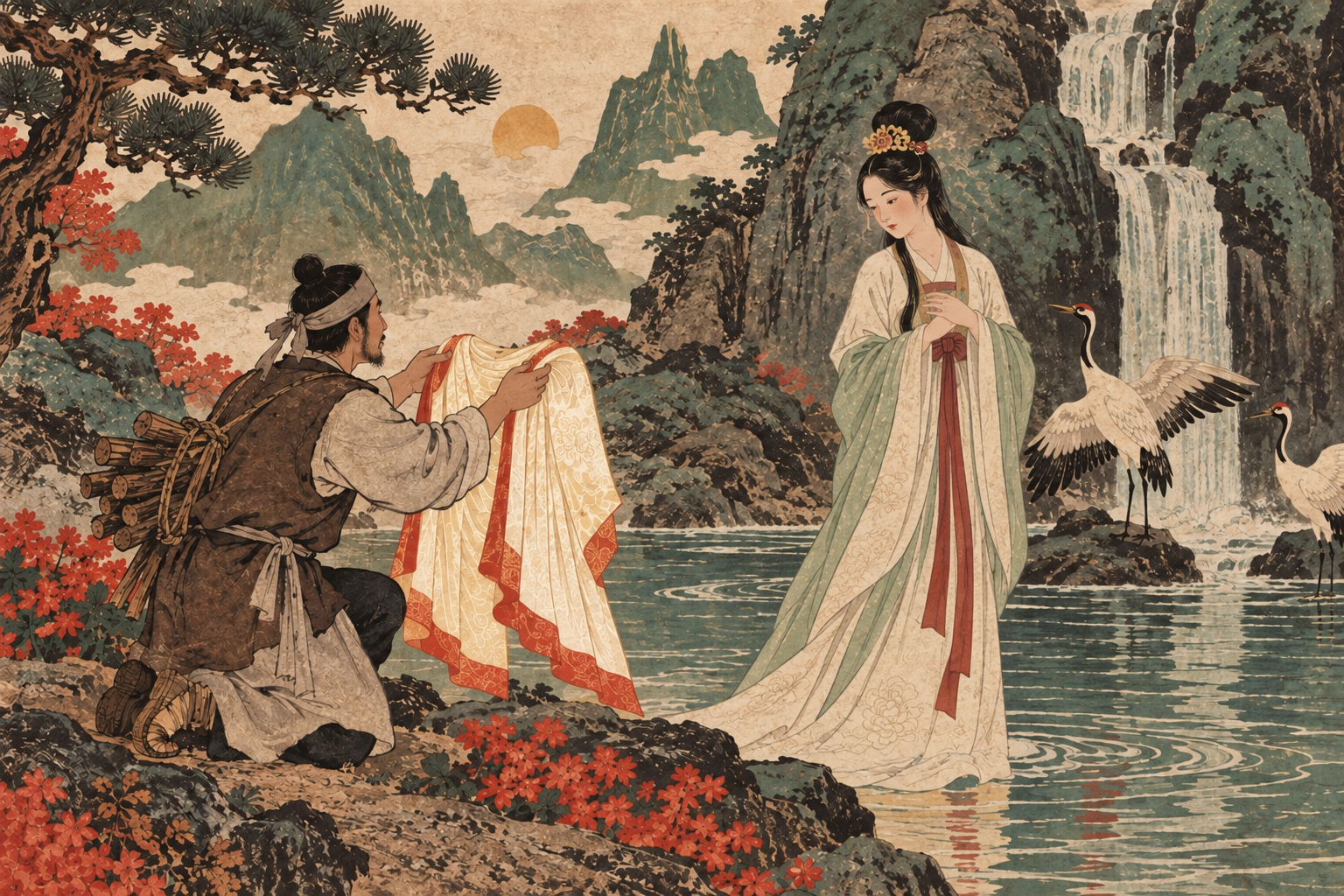
The Fairy and the Woodcutter
선녀와 나무꾼
A woodcutter saves a deer and hides a heavenly maiden’s clothes. In this Jindo telling, she returns to heaven with their two sons; his attempt to follow ends in a rooster’s cry.
Story at a Glance
A woodcutter saves a deer and learns when three heavenly maidens will bathe. He hides one maiden’s clothes; later, when she returns to heaven with their two sons, he tries to follow her and falls back to earth.
The Folktale — Faithfully Retold
A poor woodcutter in a 1979 Jindo telling saves a deer from a hunter by hiding it beneath his coat. When the deer asks what reward he wants, he says he wants a wife. The deer tells him that three heavenly maidens bathe in a pond on the next full-moon night and instructs him to hide one maiden’s clothes.
He follows the deer’s instructions. When the three maidens finish bathing and dress, one cannot find her clothes; the other two fly back to heaven. She begs the woodcutter for help. He returns with an old skirt from home and leads her to his house. They live together and have two sons.
Years later, while making The recording says he is making straw footwear; it does not specify the weave or exact shoe type. The linked guide explains jipsin as a broad footwear category without assigning that precise design to this scene. Learn more about jipsin → on a rainy day, he tells his wife how they met and says he still has the clothes. She asks to see them. He brings them out. She puts them on, gathers each son under an arm, and rises into the clouds, telling the woodcutter to stay well.
The woodcutter spends months grieving and wandering in the mountains. The deer reminds him that it had said to keep the clothes until three children were born; he had revealed them after only two sons. The deer directs him to a well where his wife and sons draw water to bathe their mother. He climbs into a water dipper and is carried upward with the bucket. His sons recognize him. Their mother cuts the rope, and he falls from the sky onto a rock and dies. His spirit becomes a rooster. The teller connects the rooster’s upward call and scratching motion to the man’s longing for heaven and lament that his legs hurt.
The concealed clothing makes the marriage possible while withholding the maiden’s choice. In this telling she takes the sons when she returns to heaven; the husband’s fall makes separation final.
Korean Context in This Story
This is one recorded outcome among several. Other versions make the husband’s return to earth or heavenly trials central; the Jindo teller ends with his death and transformation into a rooster.
Versions and Sources
Selected recording: Korean Oral Literature Compendium, POKS.GUBI.GUBI.1_0601_0113, recorded in Dunjŏn-ri, Gunnae-myeon, Jindo, on 1 August 1979 from Park Gil-jong (58). The deer instructs the woodcutter to keep the clothes until three children are born, but the wife discovers them after two sons. The husband’s failed ascent and rooster transformation are part of this record. A tape-change gap at the attempted ascent is marked as transcription unavailable; the later ending is recorded. This retelling follows that telling only.
Retold in original English prose.
Source and plot checked 2026-10-04. See the source note for whether the basis is a primary text, oral record, or scholarly summary.