 A READING PATH · 4 STORIES
Promises, Taboos & the Way Home
Do not look back. Do not return the clothes yet. Trust me to bring you home. In these stories, a few words can decide who is able to leave—and who gets back.
Which Words Can You Trust?
Not every prohibition in a folktale does the same work. One can guide someone away from danger; another can help someone keep control. A promise may be a genuine offer, a trap, or a lie told in order to escape another lie. These four stories are especially rewarding when read through the question of who gives the instruction and who carries the risk.
The comparisons discuss endings. Start with the individual tales if you prefer to meet the warnings without knowing their consequences.
The Tiger’s Bargain Keeps Moving
In The Sun and Moon Siblings, the mother gives the tiger a bowl of porridge for passage. The deal offers no lasting safety. It must be made again beyond the next hill, until the supply is gone and the tiger breaks its promise.
The same visitor then claims the mother’s identity to enter her home. Words again offer reassurance while concealing danger. The children’s questions test that claim against things they know: a voice and a hand. Their later explanation about oil on a tree turns misleading language back against the pursuer. The children cannot overpower the tiger, but can delay it long enough to call for another route out.
A Warning Can Serve the Person Holding the Clothes
The deer in The Fairy and the Woodcutter warns the woodcutter to keep the heavenly clothes hidden until three children are born. He returns them when there are two, and the family leaves for heaven. Following the warning from his point of view makes the loss look like the result of impatience.
Follow the clothes from the maiden’s point of view, however, and the same sequence becomes a recovery of the means to leave. Her presence on earth began with the clothes being stolen. Asking whose safety the instruction serves makes this a more difficult story than a general lesson in obeying advice.
The Jindo telling later cuts off another route: the rope lifting the woodcutter. His death and transformation into a rooster leave father and sons able to call across the distance, but unable to close it.
The Woman on the Hill Has a Way Out
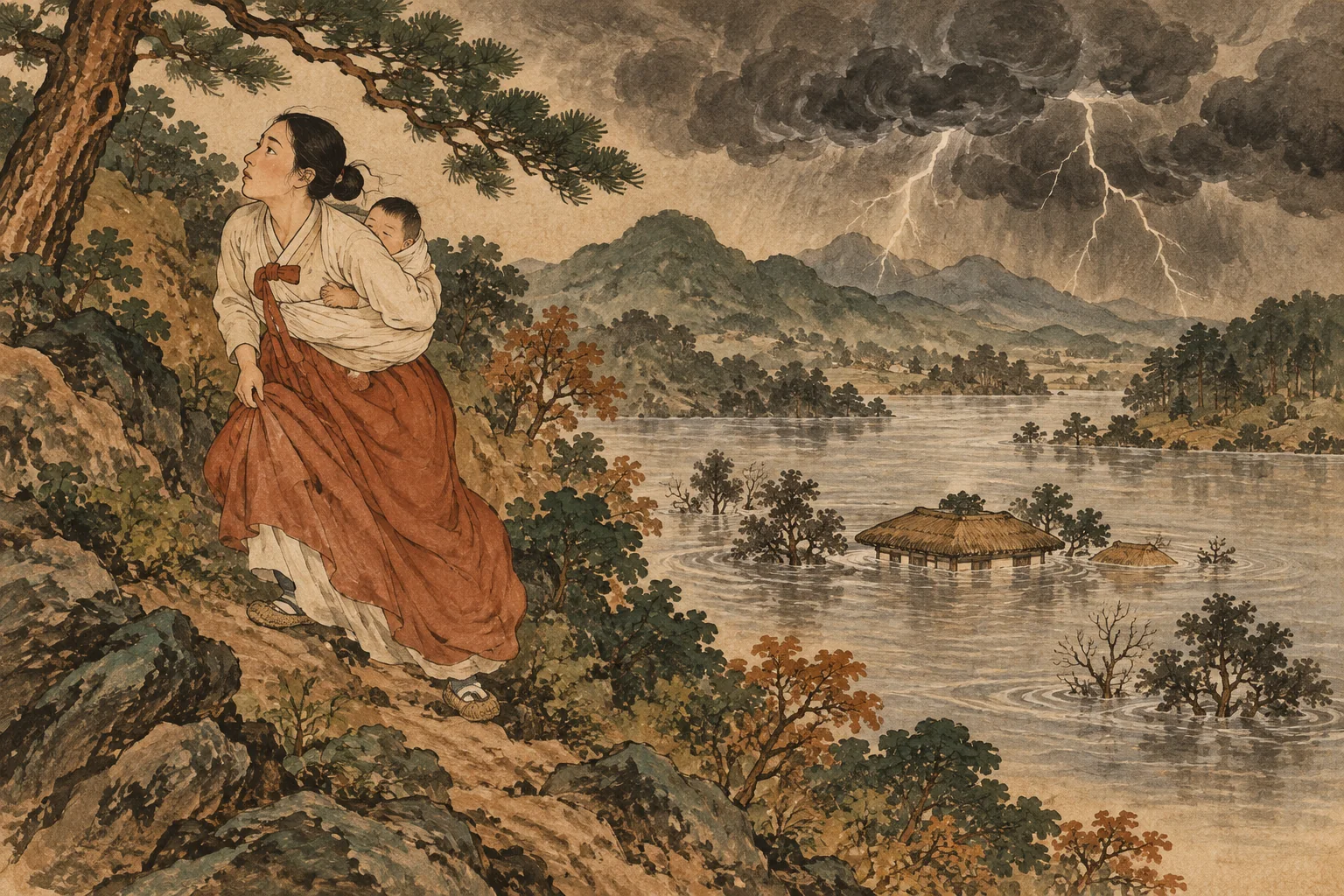
The warning in The Jangja Pond Legend follows an act of generosity. The monk tells the daughter-in-law to take her baby and flee uphill without looking back. Here the instruction opens a route away from the wealthy man’s house rather than keeping someone inside it.
Thunder makes the command difficult to follow. The woman turns, sees the pool, and becomes stone with her baby. The record gives no explanation for the impulse to turn, leaving the listener to feel how fragile the escape was. Her kindness and the warning remain part of the ending even though they do not save her.
Being Carried Home Is Not the Same as Arriving
The Rabbit’s Liver begins with an invitation built on false promises of office, riches, and a more beautiful wife. Once the rabbit understands the king’s demand, his invented story about a liver hanging on a tree persuades the court to send him back.
The return seems to reverse the outward deception. Yet he still depends on the terrapin’s back, and jumps before reaching land. The moonlit shore is visible without being reachable. In this local Bito Island legend, successful talk cannot guarantee a successful crossing.
Routes Can Change the Meaning of a Rule
The tiger repeatedly closes the mother’s road. The woodcutter hides a means of departure. The monk points toward a hill. The terrapin carries the rabbit almost home. Comparing those routes keeps the warnings attached to the relationships that produce them. The tales offer more to consider than whether a character obeys: they ask what freedom, safety, and trust would actually require.
Read in this collection
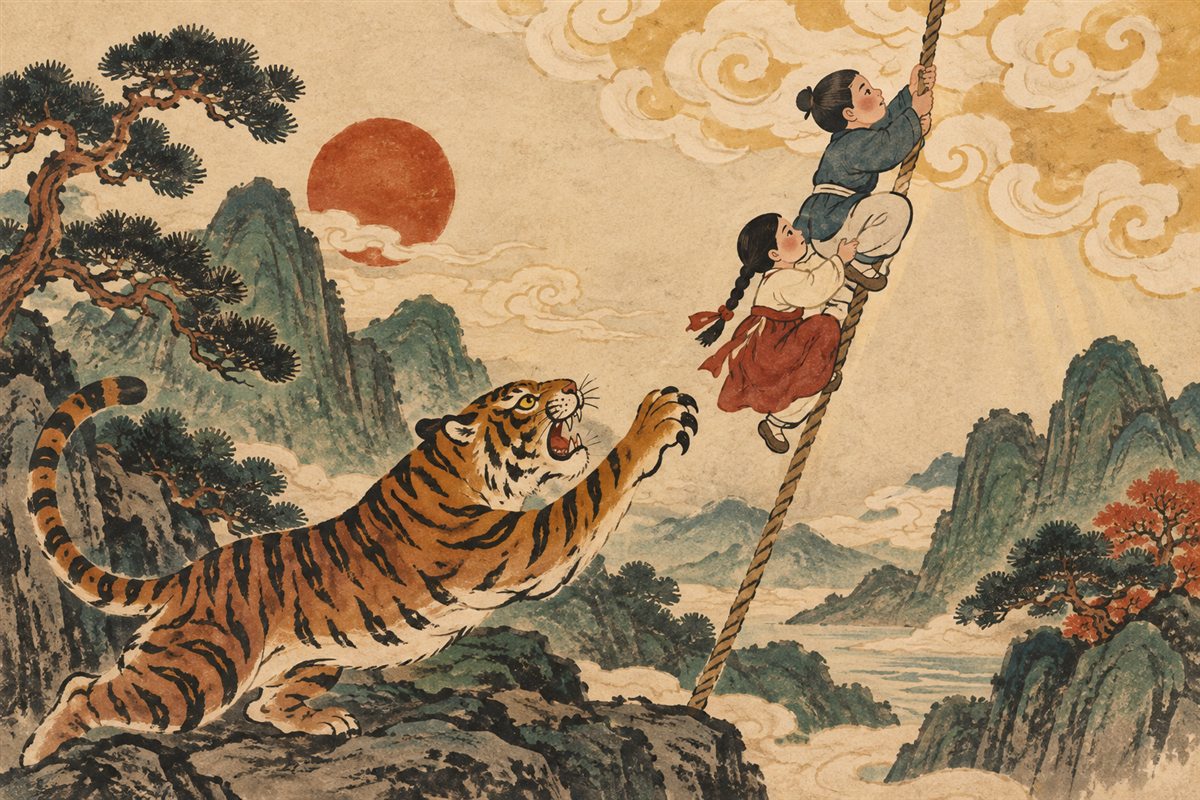 01 · 3 MINThe Sun and Moon SiblingsTheir mother is late returning home. When a strange voice calls at the door, her two children ask questions—but the visitor has an answer for everything.↗
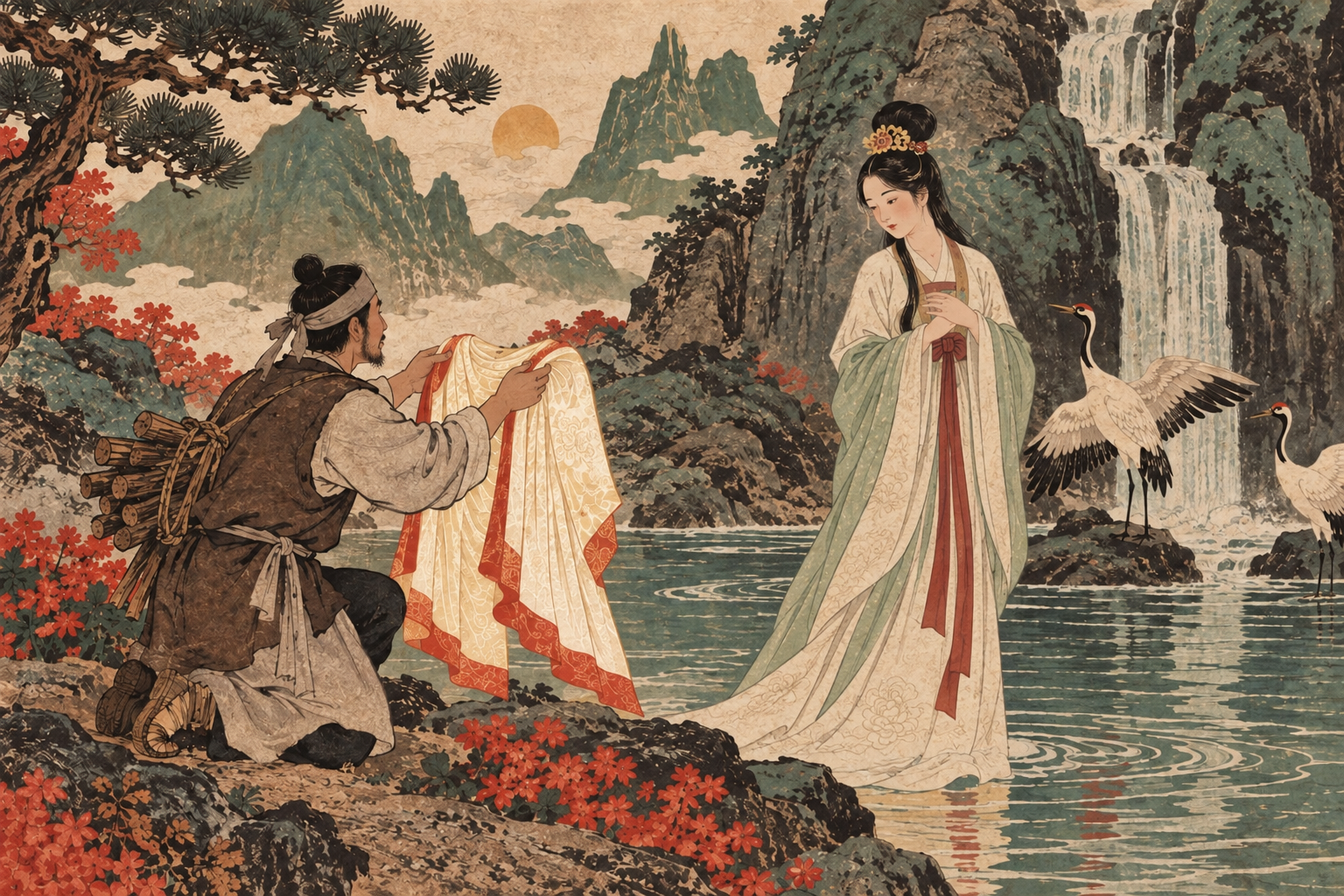 02 · 3 MINThe Fairy and the WoodcutterA deer repays a woodcutter with advice that brings a heavenly maiden into his home. Years later, the clothes he has hidden give her a way back to the sky.↗
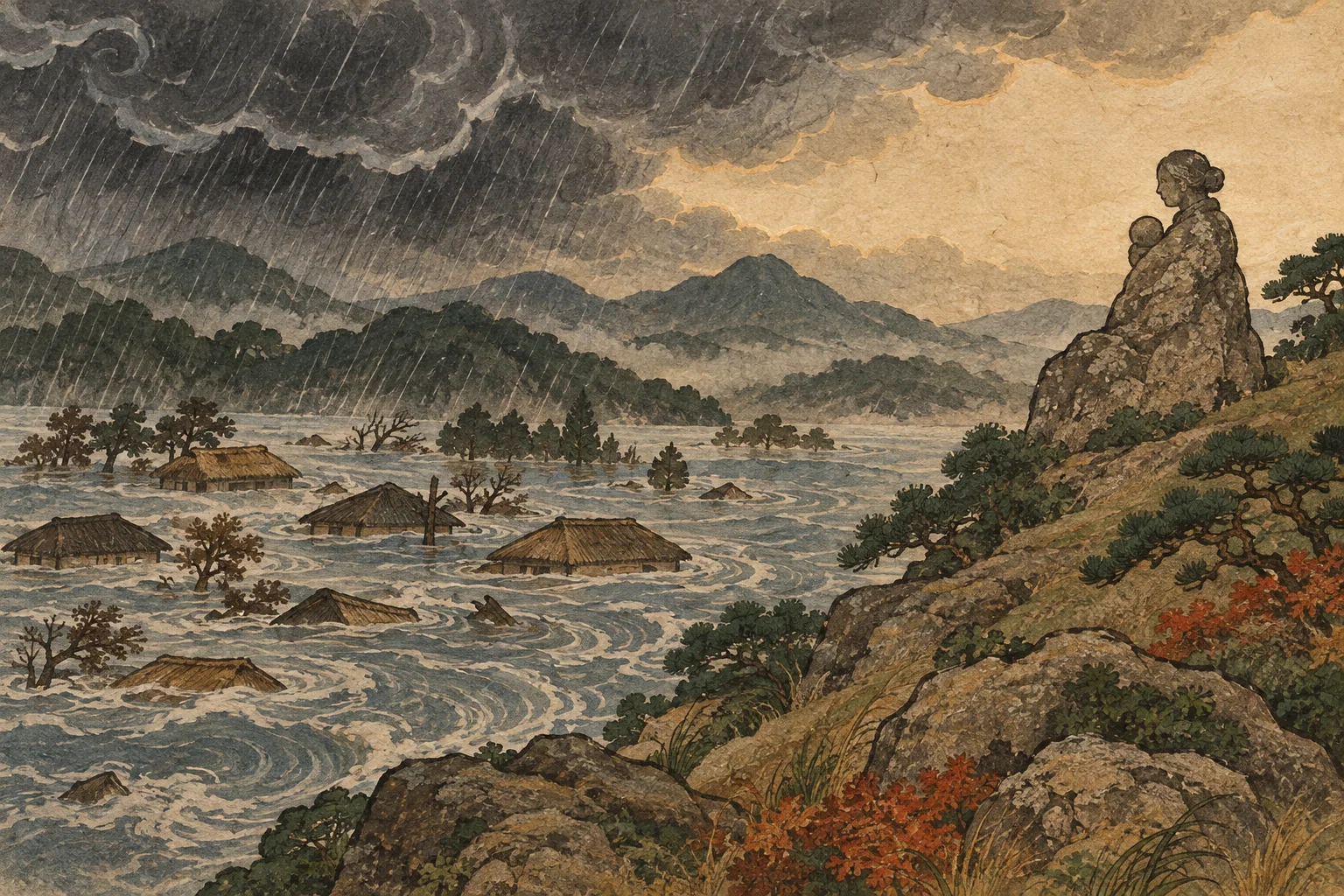 03 · 2 MINThe Jangja Pond LegendA wealthy man turns away a monk, but his daughter-in-law follows with rice. The monk gives her a warning: take her baby and leave, whatever she hears behind her.↗
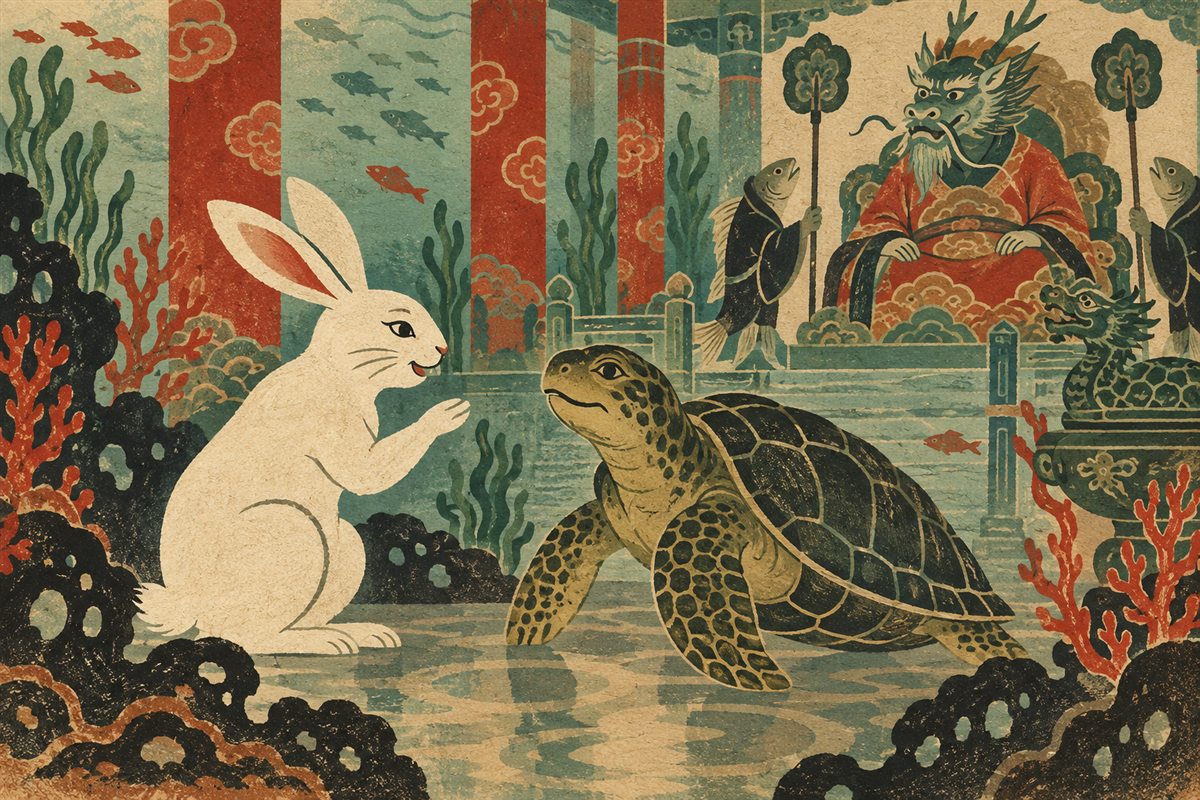 04 · 3 MINThe Rabbit’s LiverA terrapin promises a rabbit wealth and a place at the Dragon King's court. Under the sea, the rabbit discovers why the king really wanted him to come.↗
Being guides
Meet the animals, spirits, and otherworldly figures behind these tales, and discover the different roles they play.
Korean Context guides
Look more closely at the foods, objects, and customs that give these stories their texture.