The Jangja Pond Legend
장자못 전설 · 안동부락 전승
A wealthy man turns away a monk, but his daughter-in-law follows with rice. The monk gives her a warning: take her baby and leave, whatever she hears behind her.
Who’s who in this story
- The wealthy man
- The householder who gives visiting monks very little and threatens one who objects.
- The daughter-in-law
- A woman in his son's household who secretly offers the monk rice.
- The monk
- The visitor who receives her gift and warns her to flee.
- The baby
- The daughter-in-law's child, carried on her back during the escape.
Story at a Glance
A secret gift of rice brings an urgent warning. A woman must get herself and her baby out of the house—and must not turn back.
The Story
In Andong village lived a wealthy man who had a way of dealing with monks who came asking for alms. Beneath the wooden floor of his house stood a large earthenware jar containing grain. He directed the visitors there and allowed each of them only a handful. That was what they could take away from his house.
One day another monk arrived. He asked for an offering, and the man gave him the same answer: there was grain beneath the floor; he could take a handful from the jar.
This visitor objected to the way he was being treated. The man answered with threats of punishment. His anger drove the encounter to an end. The monk uttered a Buddhist invocation and left.
The man’s daughter-in-law had watched it happen. She could not accept such treatment of a visitor. Without telling her husband’s parents, she measured out rice and went outside after the monk. Her gift was a full measure, where the householder had allowed only a handful.
She called to him and offered the rice respectfully. He turned to receive it. Then he gave her an urgent instruction: she must return home at once.
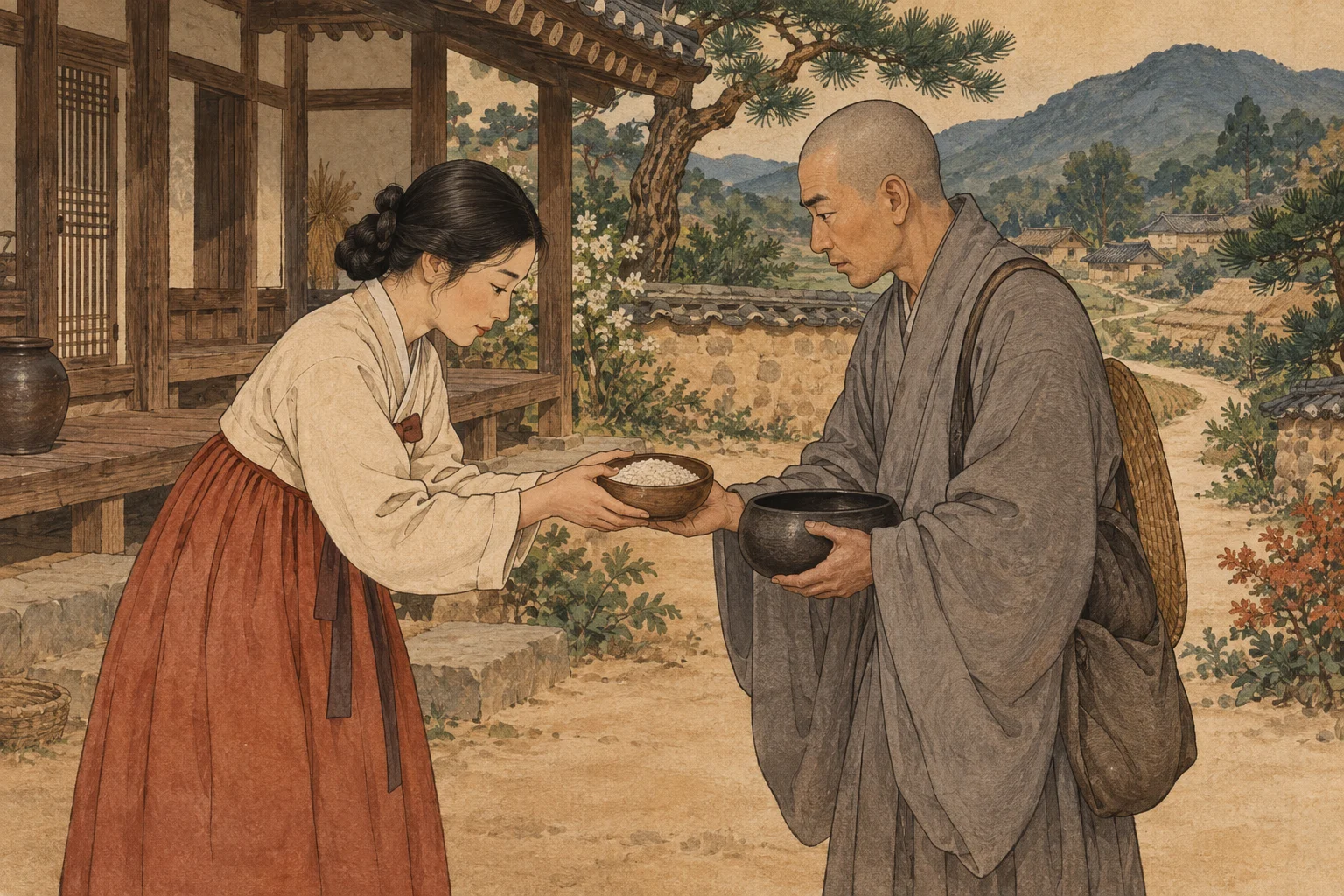
She was to put her baby on her back and flee up the hill behind the house. Whatever strange sounds came from the house site, she must go on. She must not turn to look. Having given the warning, the monk departed.
The woman went straight home. She took her baby, settled the child on her back, and started up the hill. The house fell behind her as she climbed. She was following the route the monk had given her, carrying the person she had been told to take.
Then thunder crashed from the place below her.
She turned.
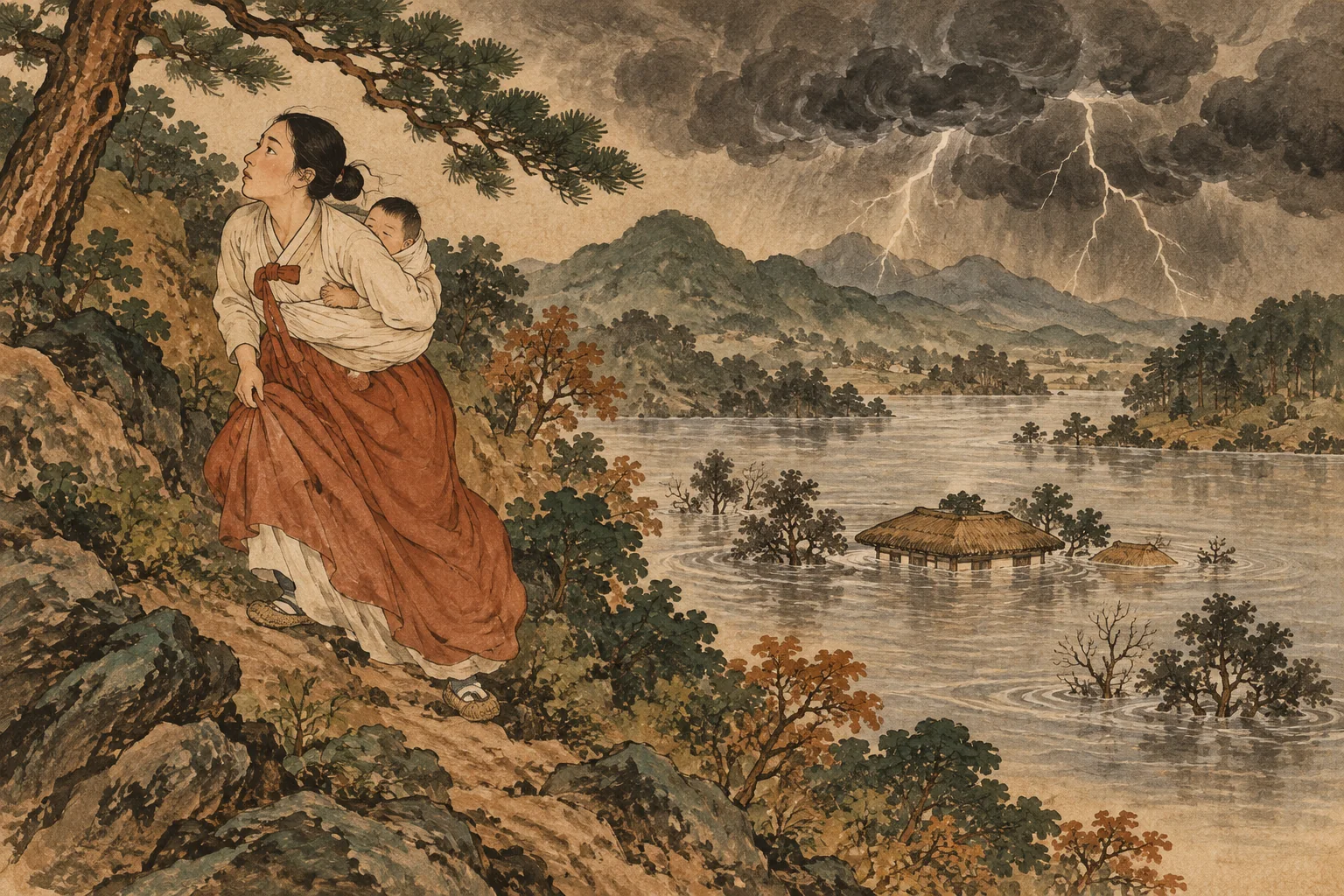
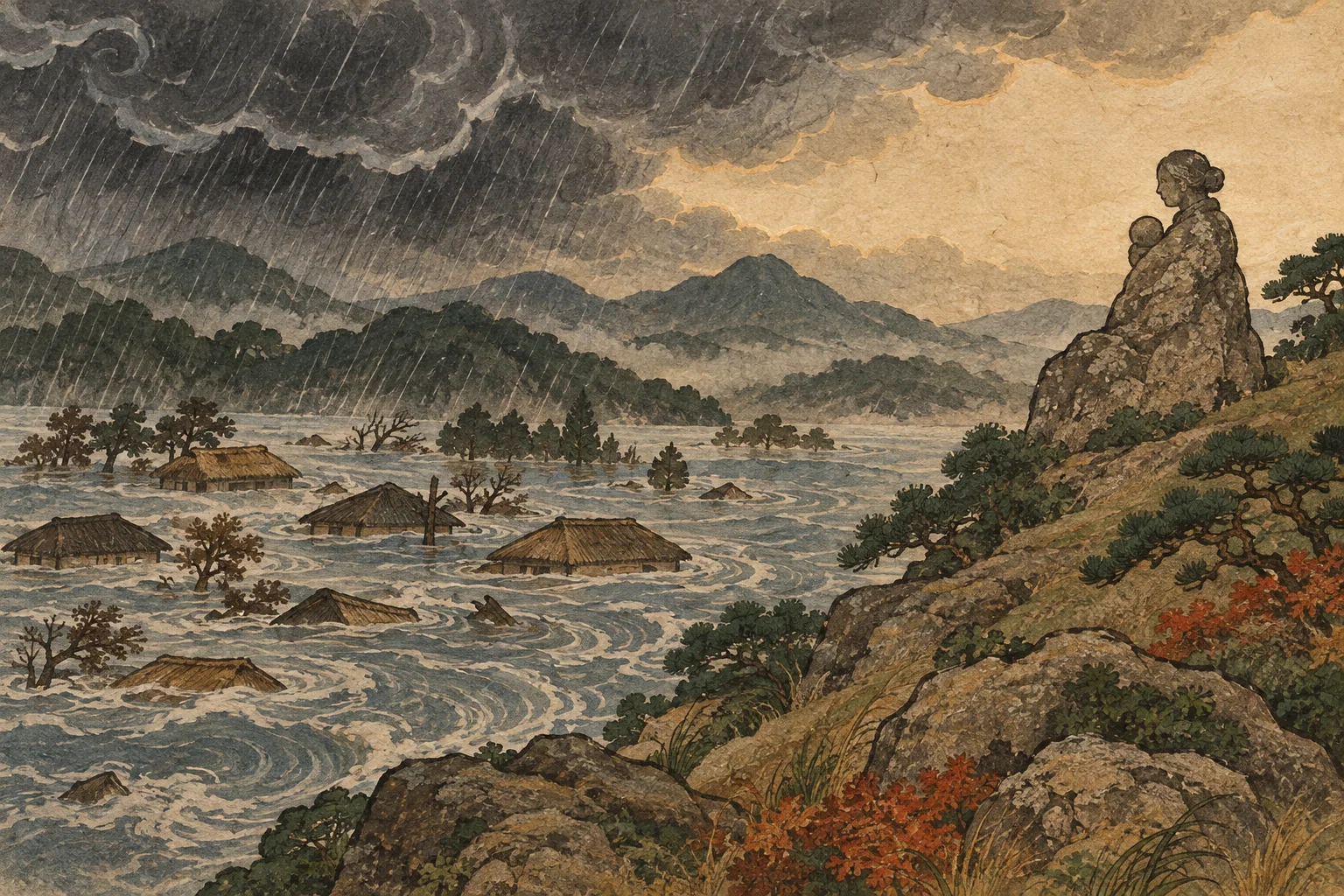
The house was gone. Where it had stood, water filled a deep pool. Lightning had struck, and the place the family called home had become the pond.
The woman went no farther. Still carrying her baby, she became stone. The escape ended on the hillside, above the water that had taken the place of the house.
The figure with the child was remembered as Baby Rock. Below it lay Byeoraksso, the pool of the thunderbolt. The story of the vanished household and the woman who turned back remained attached to those two names.
Korean Context in This Story
Jangja Pond legends belong to the way people tell stories about a landscape. A pool or a rock can become the visible reminder of a miser’s refusal, a woman’s kindness, and a warning broken at the last moment. Similar stories are attached to places across Korea, with different local names and details. In Jangseong, memories of Andong village and Byeoraksso also carry the loss of a place later submerged by Jangseong Dam. Explore earthenware jars →
A Closer Look
Why is the kind person not simply rewarded?
The daughter-in-law breaks with the wealthy man’s behavior before the disaster. He keeps grain beneath the floor and begrudges a handful; she takes rice outside and gives it respectfully. The movement of the rice already expresses the difference between keeping wealth closed and letting it reach another person.
The warning appears to offer her a route out of that household’s fate. Thunder then makes the rule hardest to obey at the very moment it matters. The tale does not tell us what she hopes or fears when she turns. It leaves us with the action and its consequence: the woman who gave generously is also the one fixed in stone.
That unresolved discomfort makes the legend more than a tidy reward story. The pool and Baby Rock keep both the miser’s downfall and the failed escape in view. A listener imagining the landscape has to remember the woman and her baby as well as the house that disappeared.
Read next: The Rabbit’s Liver also ends by linking losses to a local landscape. In both, a route toward safety comes painfully close to its destination.
How Other Tellings Change the Story
Why do some versions include an insulting offering or a dog?
The Jangseong record followed here gives the legend a particular household and landscape. The Academy of Korean Studies survey describes a wider pattern with other details.
| Detail | This Jangseong telling | Other forms in the survey |
|---|---|---|
| The miser’s treatment | A handful of grain from a jar beneath the floor, followed by threats. | Cow dung put into the visitor’s offering bowl. |
| The escape | The woman carries her baby up the hill behind the house. | She follows the monk; a baby or a dog may accompany her. |
| The remembered landscape | Byeoraksso and Baby Rock. | Local ponds and daughter-in-law rocks with different names. |
These changes make the legend belong to different places. Here the warning, the escape, and Baby Rock all belong to the woman and her baby.
Versions and Sources
Read about this telling and other versions
This page follows Choi Jun-seong’s “Andong Village Jangja Pond Legend,” recorded in Jangseong in 1982. The grain jar, secret rice offering, thunder and woman with her baby becoming stone belong to that account. The description of the wealthy man’s threatened punishment is shortened. The teller had heard of Baby Rock but could not confirm whether it still existed.
The Academy of Korean Studies overview of Jangja Pond legends describes other versions in which the miser offers cow dung or additional figures become stone. Those elements are not added to the Jangseong story.