 A READING PATH · 5 STORIES
Kindness, Gifts & Second Attempts
A swallow returns with a seed. A magpie strikes a bell. A second brother retraces a lucky journey. Follow the distance between helping someone and expecting a reward.
A Gift Is Not Always a Reward
A story about a kind act can end with treasure, with grief, or with an escape that never quite succeeds. Reading these five tales together reveals more than a rule that good people prosper. The differences turn on what someone knows when they help, what the recipient can return, and what happens when another person treats the result as a recipe.
This guide discusses the endings. For a first encounter, read the stories in the order below, then come back to compare them.
Begin with a Mistake, Not a Good Deed
In The Tiger and the Dried Persimmon, a mother gives her child a treat and accidentally terrifies a tiger. No one has arranged a reward or a punishment. The tiger’s fear grows from a misunderstanding, and the cattle thief makes a second mistake by climbing onto its back.
Keep that accident in mind when you reach The Goblin’s Magic Club. The first woodcutter thinks of his family as he gathers hazelnuts, but he does not plan to frighten the dokkaebi. An ordinary crack becomes an imagined collapsing beam. His brother can repeat the walk and find the cupboard; he cannot make the visitors forget what happened the night before. The second attempt fails partly because the world has changed.
A Splint Can Look the Same and Mean Something Else
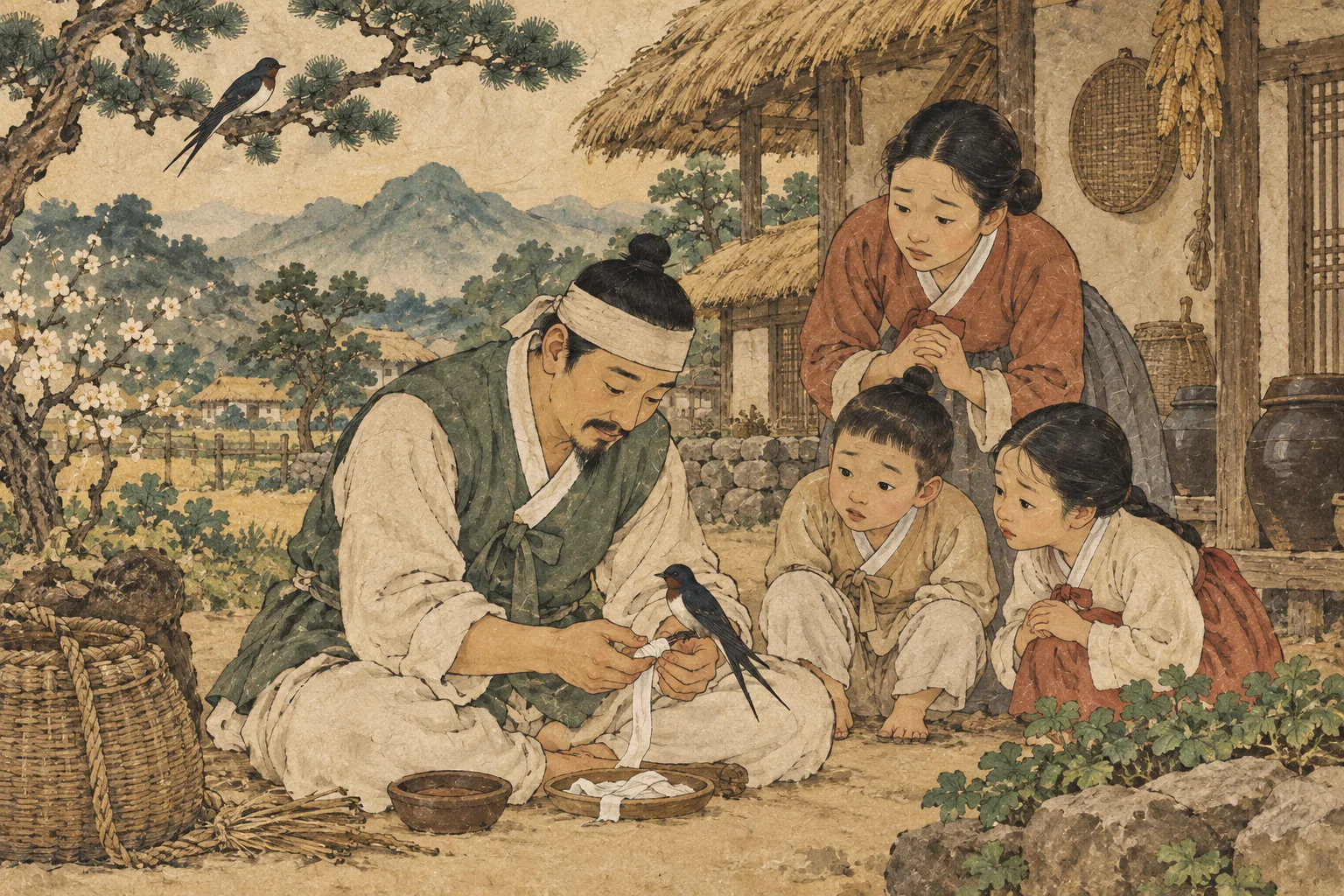
Heungbu and Nolbu makes imitation more deliberate. Nolbu knows that care for an injured swallow preceded his brother’s fortune. To recreate the opportunity, he breaks a leg himself. The treatment may resemble Heungbu’s, but its relationship to the injury is reversed.
The 1833 telling used here has already shown both brothers deciding whether to share wealth with their parents. The swallow does not introduce their difference; it concentrates it in a memorable act. And Heungbu’s generosity does not finish when his gourds open. He later shelters the ruined Nolbu.
Notice the brothers’ positions in the two stories. Heungbu, the fortunate brother, is younger. The lucky woodcutter in the selected dokkaebi record is older. Birth order alone will lead you astray; the telling asks you to follow what each person does.
The Return Can Cost More Than the First Favor
The scholar in The Grateful Magpie saves a bird with a shot from his bow. The bird saves him by striking a temple bell with its head until it dies. Calling both actions “repaying kindness” describes their connection, but not their unequal cost.
The bell also changes how the rescue works. The scholar is trapped and cannot reach it. The magpie has access but lacks a human hand to ring it. Its solution uses the body that the scholar protected. The discovery below the bell leaves gratitude inseparable from mourning: the returned favor saves one life without producing a shared happy ending.
Kindness Does Not Erase the Warning
In The Jangja Pond Legend, the daughter-in-law gives rice after the wealthy man has treated a monk badly. Her separate choice brings a warning and a route away from the coming disaster. Yet turning at the sound of thunder leaves her and her baby in stone.
This ending resists the easy expectation that a good person must be safe. It preserves both her generosity and the broken prohibition. Beside Heungbu’s plentiful house and the magpie’s sacrifice, Baby Rock gives the collection a third image of what follows a kind act: an escape offered, but not completed.
A Question to Take Back to the Stories
Who expects something in return? Heungbu treats the bird before knowing about a seed. Nolbu plans his treatment around the desired gift. The woodcutter’s brother expects tomorrow to repeat yesterday. The magpie’s return costs it everything, while the daughter-in-law receives a warning rather than wealth.
These are comparisons of the tellings linked here. They do not make a single rule for Korean beliefs about reward. Their pleasure lies in the different answers they give to a recognizable human wish: that care, luck, and fairness might finally line up.
Read in this collection
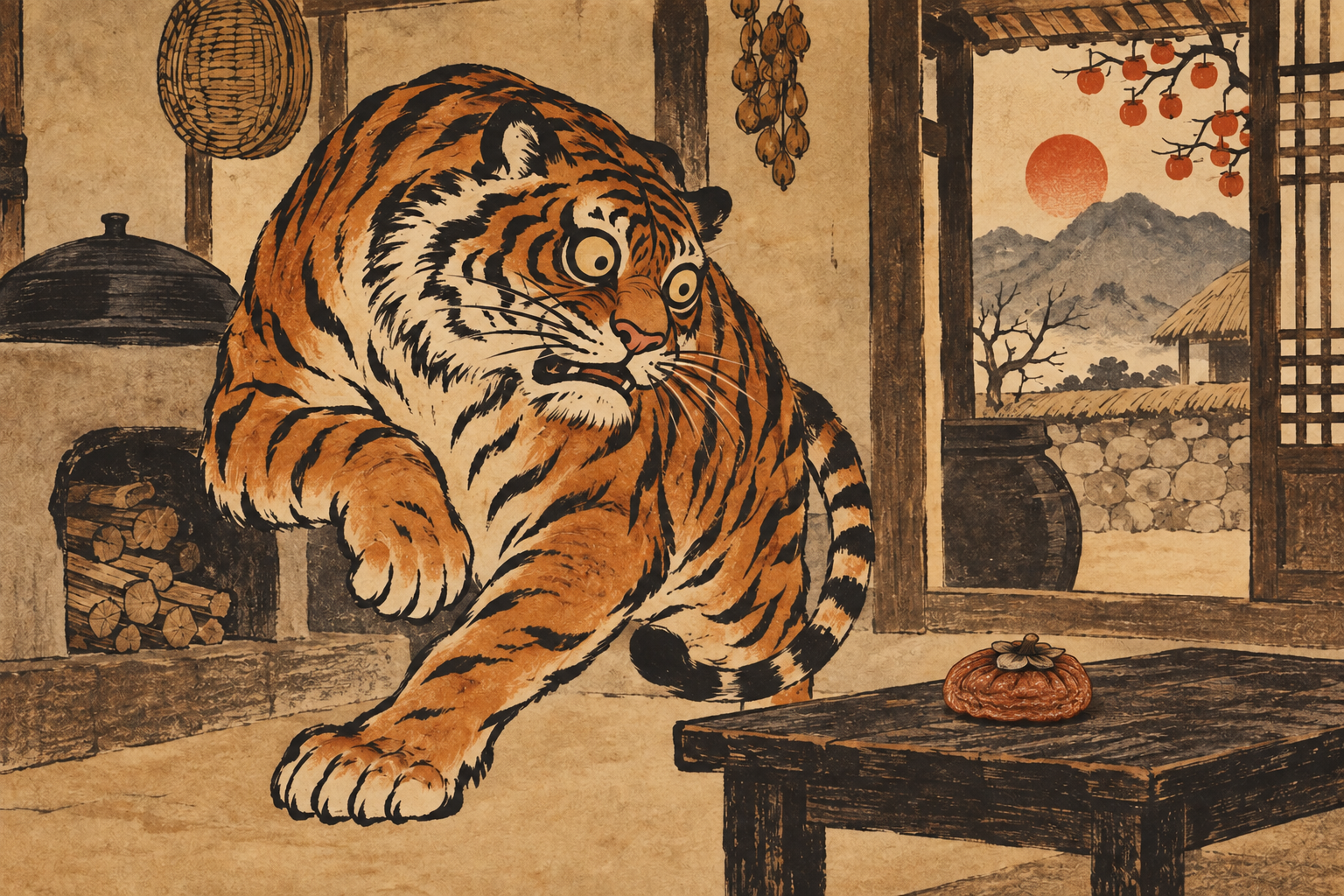 01 · 2 MINThe Tiger and the Dried PersimmonA tiger outside a village house hears a crying child fall silent at one mysterious word: gotgam. Then something climbs onto its back.↗
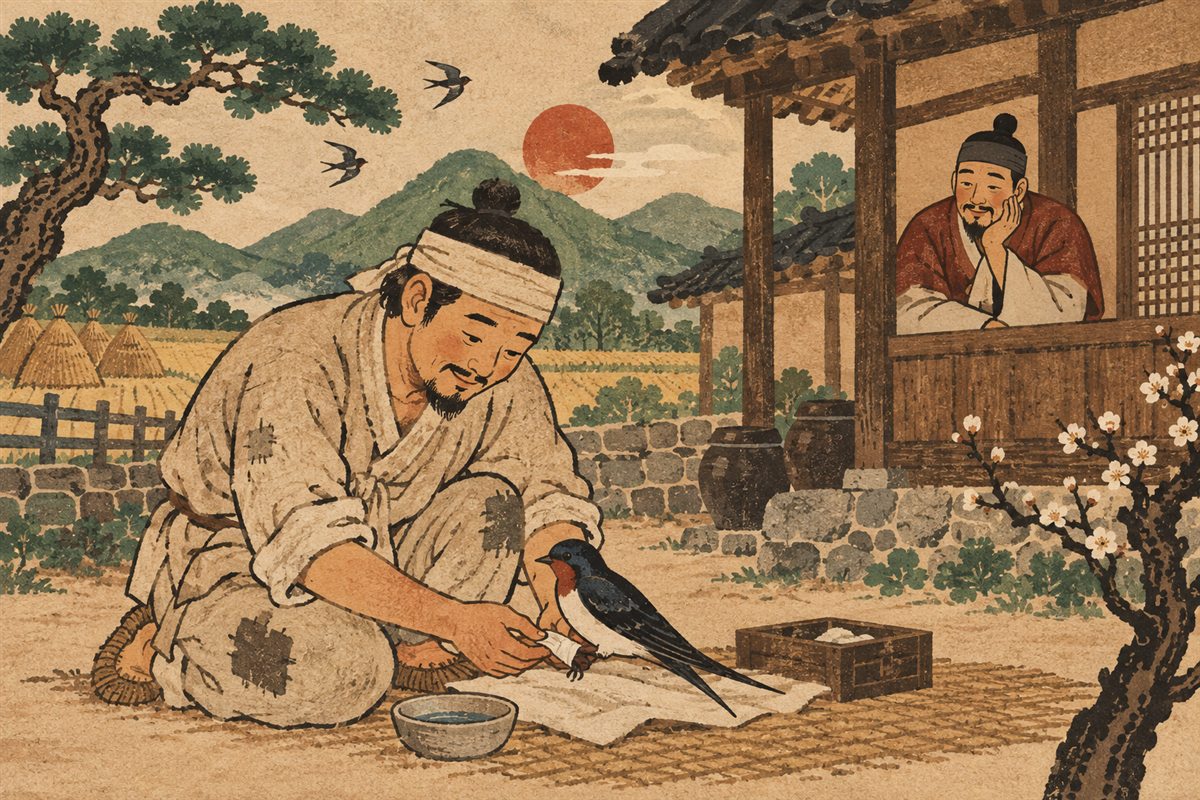 02 · 5 MINHeungbu and NolbuRead Heungbu and Nolbu in English: a kind younger brother, his wealthy older brother, and a grateful swallow whose gift brings astonishing gourds.↗
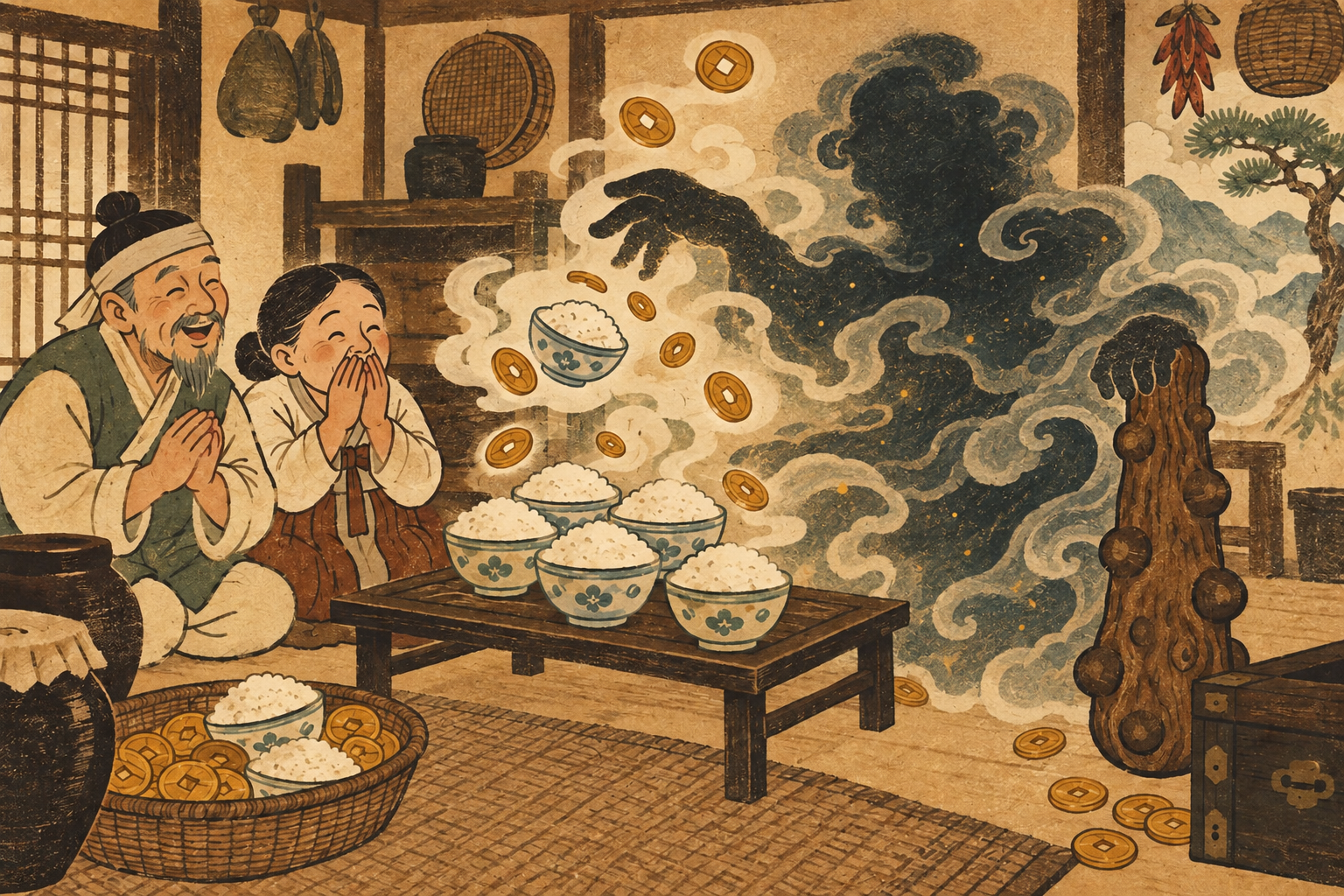 03 · 3 MINThe Goblin’s Magic ClubA woodcutter takes shelter in an empty house and finds himself listening to a dokkaebi feast. One crack of a hazelnut changes his fortune—and gives his younger brother an idea.↗
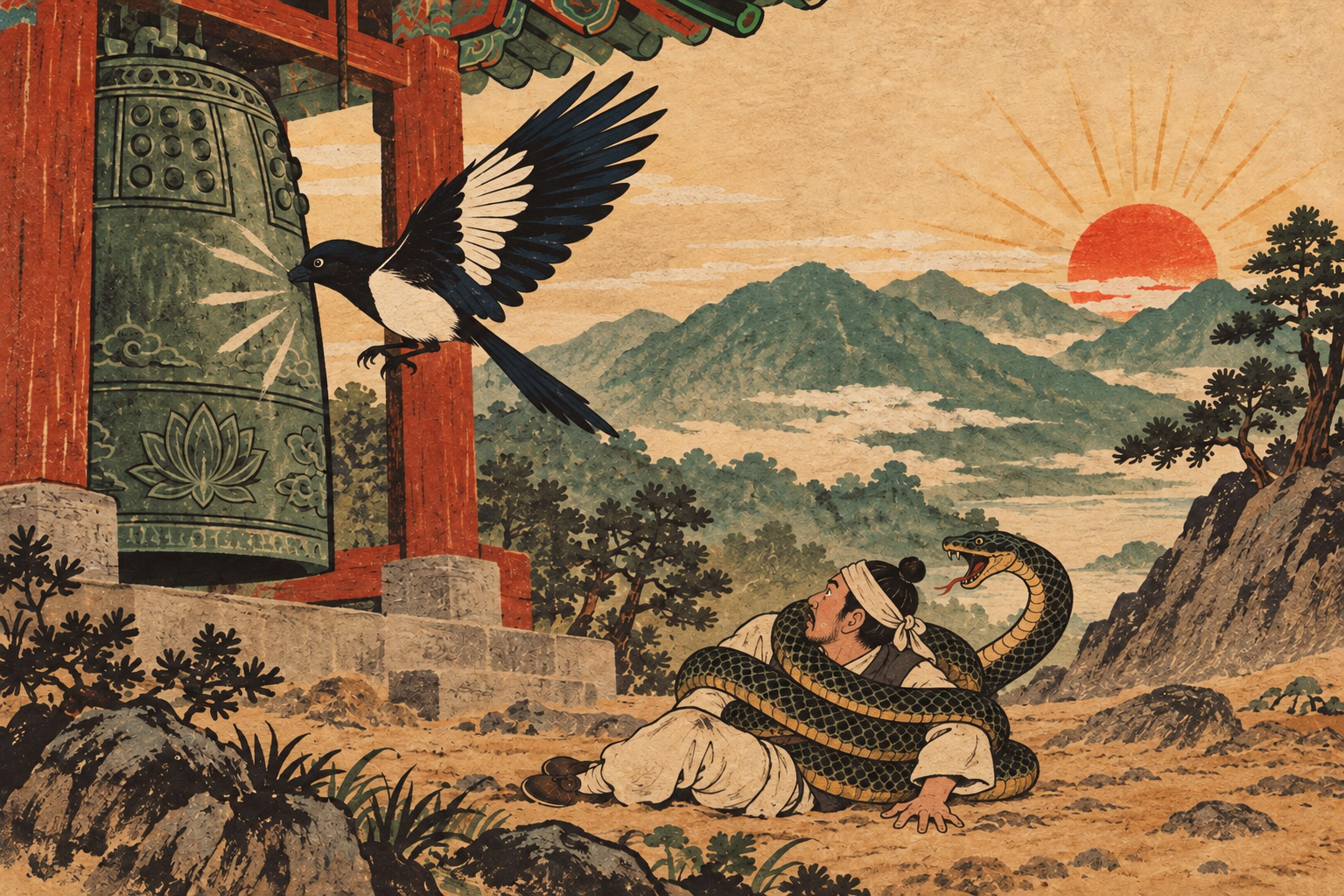 04 · 2 MINThe Grateful MagpieA scholar frees a magpie from a snake on the road to Seoul. Before dawn, the same snake is coiled around him, and a bell he cannot reach must ring three times.↗
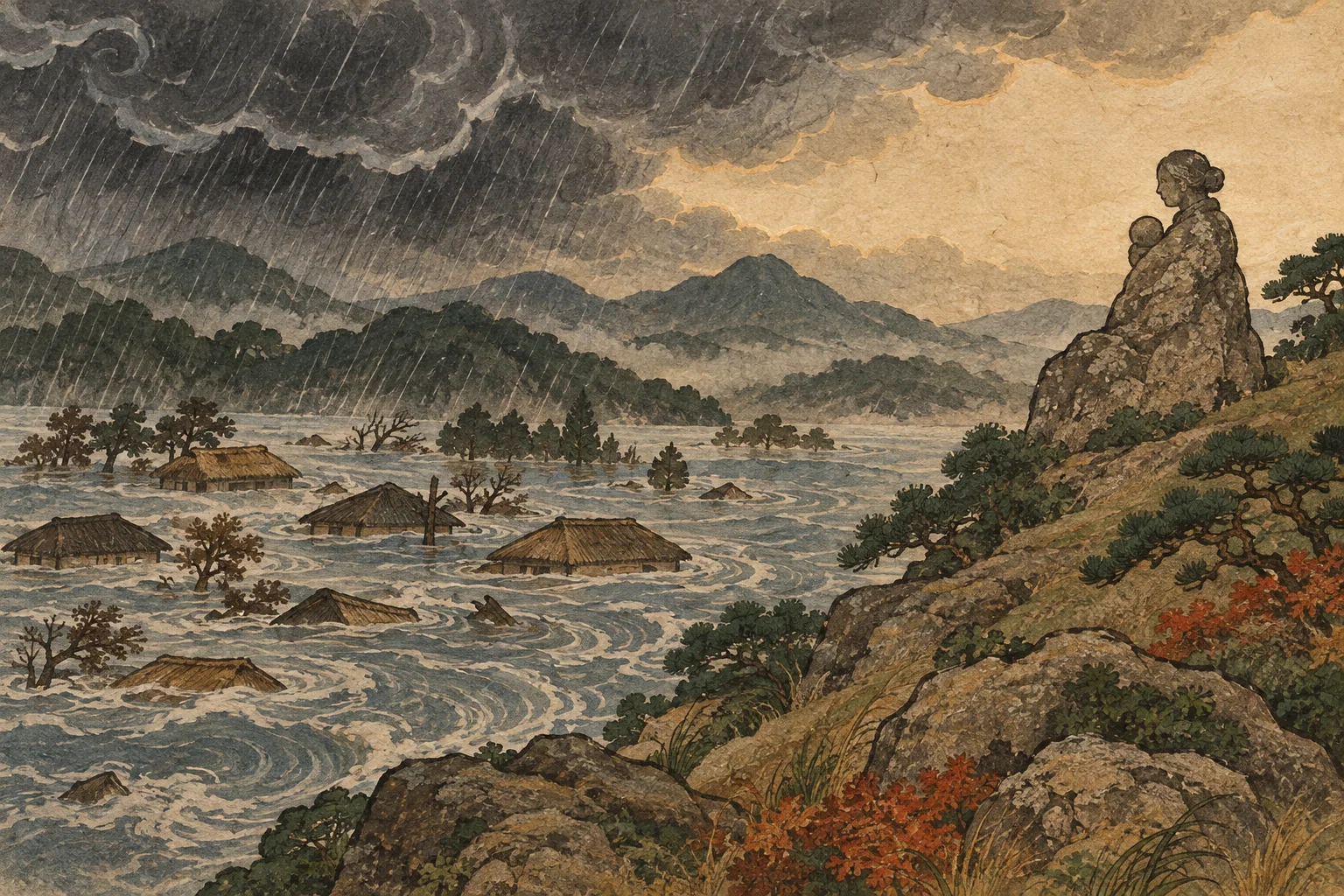 05 · 2 MINThe Jangja Pond LegendA wealthy man turns away a monk, but his daughter-in-law follows with rice. The monk gives her a warning: take her baby and leave, whatever she hears behind her.↗
Being guides
Meet the animals, spirits, and otherworldly figures behind these tales, and discover the different roles they play.
Korean Context guides
Look more closely at the foods, objects, and customs that give these stories their texture.