Where Korean Folktales Meet Real Places
설화의 장소
Follow Chunhyang to Namwon, the bamboo flute to Gyeongju's coast, and the rabbit to Bito Island. Learn why a story's setting, a commemorative site, and a storyteller's home are different kinds of connection.
Three Different Ways a Place Can Belong to a Story
A town named in a tale, a site celebrating its heroine, and a village where someone told it can all appear beside the same title. Each opens a different route into the story.
A narrative setting tells you where events unfold within a particular telling. A commemorative site shows how a community remembers or presents a story. A recording location tells you where a storyteller was heard. Keeping these connections distinct makes a journey more interesting: you can look for the landscape in the plot, or for the people who have kept the plot alive.
Namwon: Read the Meeting Before Choosing the Landmark
In the 1754 Manhwabon Chunhyangga followed by our Chunhyang story, the first sight of Chunhyang comes near Manbuksa. That is the meeting place to keep in mind when reading this particular poem. The Academy of Korean Studies introduction explains its opening and place in the Chunhyang tradition.
Visitors to Namwon also encounter Chunhyang at Gwanghallu Garden, a major place of association with the lovers and home to a shrine commemorating her. The Korea Tourism Organization’s Namwon introduction presents that garden through the familiar romance.
These two connections do not need to compete. A later cultural landmark can be meaningful even when it is not the meeting place in the version you have just read. Carry the spring scene with you, then notice how the garden presents the lovers to visitors. You are seeing a story’s continued life in a city as well as looking for its literary setting.
Gyeongju’s Eastern Coast: A Temple Beside a Dragon Legend
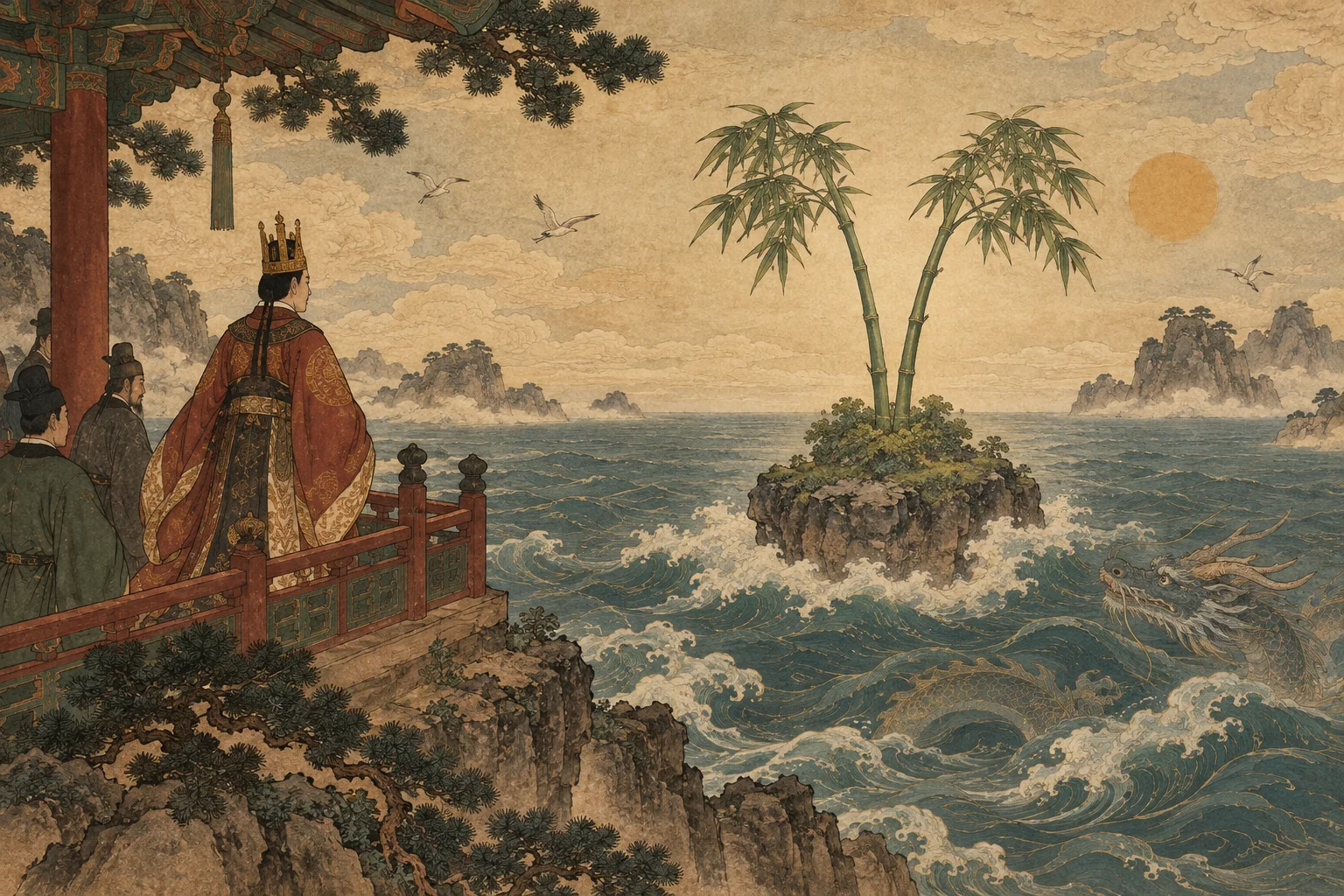
Manpasikjeok brings King Sinmun toward the sea, a floating mountain, and a gift associated with his kingdom’s protectors. Gameunsa is part of that coastal world. Its surviving site gives you something solid to put beside the tale’s moving mountain and extraordinary bamboo.
The National Institute of Korean History’s account of Gameunsa describes the temple completed in 682, its connection with Munmu and Sinmun, and the two stone pagodas still standing. It also explains the Samguk Yusa account of an opening below the main hall for Munmu in his dragon form.
Look first at the relationship between the two pagodas and the vanished hall. Then return to the story’s concern with protection across the boundary between land and sea. The ruins and the legend illuminate different things: the remains belong to a historical building, while the dragon passage belongs to the narrative associated with it. A visit can deepen your sense of the setting without turning the marvelous event into an archaeological claim.
Bito Island, Sacheon: When the Ending Names the Landscape
In Jo Maeng-ji’s Bito telling of The Rabbit’s Liver, reaching the sea’s surface does not finish the journey. The rabbit’s failed leap and the losses that follow connect the characters to islands. The ending makes the coast part of what a listener is asked to remember.
The Korea Tourism Organization’s Bito Island feature introduces Wolteungdo and the nearby Rabbit, Turtle, and Neck islands through a local Byeoljubujeon tradition. Its account has details of its own; it is another presentation of the local legend, rather than the transcript of Jo’s telling.
Read the final scene before looking at the coast. Ask what each name remembers, and how the story changes when the home the rabbit wants to reach is visible across water. Local versions can make a familiar title unexpectedly specific. They also let a landscape preserve a tragic ending beside the better-known comic escape.
Jindo: Where a Story Was Told Is Not Necessarily Where It Happened
Park Gil-jong told The Fairy and the Woodcutter in a 1979 Jindo recording. The Oral Literature Compendium record connects that telling to a person and a recording place. It does not make the heavenly bathing place a documented site on Jindo.
This is a useful distinction when a story page names a village. Sometimes the village is the setting; sometimes it is where a recorder met a narrator. The second connection is still valuable. It tells you that the cut rope and the rooster’s answer reached us through someone’s performance there, rather than through a single anonymous, unchanging text.
Take One Question Back to the Story
Choose a place and return to the paragraph where it matters. Does it make departure painful, give a ruler a boundary to cross, or explain a name? Then follow the linked institutional introduction for the place itself. That small return from landscape to sentence is often more revealing than trying to fit every version of a tale onto one map.
Explore these stories
The Bamboo That Became the Manpasikjeok →