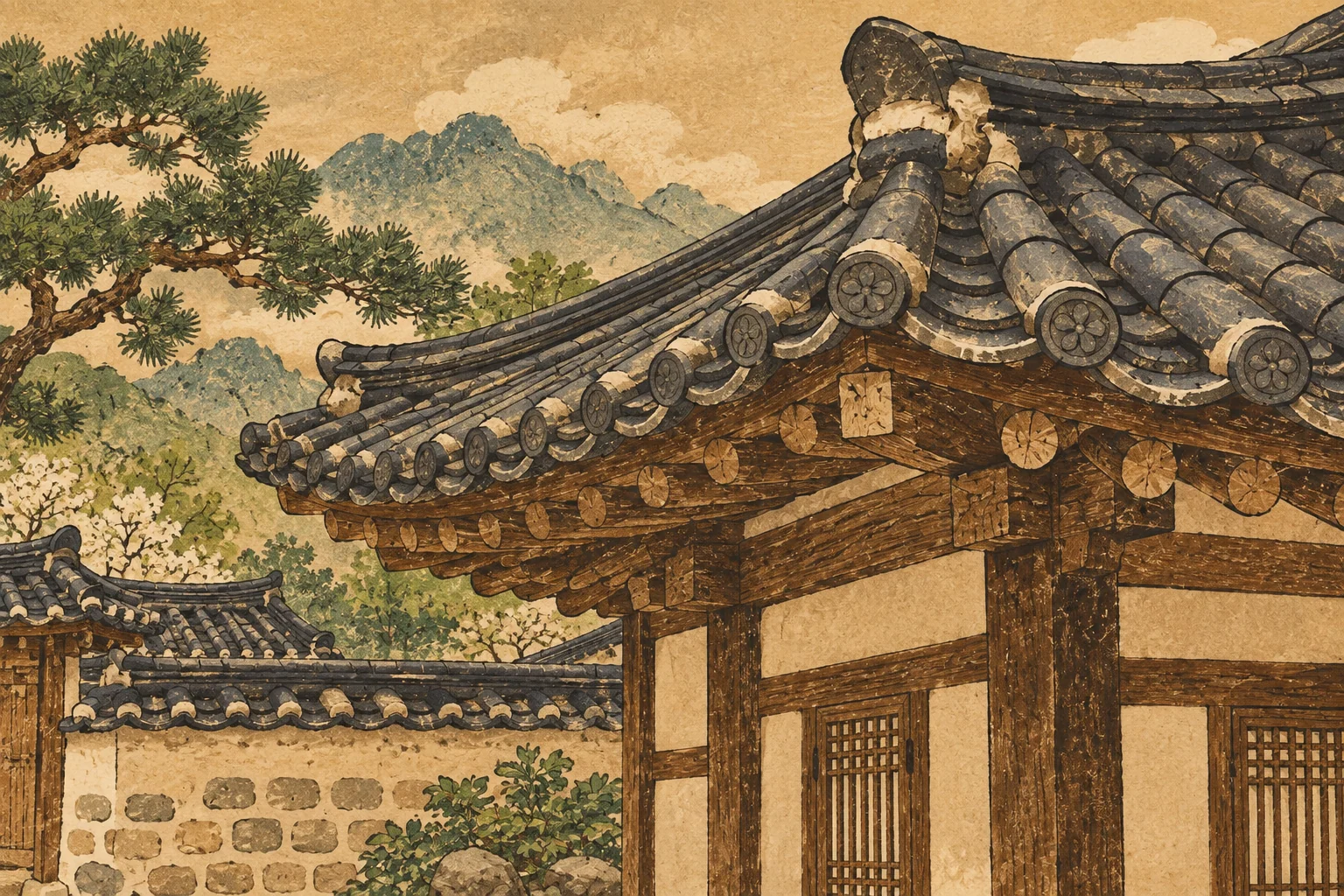
Giwa-jip (Tile-roofed House)
기와집
A house with a tiled roof; building layout and tile forms reflected different periods, regions, and household circumstances.
Research note · see sources and scope belowOne-Sentence Definition
A giwa-jip (기와집) is a house whose roof is covered with giwa (기와), roof tiles. The term identifies a roofing material and house type; it does not specify a complete floor plan.
The Roof Is Not the Whole House
The word points to roof tiles, not a complete architectural plan. Korean roof tiles include curved types that channel water and end tiles that can carry decoration. The Academy of Korean Studies records changes in tile forms and ornament across different kingdoms and periods; floral patterns, animal motifs, and other designs are part of particular historical objects, not decoration to add indiscriminately to a folktale illustration.
Tiles and the timber structure beneath them also need to be understood together. A roof described as tiled may have a different weight and structure from a thatched covering, but the short label alone does not identify the house’s rooms, region, owner, or date.
Compared with a Thatched Roof
The phrase is often contrasted with choga-jip, a house described by its thatched roof. That comparison helps readers notice roofing material, but it should not become a blanket claim about the wealth or lifestyle of every family in either home.
Sources
- Academy of Korean Studies, Encyclopedia of Korean Culture: Giwa (tile forms and historical variation).
Stories featuring Giwa-jip (Tile-roofed House)
This guide provides cultural background. No current story page names this item as a direct plot detail, so the Atlas keeps the two separate.