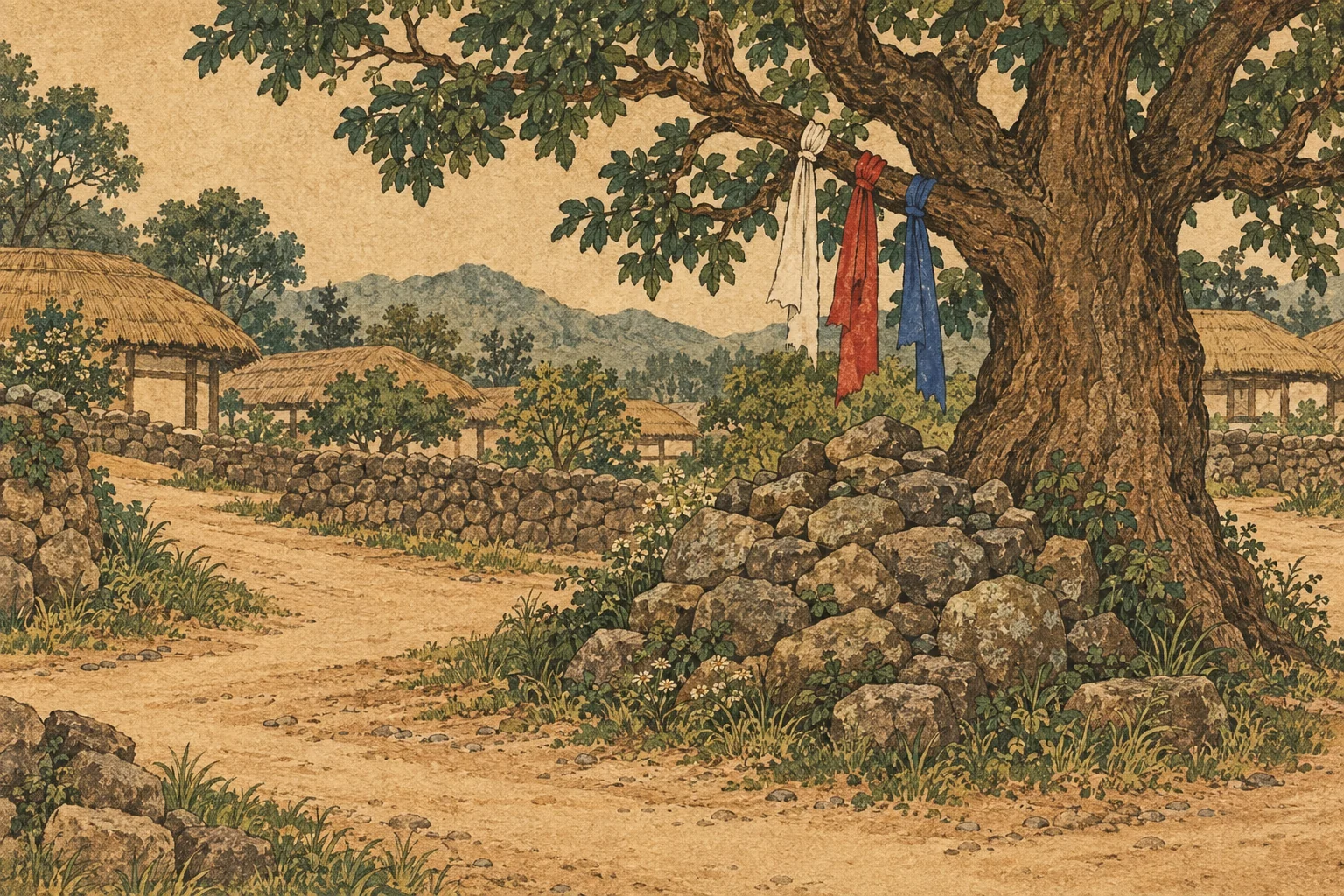
Seonangdang (Village Shrine)
서낭당
A local shrine or sacred place associated with village protection and communal ritual in some Korean traditions.
Research note · see sources and scope belowOne-Sentence Definition
A seonangdang (서낭당) is a place connected with local guardian beliefs and communal rites. The term may refer to a shrine or sacred site, but the physical form is not uniform.
Place and Community
The Academy of Korean Studies entry groups recorded forms into five broad types: stone cairns, sacred trees (sometimes with cloth strips), standing stones, small shrine buildings, and combinations such as a tree beside a cairn. Some marked a village boundary or entrance; others stood at a crossroads, pass, or other locally meaningful place. The categories describe recurring forms, not a single design shared by every region.
These sites could be connected with communal rites seeking protection and well-being. The exact guardian, ritual calendar, offerings, and local name need evidence from the particular place. A shrine should not be reduced to a “spooky” prop: its meaning is tied to the people who maintained the site and the rites performed there.
How We Describe It
An account of a specific seonangdang should name its locality and source. A general page cannot establish what every village believed or did, and a story mentioning a shrine does not by itself identify the site as a seonangdang.
Sources
- Academy of Korean Studies, Encyclopedia of Korean Culture: Seonangdang (typology and examples; specific sites and practices require locality-level evidence).
Stories featuring Seonangdang (Village Shrine)
This guide provides cultural background. No current story page names this item as a direct plot detail, so the Atlas keeps the two separate.