 A READING PATH · 9 STORIES
Objects Found in Korean Folktales
Follow the objects that carry a story’s joke, test, gift, or escape. Some are ordinary household things; others are magical within a particular tale.
Objects as Plot
Objects in a story can be ordinary necessities, gifts, tests, or impossible promises. Their narrative role does not prove that the same object had supernatural powers in daily life. This route moves from everyday food and clothing to objects whose meaning is specific to one written or oral account.
Suggested Route
- The Tiger and the Dried Persimmon turns on gotgam: the child quiets, and the tiger mistakes the word for an unseen rival. The fruit is ordinary; the misunderstanding is the plot device.
- The Sun and Moon Siblings begins with a mother’s bowl of red-bean porridge and ends with two ropes. Food draws the tiger closer; a rope offers the children a way out.
- Heungbu and Nolbu uses a swallow’s seed and twelve gourds. In the 1833 Heungbo Manborok, the gourds release a detailed sequence of wealth and comic burdens.
- Read The Fairy and the Woodcutter and Kongjwi and Patjwi for clothing that can conceal or reveal a life. The maiden’s hidden garment keeps her from heaven; Kongjwi’s lost shoe brings her to a new household, and a flower and bead later help her return.
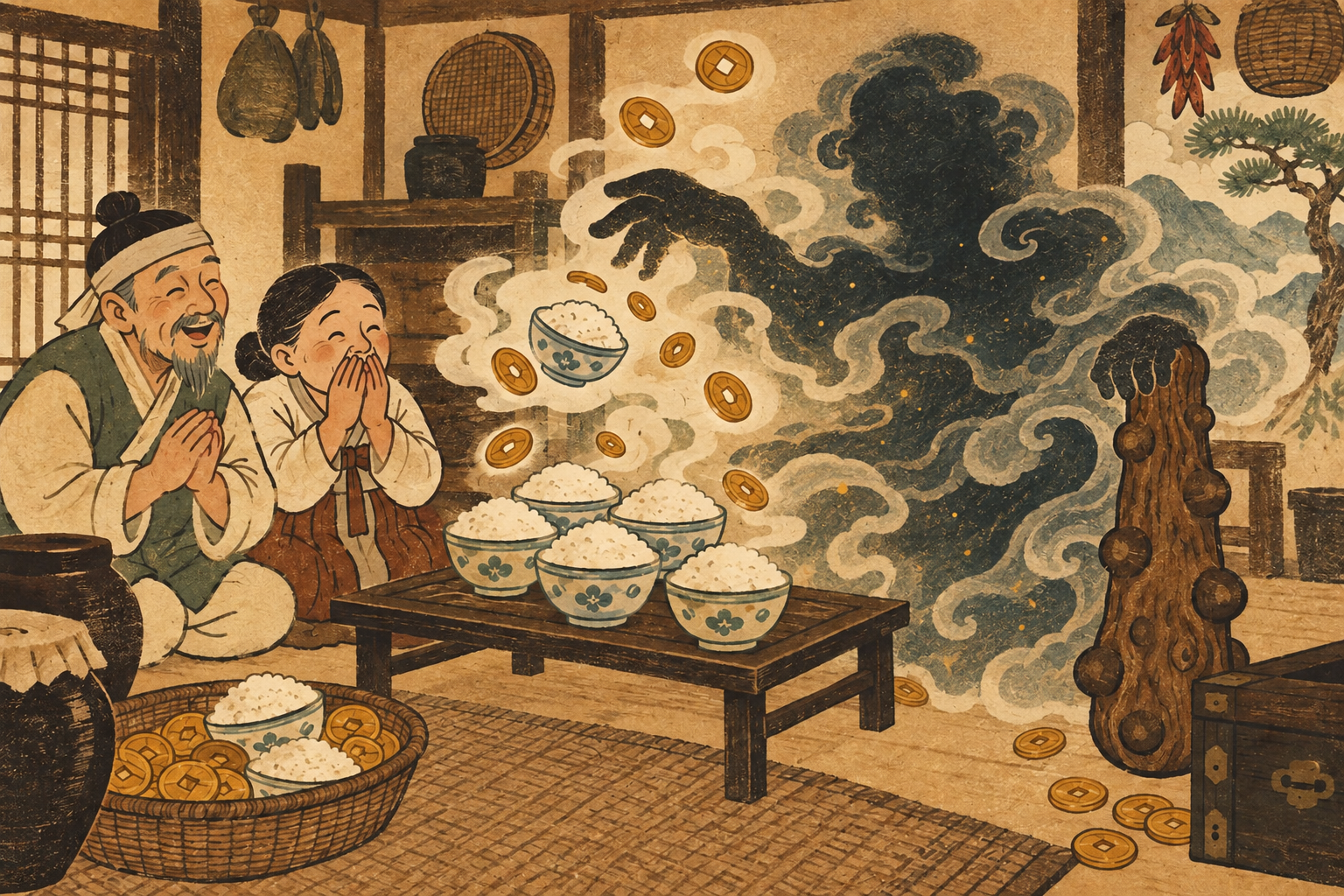
- The Goblin’s Magic Club places a magical club within one specific recorded dokkaebi episode; it is not a universal attribute of the being.
- The Rabbit’s Liver treats an animal’s liver as the Dragon King’s requested cure and the center of a deception. It is a plot object rather than a household artifact, and this selected Bito Island telling has its own tragic ending.
- Compare a hidden rice jar in The Jangja Pond Legend with the flute in The Bamboo That Became the Manpasikjeok. One is an onggi vessel in a local oral place legend; the other is a legendary royal object in a written narrative.
Ordinary Things, Extraordinary Consequences
The dried persimmon does not need to change at all. Its effect comes from the tiger not knowing what it is. The jar in Jangja Pond is similarly ordinary: it stores grain, making the wealthy man’s refusal to share tangible. Neither object has to possess magical powers for the story to turn around it.
Now set those beside the heavenly garment and the Manpasikjeok. The clothes actually enable the maiden’s departure, while the flute’s sound alters weather and danger within the legend. Their powers belong to the imagined worlds of the stories. The contrast is useful: sometimes an object changes what a character can do; sometimes it changes only what a character thinks.
Who Controls the Object?
The woodcutter keeps the clothes hidden. The wealthy man limits access to the grain. The rabbit persuades the court that his liver is elsewhere. All three create a distance between something wanted and the person who wants it. Recovering a garment, carrying rice outside, and obtaining passage back to land each changes that arrangement.
Kongjwi’s shoe works differently. Once lost, it becomes a way for someone else to find her. Later, her stolen clothes help Patjwi take her place. Within one tale, clothing can reveal identity or conceal it. That change is more interesting than assigning every garment one symbolic meaning.
Look Closer After the Story
Open gotgam for the treat behind the tiger’s fear, patjuk for the mother’s porridge, and onggi for the family of earthenware vessels that includes storage jars. The Manpasikjeok guide follows the bamboo into the royal legend. Straw shoes introduces the woodcutter’s work while explaining why the record does not establish one exact shoe design.
Read in this collection
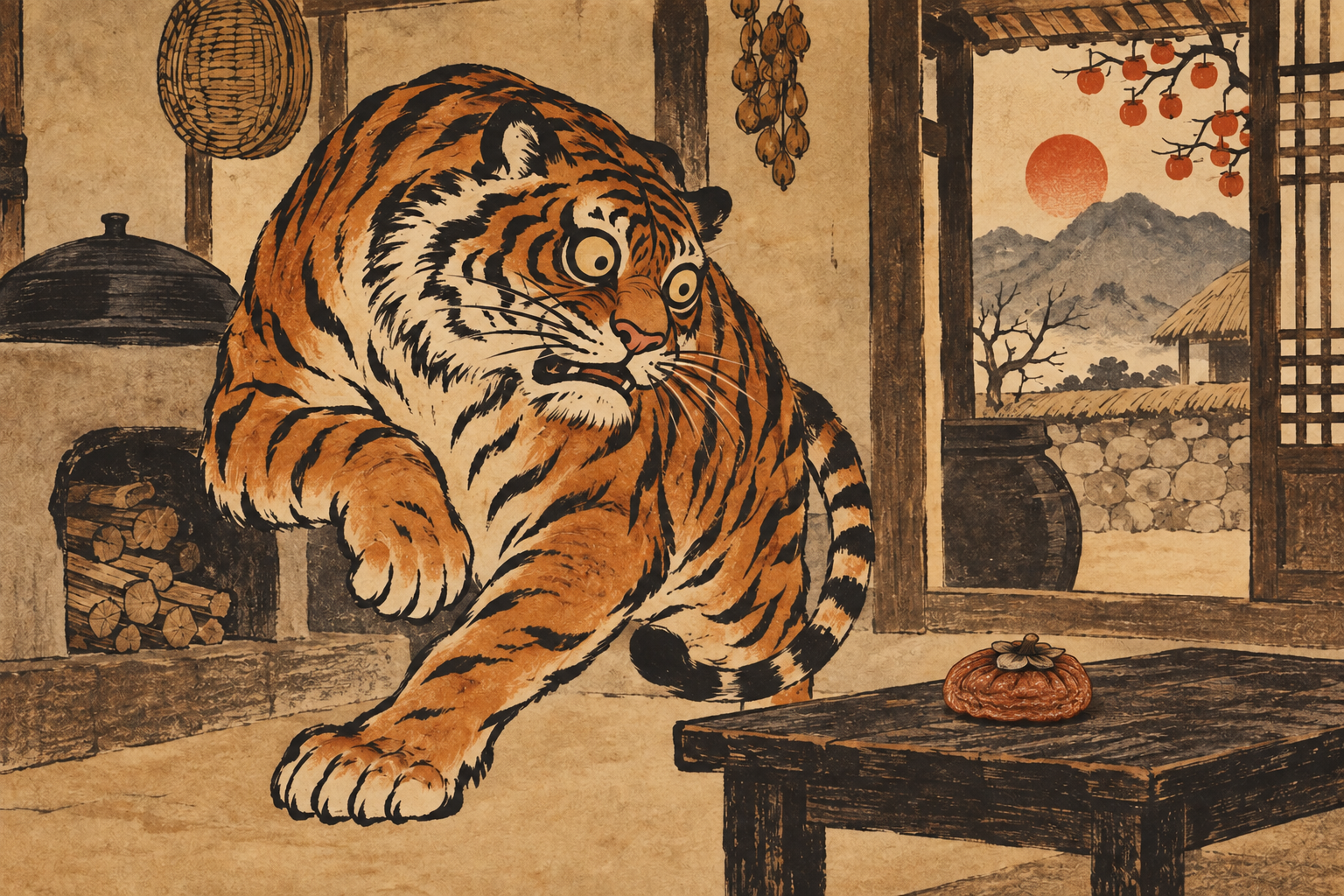 01 · 2 MINThe Tiger and the Dried PersimmonA tiger outside a village house hears a crying child fall silent at one mysterious word: gotgam. Then something climbs onto its back.↗
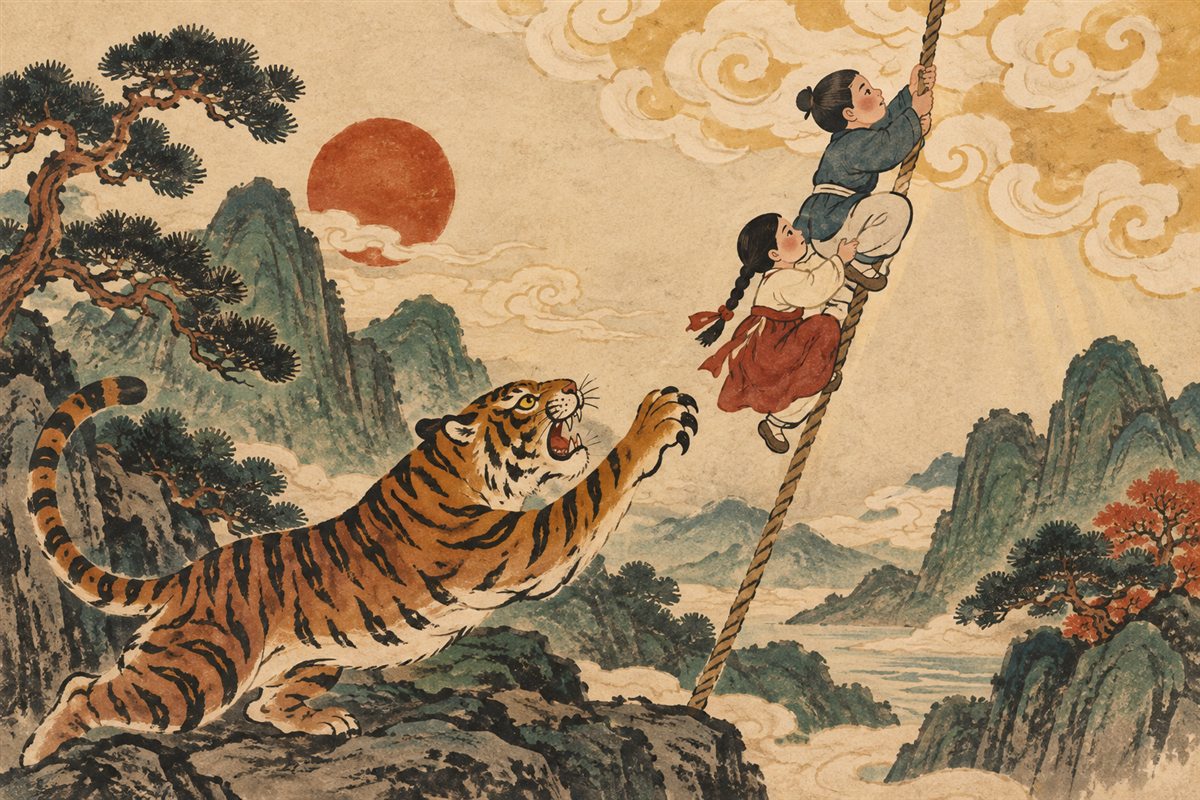 02 · 3 MINThe Sun and Moon SiblingsTheir mother is late returning home. When a strange voice calls at the door, her two children ask questions—but the visitor has an answer for everything.↗
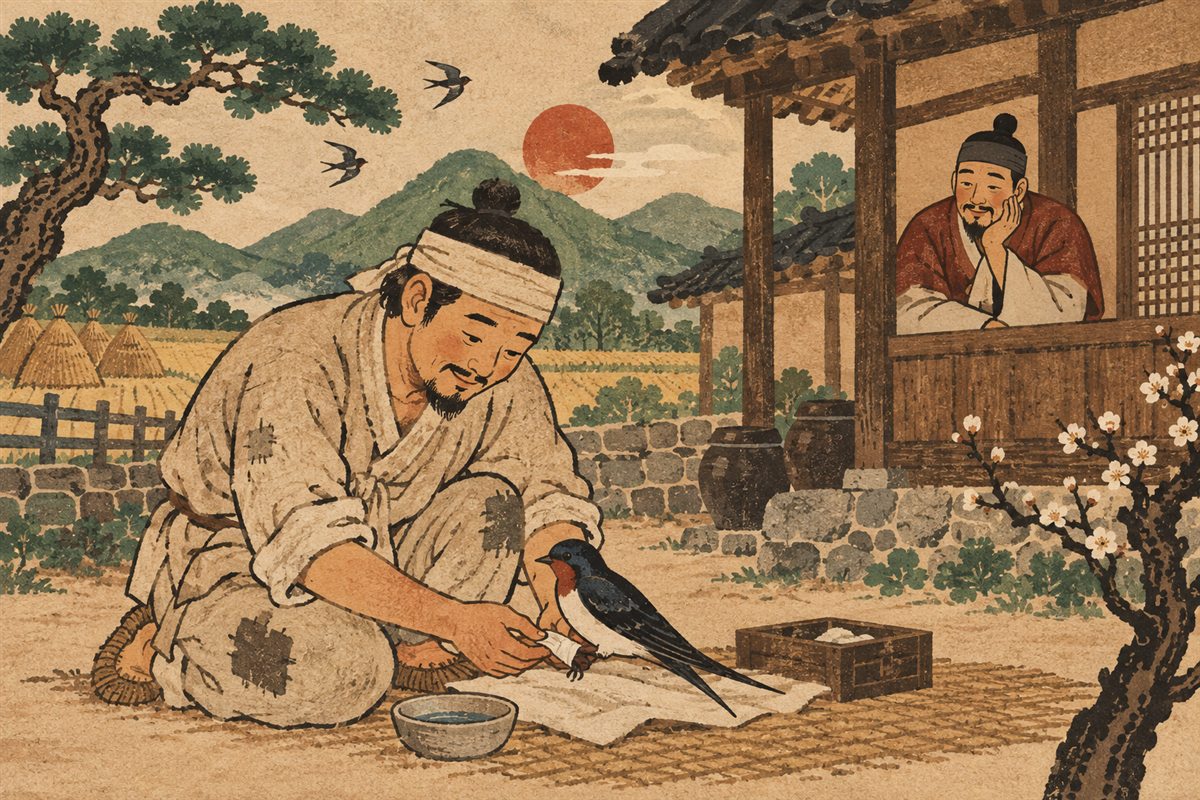 03 · 5 MINHeungbu and NolbuRead Heungbu and Nolbu in English: a kind younger brother, his wealthy older brother, and a grateful swallow whose gift brings astonishing gourds.↗04 · 3 MINThe Goblin’s Magic ClubA woodcutter takes shelter in an empty house and finds himself listening to a dokkaebi feast. One crack of a hazelnut changes his fortune—and gives his younger brother an idea.↗
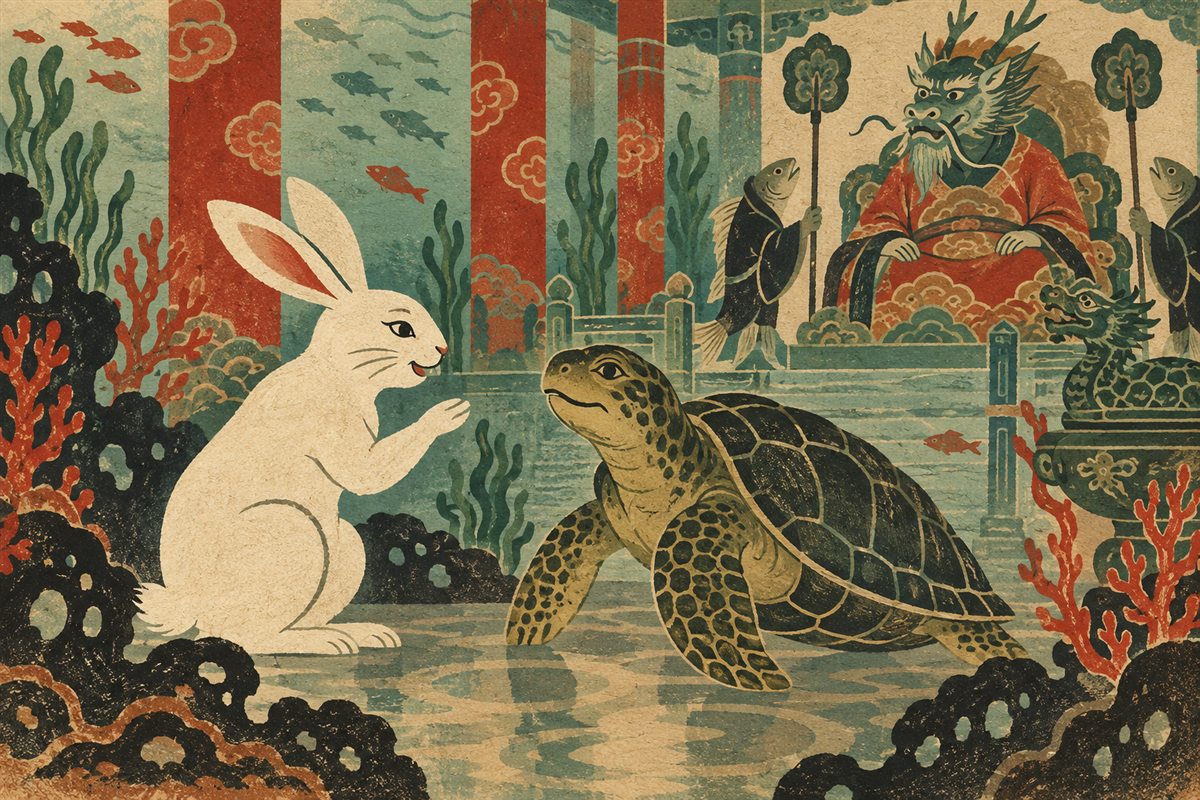 05 · 3 MINThe Rabbit’s LiverA terrapin promises a rabbit wealth and a place at the Dragon King's court. Under the sea, the rabbit discovers why the king really wanted him to come.↗
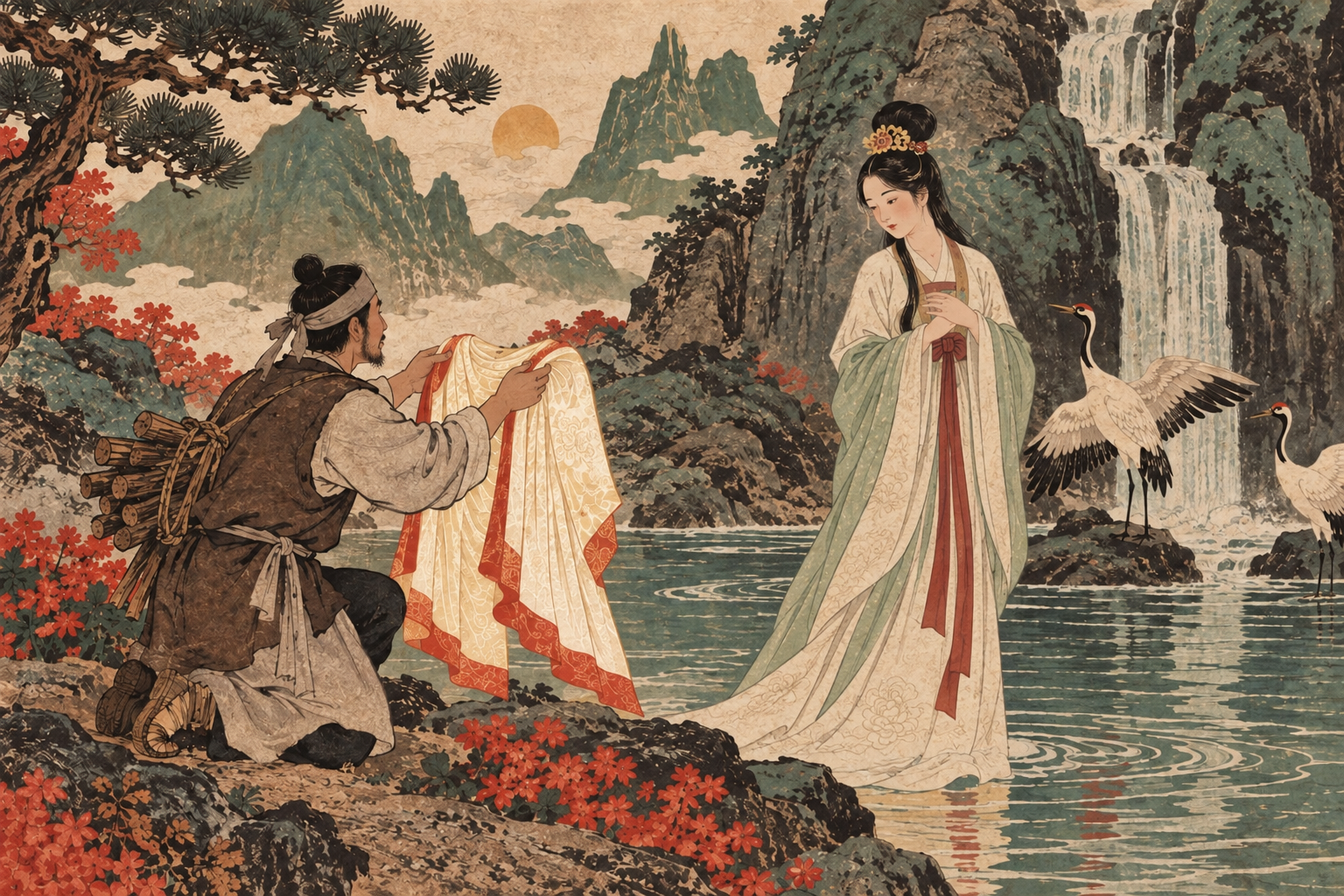 06 · 3 MINThe Fairy and the WoodcutterA deer repays a woodcutter with advice that brings a heavenly maiden into his home. Years later, the clothes he has hidden give her a way back to the sky.↗
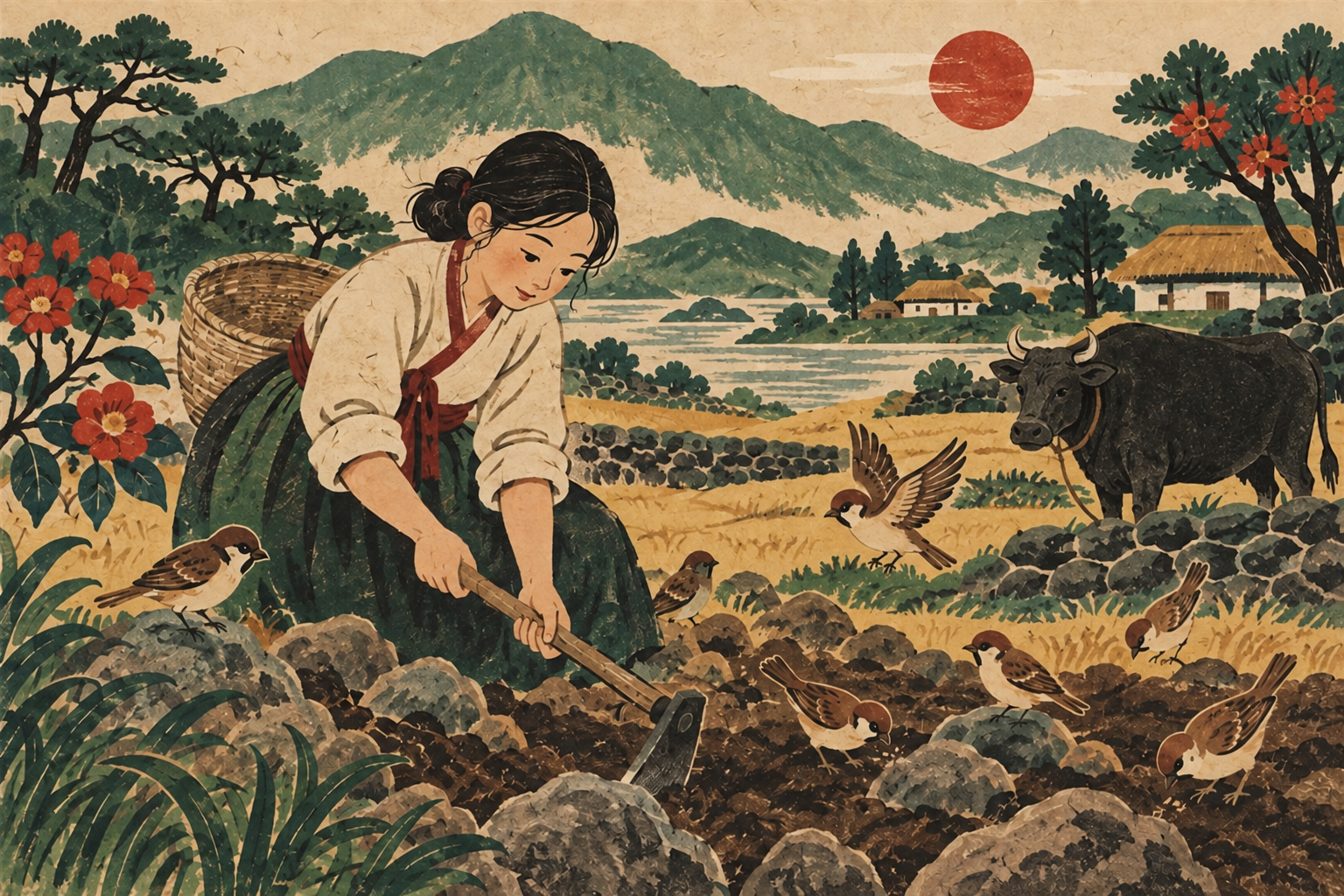 07 · 4 MINKongjwi and PatjwiKongjwi faces chores she cannot possibly finish and finds help in the most unexpected places. A lost shoe opens a new life, but her stepsister will not let her keep it.↗
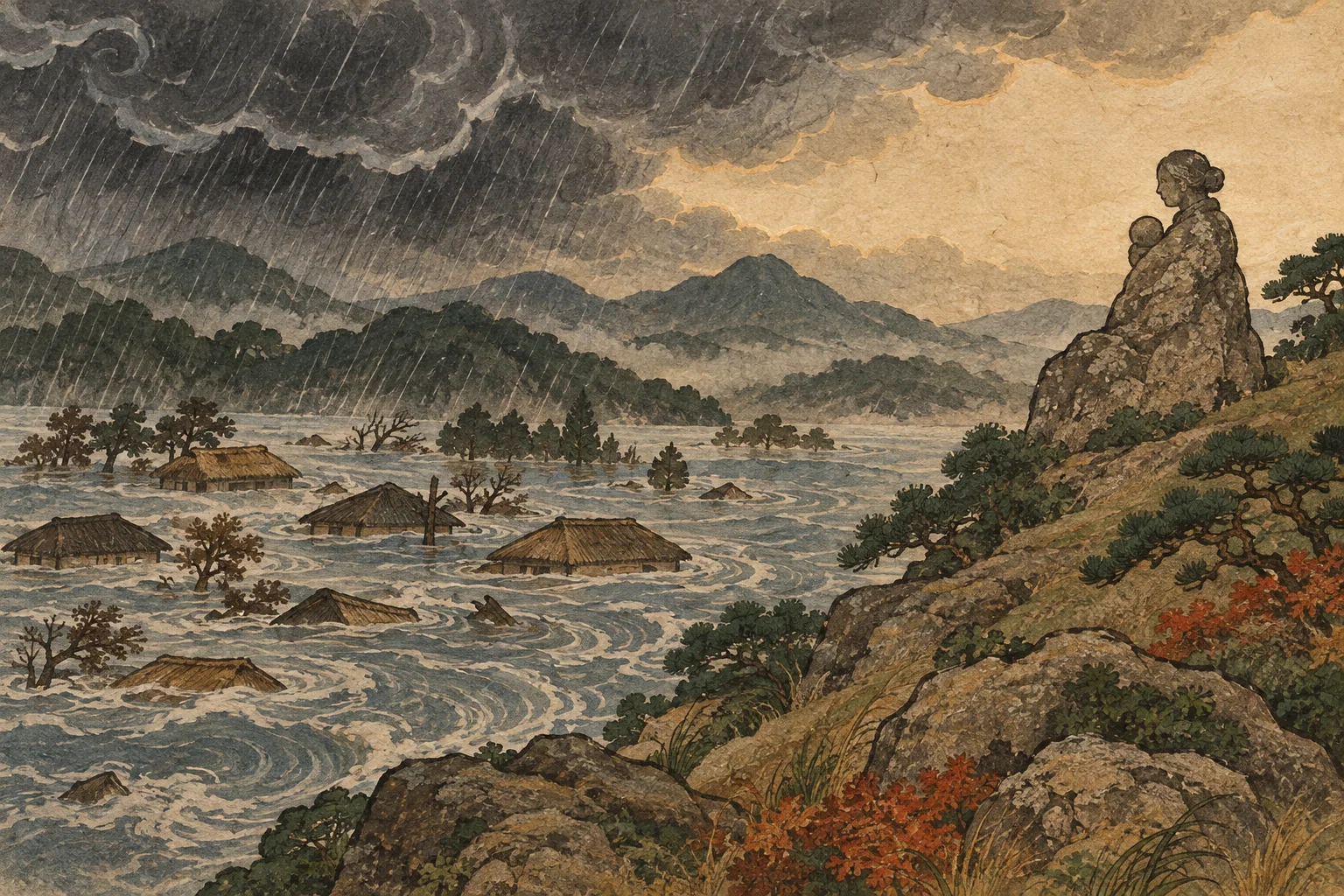 08 · 2 MINThe Jangja Pond LegendA wealthy man turns away a monk, but his daughter-in-law follows with rice. The monk gives her a warning: take her baby and leave, whatever she hears behind her.↗
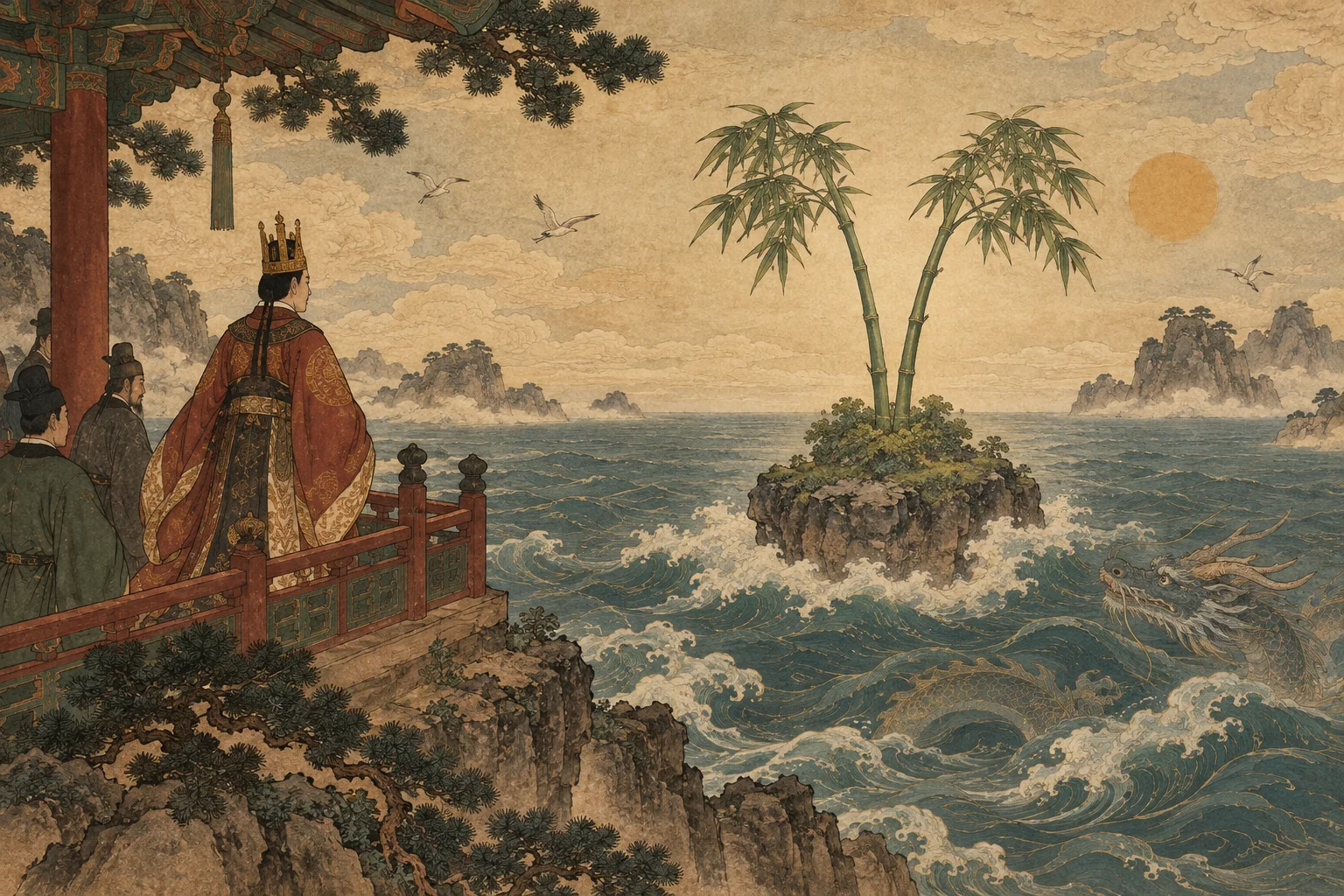 09 · 3 MINThe Bamboo That Became the ManpasikjeokA small mountain floats toward Silla's coast, carrying a bamboo stalk that divides and joins again. King Sinmun goes out to discover what the sea has brought him.↗
Being guides
Meet the animals, spirits, and otherworldly figures behind these tales, and discover the different roles they play.
Korean Context guides
Look more closely at the foods, objects, and customs that give these stories their texture.
Experience Korean culture
Visiting Korea? Explore an experience connected with what you’ve just read.
Step into Korean village life
Explore traditional houses, crafts and performances at Korean Folk Village. Its recreated village setting offers another way to encounter the everyday culture behind these stories.
Craft demonstrations and performance schedules vary by date.
View village tickets on Klook (opens in a new tab)Affiliate links: we may earn a commission if you book through these links, at no additional cost to you. Klook handles bookings, availability and prices. About our recommendations.