Yeopjeon (Cash Coin)
엽전
A broad term for historic East Asian-style cash coins, commonly round with a square central hole; Korean issues and circulation changed over time.
Research note · see sources and scope belowOne-Sentence Definition
Yeopjeon (엽전) is a general Korean term often used for old cast cash coins, typically round with a square hole. It does not name one denomination or a single unchanging currency.
Shape and Use
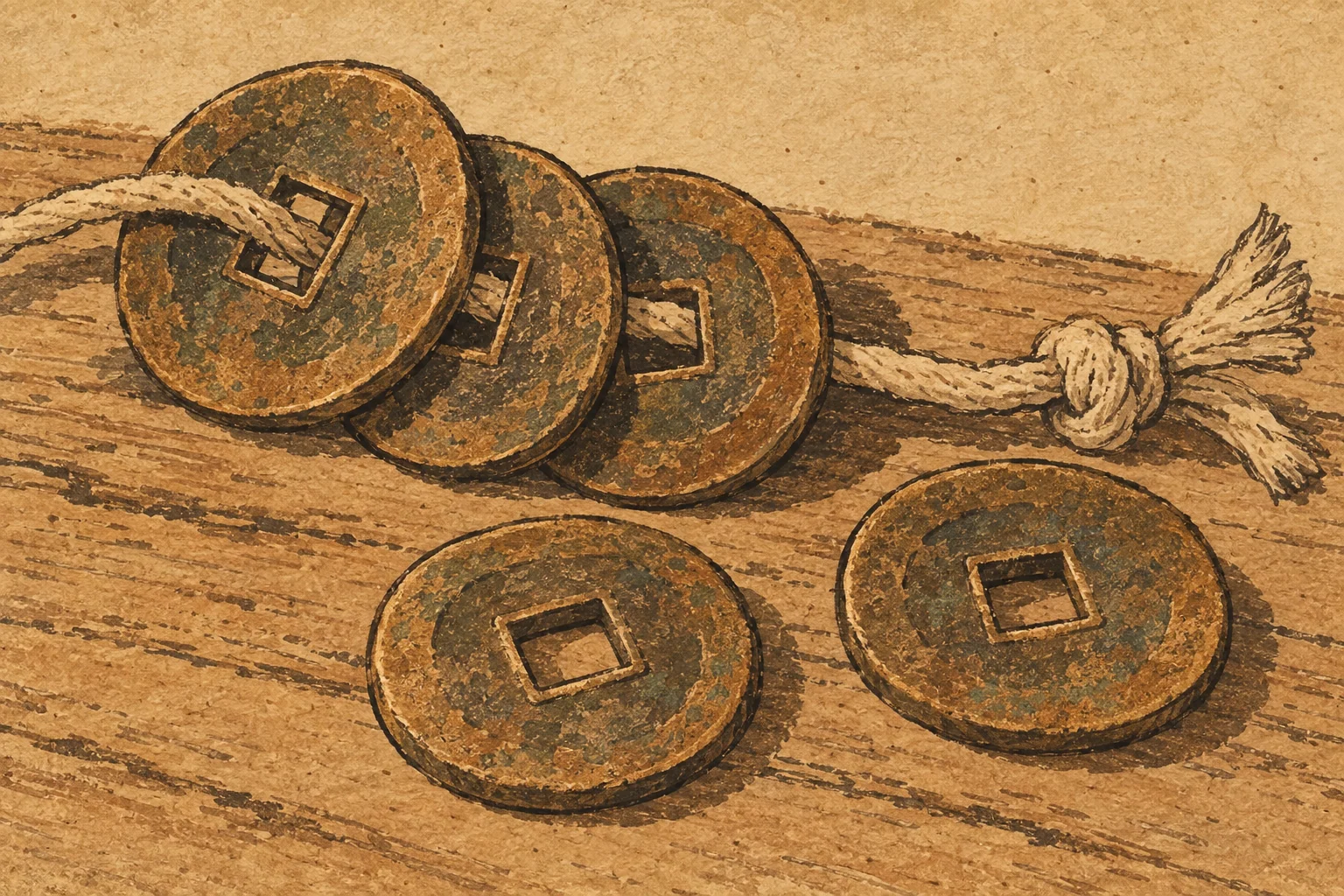
The Academy of Korean Studies describes the familiar round coin with a square opening, but stresses that weights and sizes differed by face value, mint, and period. Yeopjeon is a category, not the name of one coin. Goryeo and Joseon governments issued several iron, copper, and tin coins; the best-known Joseon issue, Sangpyeong Tongbo, returned to circulation in 1678.
Coin use changed unevenly. The encyclopedia notes that coins did not circulate widely in every period, and that economic conditions and metal supply affected currency policy. After the late sixteenth century, expanding production and exchange helped coin use grow. By the eighteenth century, copper cash had become a more common means of pricing and payment. A story that mentions a few coins cannot by itself establish the scene’s exact value, purchasing power, or date.
Folktale Objects and Later Images
Coins often serve as a compact sign of payment or wealth in retellings. Unless the source identifies a coin type, this atlas will not assign a reign, inscription, or exact value to it.
The square hole and cast form are useful visual clues, but an inscription identifies a particular issue more reliably. This Atlas illustration has no legible inscription or date, so it represents cash coinage broadly rather than a named Sangpyeong Tongbo specimen.
Sources
- Academy of Korean Studies, Encyclopedia of Korean Culture: Yeopjeon (coin types, circulation, and the expansion of Sangpyeong Tongbo use).
Stories featuring Yeopjeon (Cash Coin)
This guide provides cultural background. No current story page names this item as a direct plot detail, so the Atlas keeps the two separate.