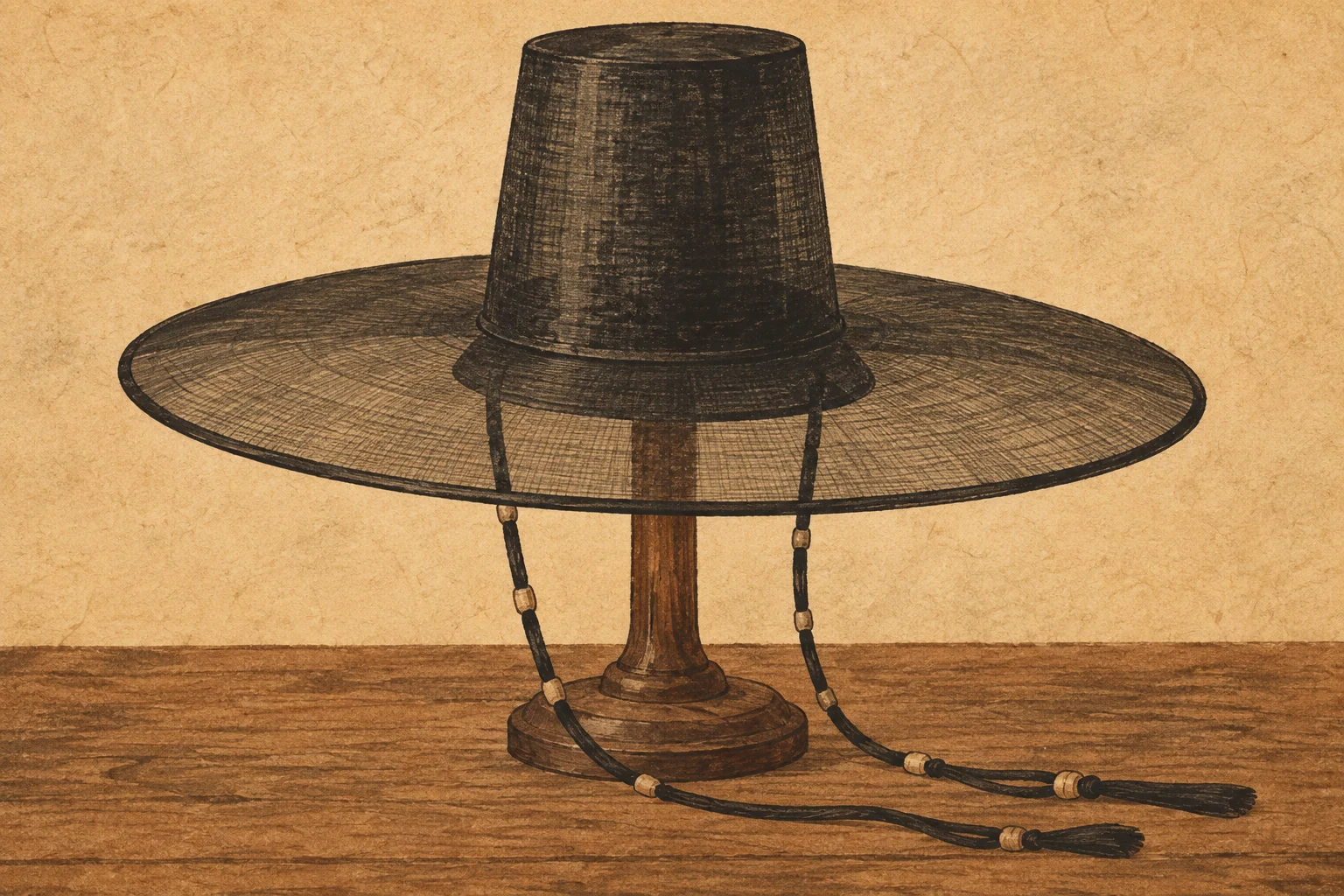
Gat (Traditional Hat)
갓
Recognize the crown, brim, and ties of a Korean gat, and explore how a familiar hat acquires different meanings in portraits, dramas, and folklore imagery.
Recognizing the Hat
The broad brim and raised crown make a gat one of the most recognizable items of Korean dress. Look a little closer and it becomes less like a solid black silhouette. Fine woven material can let light through the crown and brim; ties beneath the chin help hold the hat in place.
The name covers more than one form. The familiar black heukrip belongs to a wider family that also includes white mourning hats and red hats associated with military or ceremonial dress. Shape, material, and occasion matter when reading an old portrait or a costume in a historical drama.
Three Details to Notice
- The crown: the part that fits over the head. Horsehair and finely worked bamboo appear in traditional hat making.
- The brim: its width and shape change the outline of the wearer. The delicate weave is easier to appreciate against a light background.
- The ties: these are part of how the hat is worn, rather than a decorative line added to a drawing.
A finished hat brings together skilled work on several parts. Its apparent lightness should not hide the labor needed to shape and join them.
A Familiar Shape with Different Meanings
A black hat may suggest a scholar to a viewer of a period drama. In another setting, similar headwear may help create the instantly recognizable modern image of a Jeoseung Saja, a messenger from the afterlife. Recognizing that visual association is useful; it does not mean every traditional account describes the messenger in the same costume.
The same distinction helps when reading Chunhyang. Mongryong’s authority at the end comes from his position as a royal inspector, not simply from looking like an educated man. The amhaeng eosa guide explains why an apparently ordinary traveler can suddenly challenge a magistrate.
Clothing gives the reader clues. What a character does, and what authority the story gives them, completes the picture.
Further Reading
The Academy of Korean Studies entry 갓 introduces the parts, materials, and historical varieties of the hat.