Gamasot (Cast-iron Cooking Pot)
가마솥
Make sense of the Korean cooking pot, hearth, and kitchen platform, then connect the work of making a meal with stories about rice and generosity.
A Pot, a Hearth, and the Work of Cooking
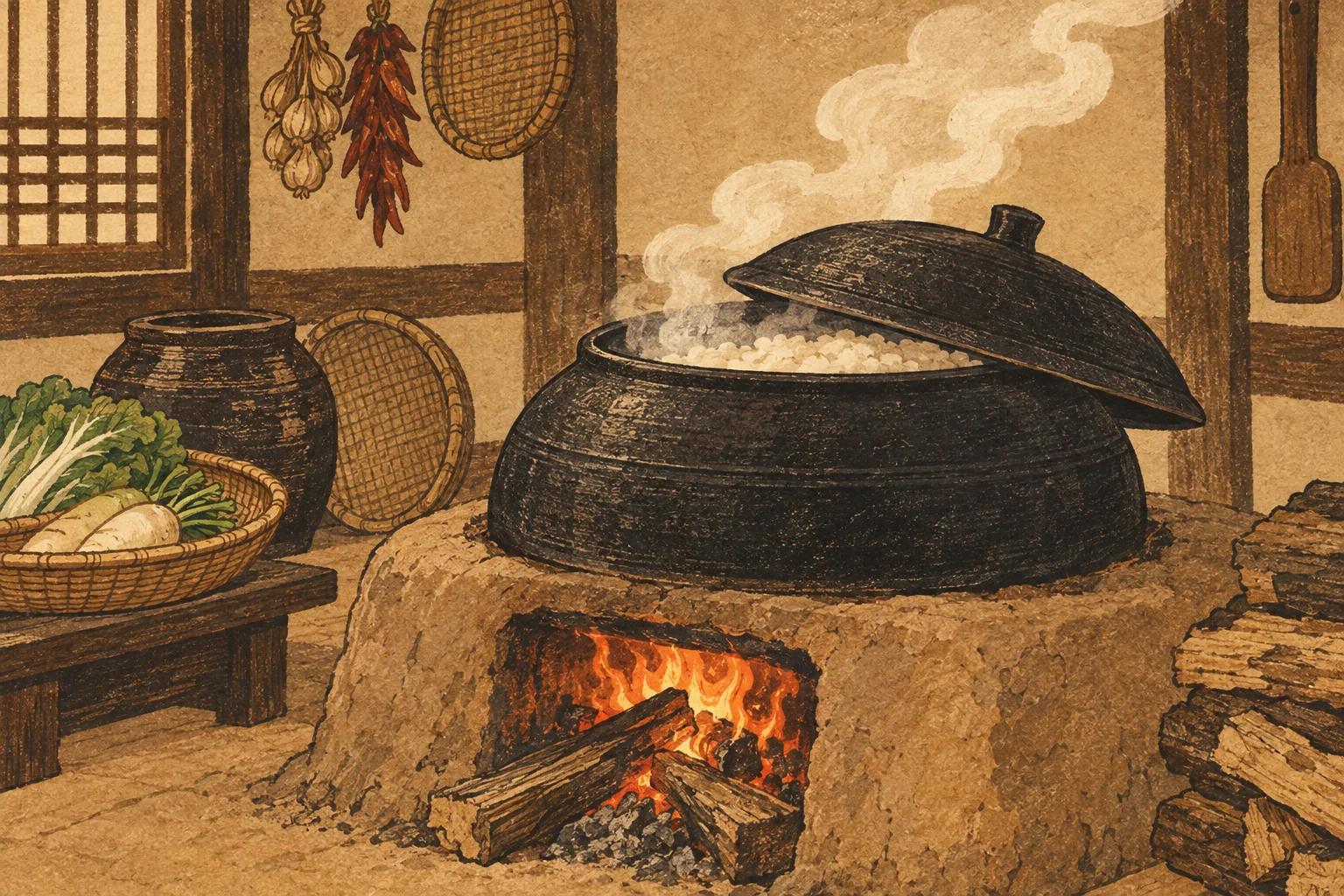
A gamasot is a heavy cooking pot associated with the traditional Korean kitchen. Its broad body and lid belong to a working arrangement: the pot holds the food, while a fire below supplies heat.
Two nearby words help make sense of that arrangement. Agungi names the hearth opening where fuel is burned; buttumak names the raised kitchen structure around the cooking place. The pot, the fire opening, and the surrounding platform are connected, but they are different things.
What a Kitchen Scene Can Show
Look for the pot’s lid, where its body sits, and how the cook reaches the fire. A serving bowl or a low dining table belongs to a later part of the meal. Cooking, carrying, and eating need not happen in the same place.
In the National Folk Museum essay “부엌, 밥꽃을 피우다,” curator Park Seonju recalls rice bubbling under a heavy lid and a mother serving the cooked grain. The memory draws attention to waiting, heat, and the person doing the work. It makes a kitchen easier to imagine as an inhabited place.
The details are ordinary, which is precisely why they help: a meal does not appear simply because a household owns grain.
When Rice Becomes a Meal
Read Simcheong with that labor in mind. Rice is a measure of a daunting obligation, while feeding a household is a repeated daily need. The scale of the promise becomes clearer when set against one meal at a time.
Jangja Pond asks a related question through an offering of rice. Giving away even a small amount means parting with something another person can eat. The household scene gives substance to the contrast between abundance and refusal.
These comparisons do not require either tale to name a gamasot. The kitchen guide supplies the material background for understanding why food, fuel, and the work of preparing a meal recur in stories of poverty and generosity.
Continue with onggi for storage vessels and jangdokdae for the place where household jars stand.
Further Reading
The National Folk Museum essay 부엌, 밥꽃을 피우다 follows kitchen objects through everyday memory. The Academy of Korean Studies entry 아궁이 explains the hearth.