Mugwort and Garlic in the Dangun Account
쑥과 마늘
A small ration and a long stay out of sunlight turn the bear and tiger's wish to become human into the best-known trial in the Dangun story.
The Foods at the Cave
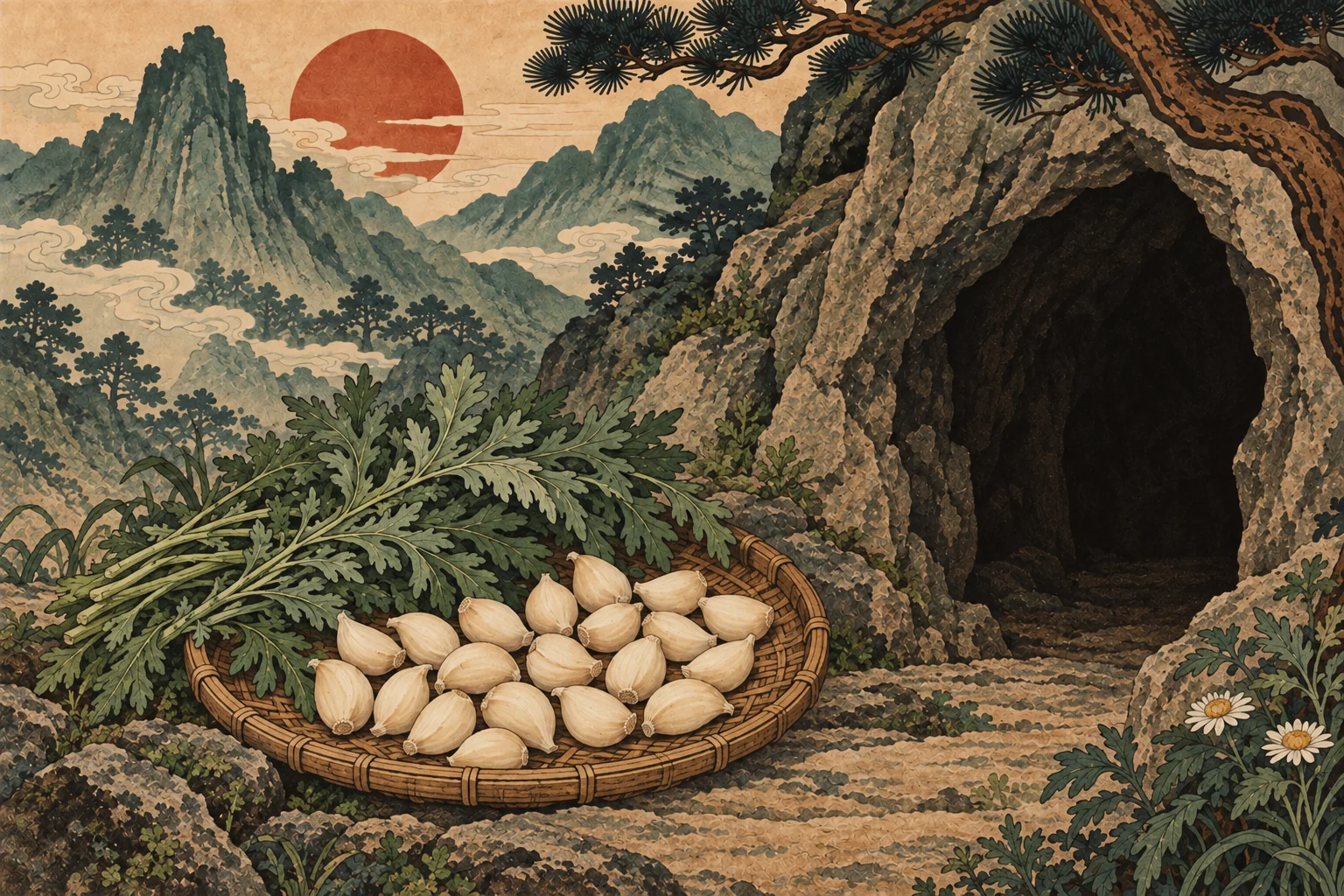
In the Samguk Yusa passage retold here, mugwort and garlic are the foods Hwanung gives the bear and tiger during their attempt to become human.
What the Text Says
The selected account names mugwort and twenty cloves of garlic, instructs the animals to avoid sunlight for one hundred days, and then says they fast for three periods of seven days. Only the bear remains in the cave and becomes a woman. This entry follows the wording and sequence of that passage; it does not claim the plants had one fixed meaning across Korean tradition.
Why Ordinary Foods Make a Memorable Trial
The animals ask for an extraordinary transformation, but Hwanung answers with concrete things to eat and a restriction to keep. The listener can picture leaves, garlic, and the absence of sunlight much more readily than the process of becoming human. The instructions turn a wish into something that must be lived through.
Both animals receive the same conditions. Their paths separate through endurance: the tiger leaves, and the bear remains. The foods are not described as a prize given to the successful animal afterward. They belong to the difficult interval before the transformation.
Ungnyeo’s later wish for a child also matters. The cave episode does not complete her life or the founding account. It enables the next relationship, which leads to Dangun’s birth. Read the complete story →
Why the Two Durations Differ on the Page
The episode is part of a foundation narrative preserved in a medieval compilation. It is not independent evidence that the narrated events occurred as history. The passage’s stated hundred-day instruction and its narrated twenty-one-day duration also differ.
The hundred days belong to Hwanung’s instruction; the three seven-day periods belong to the account of what the bear undergoes. Keeping those two statements distinct lets readers see the wording rather than silently turning them into one number. The story on this site leaves the durations unspecified, while this guide preserves the detail for readers who want to look closer.
Sources
- Samguk Yusa, Gi-i 1, “Gojoseon / Wanggeom Joseon” (selected passage and Korean translation).
- Academy of Korean Studies, “Dangun Myth” (comparison with the distinct Jewang Ungi maternal-origin account).