Haetae
해태
A legendary judge-like creature associated with distinguishing right from wrong and with protective imagery in Korean architecture.
Research note · see sources and scope belowQuick Summary
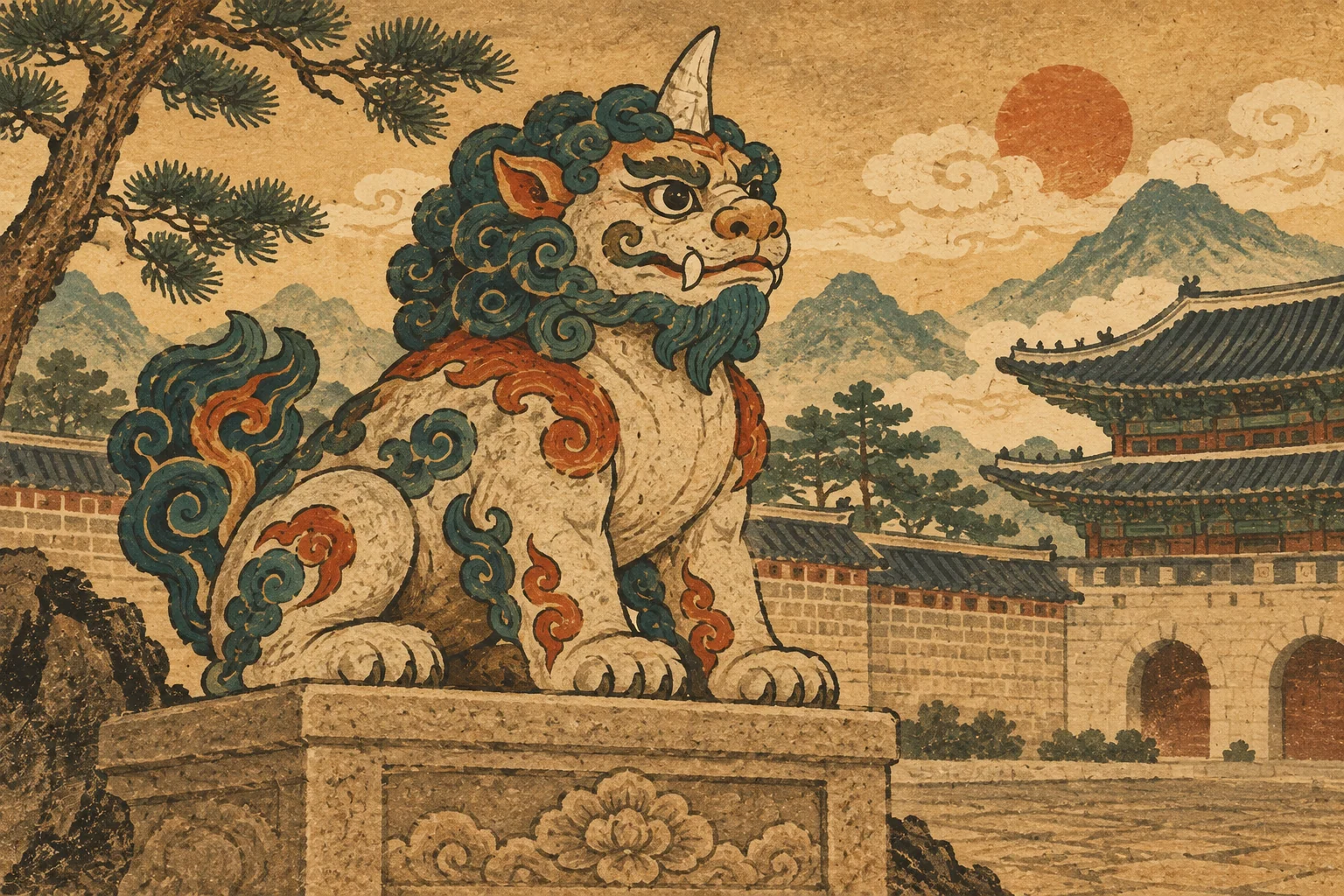
Haetae (해태), also romanized haetae or haechi, is a legendary creature associated with judging right and wrong. It is also visible in architectural and civic symbolism.
Justice and Protection
The Academy of Korean Studies describes a lion-like animal with a horn at the centre of its head. In the account it draws on, the creature recognizes right and wrong and confronts the person at fault. This image of moral discernment also appears in court-related settings: the source notes the haechigwan hat and the haetae motif on the breast badges of senior inspectors.
The same encyclopedia records haetae figures used on palace buildings as protective images against fire or disaster. The Gwanghwamun statues are a familiar example, but their placement should be read in its architectural and political setting. Protection, justice, and palace decoration are connected strands of the image, not a claim that every haetae figure served the same purpose.
Not Simply a Lion
The Korean article uses a comparison with a lion to help describe the body, while distinguishing the creature by its horn and moral role. Modern mascots and stylized statues can emphasize different features. A responsible caption identifies a dated or named object when reproducing one; the Atlas illustration is a modern interpretation rather than a reconstruction.
Editorial Status
The atlas does not yet have a retelling featuring a haetae. This entry summarizes a cultural reference and avoids inventing a story connection.
Sources
- Academy of Korean Studies, Encyclopedia of Korean Culture: Haetae.
Stories featuring Haetae
No current Atlas retelling directly features this being. The guide summarizes documented cultural or narrative material without inventing a story link.